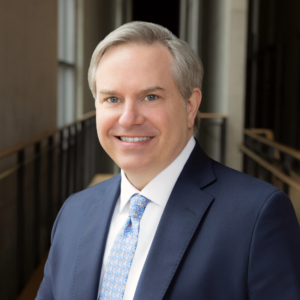
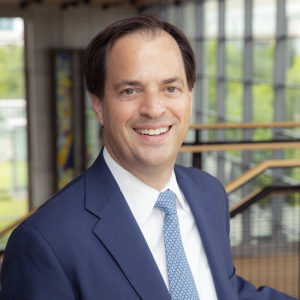
In this episode, Dr. Johnny Franco, a board-certified plastic surgeon and founder of Austin Plastic Surgeon, shares the challenges practices face as they navigate the exploding demand for weight loss and wellness. Dr. Franco breaks down what it takes to integrate these services into an existing practice. Learn how quickly the space is shifting and what compliance risks come with expansion. Tune in for insights on building a compliant wellness strategy that avoids costly missteps and supports patients across their entire health journey.
Listen to the full episode using the player below, or by visiting one of the links below. Contact ByrdAdatto if you have any questions or would like to learn more.




Transcript
*The below transcript has been edited for readability.
Intro: [00:00] Welcome to Legal 123s with ByrdAdatto. Legal issues simplified through real client stories and real-world experiences, creating simplicity in three, two, one.
Brad: [00:13] Welcome back to Legal 123s with ByrdAdatto. I’m your host, Brad Adatto, with my co-host, Michael Byrd
Michael: [00:20] As business attorneys for health care practices, we meet a lot of interesting people and learn their amazing stories. This season’s theme is The Future of Wellness, where longevity, advanced weight loss solutions, and anti-aging innovations collide. Get ready for insights from the people driving the evolution of the medical industry.
Brad: [00:40] Well, Michael, I’m real excited for our audience because we are going to bring on someone who just brings a lot of energy to this topic of the intersection of weight loss and other wellness services.
Michael: [00:51] I’m excited too. We have a longtime friend and client joining us today, but I do have something to talk about, Brad.
Brad: [00:59] Uh-oh.
Michael: [01:00] The stock market’s been a little crazy this year, right?
Brad: [01:02] Yeah. Well, well-
Michael: [01:02] Up and down
Brad: [01:03] … yeah.
Michael: [01:04] I read an article about something that actually follows the market. Did you know that the market for a lost tooth has been booming with the increases in the market in 2025?
Brad: [01:24] I know my hearing is not as good as it used to be. Did you say the words, “Market for a lost tooth is booming”?
Michael: [01:31] I did. We’re talking about the Tooth Fairy, Brad.
Brad: [01:33] Oh.
Michael: [01:34] This article. I read an article that the average payout for a tooth under a child’s pillow in 2025 is $5.84, up 17% from the year before.
Brad: [01:51] Apparently the Tooth Fairy must carry a lot of cash on him, or her, or whatever the Tooth Fairy is.
Michael: [01:56] Yeah. The article did note that the going rate for a child’s tooth is impacted by the economy. When the market’s going well and spending confidence is high, the Tooth Fairy’s even more generous.
Brad: [02:10] Well, I guess that makes sense. If the US is having a big economic downturn, I guess so does the Tooth Fairy.
Michael: [02:16] Yes. A few other data points from this article. A child’s first tooth goes for an average of $7.17, so a little higher for the first tooth.
Brad: [02:27] Okay.
Michael: [02:28] And for whatever reason, the Northeast seems to be more generous than other parts of the country.
Brad: [02:34] Maybe it follows the whole location, location, location thing. The dirt around North New York City or New Jersey tends to be higher in price, so I guess the tooth goes up in price.
Michael: [02:45] Yep. Yeah, fair. But I’m going to put you on the spot.
Brad: [02:48] Okay.
Michael: [02:48] How generous has the Tooth Fairy been at your house?
Brad: [02:51] My Tooth Fairy had been very consistent, and every single tooth they left a silver dollar. So each child, throughout their life, always received a silver dollar for the Tooth Fairy.
Michael: [03:05] So, really high branding to be cheap, basically-
Brad: [03:07] Yes
Michael: [03:08] … compared to the market. Yes. Nice and polished silver dollar.
Brad: [03:12] It looks amazing, though.
Michael: [03:12] Yeah. In many ways, I respect the consistency because the Tooth Fairy at the Byrd house behaved very inconsistently.
Brad: [03:28] Especially with multiple generations-
Michael: [03:30] Yeah
Brad: [03:30] … and you have five kids.
Michael: [03:31] Yeah. The fourth and fifth kids, the Tooth Fairy sometimes forgot to show up. It got pretty rough, and so that created a very unpredictable market on what the Tooth Fairy would leave because sometimes the Tooth Fairy might feel a little guilty and leave a $20 bill because the Tooth Fairy had forgotten three days in a row. Or sometimes the Tooth Fairy didn’t have any change and didn’t want to forget again, and so there would be a price hike. Then the next time it might be a dollar.
Brad: [04:16] Inconsistent
Michael: [04:16] … pretty inconsistent. Yeah.
Brad: [04:17] Yeah, pretty much.
Michael: [04:18] Yeah.
Brad: [04:18] I think now that we know all this, it’s time to bring on our superstar guest.
Michael: [04:23] All right. Joining us today is our friend, Dr. Johnny Franco. He’s a board-certified plastic surgeon in Austin, Texas. He’s the owner and founder of Austin Plastic Surgeon with locations in Austin and San Antonio. Johnny is originally from Las Cruces, New Mexico, and is bilingual in Spanish and English. Fun fact: I just learned when I was with him at a conference that he has a twin. He did his undergrad at Beloit College, medical school at UT Galveston, residency in St. Louis. He was the chief resident. We have had the pleasure of lecturing with Johnny multiple times over the years, and I think this is his third time on our podcast.
Brad: [05:09] Ooh.
Michael: [05:10] Johnny, welcome.
Johnny: [05:11] I appreciate you guys having me. I definitely was ahead of my time. I think I only got a quarter from the Tooth Fairy. But no question, I think my girlfriend, the last thing, the Tooth Fairy at their house dropped a $20 bill. But sort of like the Byrd house, you were scrambling to see what bills were-
Michael: [05:29] Available?
Johnny: [05:30] … that the Tooth Fairy could find.
Michael: [05:32] I know. The Tooth Fairy needs to start taking, delivering Apple Pay.
Brad: [05:35] Well, one of our old partners, when his daughter lost her first tooth, they were scrambling. They only had a 20, so that’s what the Tooth Fairy left. And the next time, when the Tooth Fairy came by, they left a dollar, and the daughter wanted to know what was wrong with their tooth. Why was the first one worth 20 and the next one only worth a dollar? And they’re like, “Well, this is a bad precedent.”
Michael: [05:58] We all have strengths and weaknesses, Johnny.
Michael: [06:03] All right. Well, let’s get into it. For the audience that hasn’t met you before, talk to us about you and your background, and Austin Plastic Surgeon, your practice.
Johnny: [06:15] Yeah, one, thanks for having me on. Two, this whole wellness wave that you guys are covering this season, I think the timing couldn’t be any better. Lots of really cool stuff going on. And for anyone that doesn’t know, this is a passion project of mine. I started on the wellness wave or weight loss revolution, whatever you want to call it, depending on what time point, about three years ago, and I lost about 90 pounds on the GLP medications. That’s what got me interested in this, and it has really expanded into our practice over that time. And I love the wellness wave because I think it’s really evolved so much more than just the weight loss medications. And so I think that was kind of a real tipping point, but has definitely expanded. The interest has grown. One of the things that we were talking about a couple weekends ago was it used to be that we looked at this as plastic surgery, med spa, kind of wellness or longevity as separate pillars. In our practice it’s really become this continuum, and I think you’re going to see more and more of that in aesthetics. And it honestly wasn’t too long ago that we were saying, “Why are we even talking about weight loss medications” at a plastic surgery meeting? And now it’s kind of, how can you have the meeting without talking about wellness, weight loss, peptides, and kind of all the things I think we’re going to get into today.
Brad: [07:32] Yeah. It’s interesting the future of wellness. You’re kind of nailing it, Johnny, which it includes so much. I mean, because we’ll talk to someone, they’re like, “No, I’m a longevity clinic.” “No, I’m an anti-aging clinic.” Or, “No.” And then you start asking them, “Well, what are you providing?” “Well, I would like to provide weight loss drugs, but I want to do some Botox and fillers, and I’ll do some IV.” And then as you talk about it, it’s a lot of the same things that a lot of these different plastic surgery practices will do now, or med spa services that they can do, so you’re right. Or how do I handle an Ozempic face? That was a big topic that I think a lot of people are talking about now. So since we’re focusing on this, I would love to hear again how you were kind of alluding to this, but maybe if you can share with the audience how it is impacting your practice, and how are you utilizing it in your practice with wellness itself?
Johnny: [08:26] It’s super interesting because I shared my journey on social media, and I think that’s what kind of connected with a lot of our patients. But we see about 1,000 weight loss patients a month in our office.
Brad: [08:37] Easy.
Johnny: [08:37] I think that’s no question gotten people into the office. Interesting, and I just saw a stat from Q Site showing how hard it has become to move patients from weight loss into the aesthetic of what we’d call traditional plastic surgery, whether that’s toxin fillers or surgery, and I think it’s for a couple reasons. So, a short answer is no question it has driven new patients into our office, aesthetic-naive patients, people that never would’ve considered aesthetics. But you start to feel good, you want to look good too, and I think that is really great. But it’s become a little bit more challenging because, one, patients have a lot of options. Two, a lot of patients have turned into either telehealth, virtual, some different terms, and you guys are definitely into the semantics of each of those. But there’s not as much foot traffic necessarily in the office every month, which made it much easier to have some of those conversations, and I think that’s what’s going to be some of the triggers and really some of the challenges is how do you educate people along that journey if they’re not traditionally setting foot in the office every month? And that’s been a challenge for us because what we’ve seen is that when people come in for their weight loss journey, usually between three and six months they’ll make the transition over to the med spa. And then usually between 9 to 12 months is when they’ll look at surgical intervention. So it is a pretty significant time period to make those transitions. And when we’ve looked at our own data in our office, we still only have, as much of an effort as we try to make, about a 29% conversion for weight loss patients to enter and have a traditional med spa or surgical procedure.
Brad: [10:20] So now, based on that data, Johnny, this is curiosity. Again, the weight loss craze is relatively new. Four years ago, five years ago, no one was talking about it. And then the accelerant happened, as you said, just three years ago for yourself. But I know it’s about three and a half, four years ago when it started getting, now it’s been a huge boom. Do you think that’s going to change as more people get into the weight loss, or the longevity aspect or the wellness aspect, that they’ll feel more comfortable? Or do you think the conversion rate will always, from the wellness over to aesthetic, be about 30%?
Johnny: [11:00] I think it’s going to continue to increase, because I think a lot of people are just still starting that journey.
Brad: [11:04] Yeah.
Johnny: [11:04] It’s been interesting even talking to, to patients. People bring up questions about, you know, “How is this going to change my face?” Uh, muscle loss, some of these other things that, uh, uh, were never conversations and were truly just driven by us trying to educate people. So I think they’re definitely much more aware of that. We’ve definitely seen a huge change in the types of surgeries that, that we do, uh, in terms of, uh, big surgical e- excisions and so forth. The other kind of interesting thing for, uh, any of your practices listening to the, the podcast is, I think it’s important to realize too that even if you’re not offering these medications or, or prescribing them or however you want to do that, you can still be part of this weight loss journey for them, and I think a lot of people forget that. Because only about 1% of people who get a GLP medication actually get it from an aesthetic office. Uh, that means that there’s a massive, you know, amount of people who are getting this elsewhere, primary care, uh, something, something else, and they still have those same needs. So a lot of ways to be part of this journey, even if you’re not prescribing, offering these medications.
Michael: [12:09] The elephant in the room, so to speak, when we talk about weight loss has been all the regulatory chaos, which you’ve been on a couple times to talk about, and we’ve talked about from kind of the legal on the shortage list and this and that. But I’d love to hear kind of from your perspective as someone who’s had weight loss as an offering throughout all of this, how you’re navigating it, how you’re currently thinking about and offering weight loss in light of the evolution of the regulatory climate from the FDA and all that.
Johnny: [12:50] I’ll tell you, number one, it’s been hard. Without your guys’ help and Sam, who’s one of your associates and partners, I think this would’ve been really, really challenging. I think it’s easy to make missteps because for a while there, things were changing almost daily, and that was hard. I think even though some of the regulatory has become a little bit more strict, definitely for me and probably for you guys, it’s nice that I feel like it’s settled out for a little bit now. So now we pretty have a pretty good theme of what you can and can’t do from the GLPs. I think, and maybe we’ll get into it, with the peptides that’s still evolving a little bit, and some big changes coming soon. But it’s been nicer that at least it’s steadied out. I think some of the offices that were trying to get charged at this massive amount because of scarcity have had some real challenges and shifts. I think the concept is a little bit different in terms of what we’re doing currently. The goal for us is how do we integrate this into their entire journey? No question, we have some people that come in specifically for weight loss, but we try to look at it as how are we going to be part of their journey for the next 70 or 80 years? So just being a good partner throughout this and educating them for whenever they are ready. I love that you use the term wellness instead of weight loss or other things, and you can use longevity. But a lot of this is how do we make them better. We’ve always talked about this from a plastic surgery standpoint, but there wasn’t a lot that we necessarily could do about it. We could say, “Hey, eat better, work out before your surgery to optimize,” but people would say, “Okay, cool. I came here for lipo.” Now we can actually help them. In the past, I’d have patients whose BMI was too high. It would be the longest consultation because it was me telling them we couldn’t do anything for them. Now, we can get them on a journey. They’ll be my patient for six to nine months, and then we’ll end up doing their surgery. My little brother actually had seen the cardiologist recently, and he’s at a good goal weight. His cardiologist told him that he should never come off his GLP, even if he’s at a good weight, because of our family history of heart disease. It’s going to be interesting how you’re going to see longevity, wellness, and all these things really merge, and you’re going to see the sequela of this. You’re also seeing a big change, and we talked about this a couple of weeks ago. There was a time Eli Lilly was sending every aesthetic office threatening cease and desist letters. We recently had one of their field reps come to our office talking about how this is for aesthetic patients and that there are cash options. It’s interesting how they’ve made a pivot. And then obviously, AbbVie and Allergan have made their licensing agreement with a drug they’re working on. I think it’s going to continue to expand. I don’t think the dust has settled on how this is going to play out completely, but it’s not going away.
Brad: [15:42] That’s fascinating to hear that they went from being the guy running around with a baseball bat hitting everyone, almost like a Whack-A-Mole thing, to like, “Oh, wait, hi. Do you know we sell this product? Here’s a nice way of working with us. Have you met our nice sales team? They’re real sweet.” Which was different because I know we’ve talked about in other episodes the Nastygram that all those practices get. But I want to go back to you talking about what you were going through in your journey. If someone is actually even considering adding, again we’ll use wellness, to their practice, since you’ve done this, what were some of the friction points or traps that you were like, “Gosh, I’m glad I learned this, and when you’re doing this, this is something to consider,” that you could share with the audience?
Johnny: [16:33] Well, number one, I think you need to be thoughtful about how you’re incorporating this, because I think there’s still a little bit of belief that, oh, we’ll just offer this and people will just come. At this point, there’s no scarcity of these medications available. I mean, you see it offered on every social media platform. You see ads for it. You see it on late night TV. I was honestly at the conference we were at, and it was playing on the TV in the hotel room even. So the advertisements are so aggressive. So I think you need to have a real business plan and what’s going to be your unique value proposition. Because I will tell you, if you’re going to set up a wellness program and offer some of these GLP medications, some of these peptides, even some of the IV therapies, as you know here in Texas it’s been a hot topic of making sure that’s set up correctly with the right supervision. You need to, one, define your unique value proposition. Two, decide if this is really something that you want to do and whether you’re going to integrate it into your practice to supplement, like us, your surgery patients in that journey, or if this is trying to create a whole new patient base. And then thirdly, and probably most important, the last thing you want to do is create a problem for your practice for very little gain. You really need to make sure that you consult with somebody, not trying to give you guys a shameless plug, but you need to have somebody that is up to date on how these regulatory changes have been made. We were talking offline. I’ve been to conferences where people have misspoken because things have changed so rapidly, and I think this is where having somebody helping you from a legal perspective is critical, because some of these small regulatory changes don’t make the massive news. If you don’t have a team that’s on this every day and regularly checking, it’s easy for things to slip under the radar and for you to be doing something outdated that could be a real problem for your practice.
Michael: [18:27] That’s awesome. I want to go back. We’ve had a lot of side conversations about peptides, and that’s kind of the next thing that has a whole bunch of regulatory hair on it, so to speak. But I’d love to hear what you’re excited about with peptides and how you think they can fit into this continuum that you’re talking about. What’s their place, assuming we get there, because it is a very long conversation. We had an entire podcast with Sam just to break down the regulatory hurdles on the peptide talk.
Johnny: [19:07] I think the peptides are interesting because since the GLPs kind of got peptides into the conversation, we have patients coming in on peptides now. As you know, many of the peptides are not necessarily readily available from a regulatory standpoint currently, which makes it challenging when patients come in on these. I think a lot of times they don’t even realize that the vials or bottles they’re showing us say research only or veterinary use. That creates a challenge when you’re providing surgery for these patients, because what are they actually getting or taking? Some of these may be fine, some may not, and the challenge is you don’t know. Some of the excitement, especially when we look at wound healing, is that this is one of the areas where we would really incorporate peptides. You’ve seen this massive trend in aesthetics toward rapid recovery, whether you’re talking about breast surgery, lipo, hyperbaric chambers, or GLPs from an anti-inflammatory standpoint. This is where the merger of wellness, longevity, and surgery is no longer separated. If you’re getting patients started on some of these peptides for wound healing before and throughout that journey, you can see how this could really improve outcomes. For a lot of our patients, if we can even decrease their time off work by five days, that’s massive. Office time, staff time, wound issues, all of those things matter, and that’s where the big trend has been—trying to reduce downtime. We’re all busy, none of us want downtime, and we all want results now. I think that’s where you’re going to see peptides fit in, especially in the plastic surgery world, from a recovery standpoint and as a supplement. We’ve seen a lot of patients on GLPs who start with weight loss and then transition into a fitness mindset, and that’s where some of these other peptides come in for muscle building and overall wellness. Right now, there’s a bit of a gap. I do think there’s going to be a transition period because a lot of these peptides are based on small case series at best, and much of it is anecdotal. It’s going to take time to really understand how effective they are in different situations.
Michael: [21:23] Yeah.
Brad: [21:24] Yeah. And I know Michael and I have been on panels before where they were talking about how much research they’ve already done in Europe, so I’ll be very curious to see how much. And I know the FDA does not like to rely on other countries for that information, but that was a very hot topic of, “Well, this particular peptide’s allowed in this country or allowed in that country.” Unfortunately, sometimes the patients come to you guys saying, “Well, can’t you just prescribe this for me because it’s okay in Europe?” And I know I’m not putting you on the spot, but these are questions we get all the time. And so that’s the journey they want. They’re pushing the retail side of it versus where you have to be seated, which is the medical side.
Johnny: [22:05] 100, 100%. And then one, do you offer it, and then two, when they come in because they’re already ordering it from some website and getting it from somewhere overseas, and again, really, really hard to know what they’re actually getting. And obviously I’m sure there’s some sites that are great and great product, but it’s really hard to vet those when they’re coming in like that, and sometimes challenging for us making sure that patients are in a good spot prior to surgery.
Michael: [22:31] Yeah, I bet. One of the things you and I have talked about before, and we’ve had a panel on this, is just the concept that weight loss and other wellness services are a different discipline than traditional plastic surgery and medical spa services. So how do you think about from a standard of care perspective the training and education that a practice should focus on if they’re looking to incorporate these types of services?
Johnny: [23:06] Yeah, I think that’s been really challenging, especially when you talk about some of these peptides because in the United States they’ve been so limited. It’s really hard to have educational courses teaching about medications that aren’t approved here, and so it becomes a slippery slope. Because on the bigger picture of this, you don’t want to just prescribe something and say, “Good luck,” and see them. And we’ve seen a big change even on the GLPs if you think about it, because it used to be there was this perception that you had to be sick on these medications for them to actually be working. I think we’ve seen, one, that’s not true. Two, from an appearance and skin health standpoint, if we can lose that weight a little bit slower, we don’t get some of the muscle wasting or skin changes, which kind of makes sense. You can only lose weight so fast before your body takes an overall toll. But in the United States we want things done as fast as possible. I do think setting up a good protocol system, where you’ve trained somebody and have good office staffing, is critical. But this goes back to the first step. If you’re going to bring this on, creating a true business plan is important because there are a lot of obstacles and challenges. Even with peptides, I think we’re going to see a little bit of what happened with the GLPs initially. It’s going to be a rollercoaster. They’re not all being rolled out at once. That’s something I see on social media, that all these things are going to be available in two months, and I don’t think that’s going to be true. The FDA has said that’s not going to be true. It’s going to be a longer process than I think some people realize.
Brad: [24:42] Completely agree. Well, I know we’re almost out of time, but I want you to get out your crystal ball here, Johnny, and look into the future and tell us where you think the industry is going to be five years from now when it comes to wellness.
Johnny: [24:58] Yeah, I think that’s going to be a major portion of the aesthetic industry. You’re going to see a regenerative revolution tied into wellness. You’re going to see all of this intertwined because wellness is no longer just weight loss. It’s going to be about skin health, aging prevention, and how we use biologics. You’ve already seen some of these fat-based and natural products. You’re going to see less synthetics. You’re also going to see a huge change in implants. If you look five years from now, I wouldn’t be surprised if traditional silicone implants only make up 10 to 15% of the market.
Brad: [25:41] Wow.
Johnny: [25:41] There’s a few things in FDA conversations now that would make a big change if they get approved. It depends whether they can fall in that 361 or not. So I think that’ll be huge. And from an overall longevity standpoint, with the AI stuff, I think we’re going to be able to map who does better with some of these medications. So as a plastic surgeon, if you’re not at least starting to educate yourself, even if you’re not ready to jump in, I think if you don’t become part of this conversation, you’re going to get left behind. There’s still a huge opportunity right now, though.
Brad: [26:15] Amazing. It’s so fascinating as always. Well, sadly, we’re out of time. Thank you.
Johnny: [26:21] I was about to say, can we just go another hour?
Brad: [26:22] Yeah, I know. We appreciate you joining us on The Legal 123s with ByrdAdatto. We’re, as always, grateful for you. We’ll go to break and come back with a quick wrap-up. Thank you.
Johnny: [26:35] Thanks, guys. Appreciate you having me.
Access+: [26:38] Many business owners use legal counsel as a last resort, rather than as a proactive tool that can further their success. Why? For most, it’s the fear of unknown legal costs. ByrdAdatto’s Access+ program makes it possible for you to get the ongoing legal assistance you need, for one predictable monthly fee. That gives you unlimited phone and email access to the legal team, so you can receive feedback on legal concerns as they arise. Access+, a smarter, simpler way to access legal services. Find out more. Visit byrdadatto.com today.
Brad: [27:12] Well, welcome back to The Legal 123s with ByrdAdatto. I’m your host, Brad Adatto, my co-host Michael Byrd. Now, Michael, for those who don’t remember, this season our theme is the future of wellness, and man, did we have a great conversation with Dr. Johnny Franco. I mean, his passion for wellness, for weight loss, it just oozes through him, and I always enjoy listening to him, and I always learn something. But I thought Johnny had a really good takeaway that the audience members hopefully caught onto, which was about asking the questions as to if they are into peptides and what types they are. But I think we should expound why that’s important.
Michael: [27:47] Yeah, he talked about the sources, and Brad, when he said that if it’s for veterinary use only, that’s for animals.
Brad: [27:54] Oh, okay.
Michael: [27:55] I don’t know if you knew that.
Brad: [27:55] No, I didn’t. That’s, that’s for letting me know.
Michael: [27:57] Yeah. And what’s interesting is that if you don’t know as a doctor what the patient is on, what’s in their system and the source of it, how does that create risk for the actual surgery that you’re about to conduct? It makes the whole process of the patient consult, the informed consent, and the documentation that much more important so that you as a physician are protecting the patient, but also protecting yourself by following these processes.
Brad: [28:35] Absolutely. Well, it’s good to know that you should not take the same medications that you give to your dogs. Thank you for letting me know that, Michael. I was kind of confused on that one.
Michael: [28:42] Okay, good.
Brad: [28:43] Well, audience members, that’s all the time we have today, but next Wednesday we’ll be back as we continue to explore the future of wellness when we bring on Dr. Matti Palo, who will be joining us and talking about his experience entering the wellness space from an orthopedic surgeon’s perspective.
Brad: [28:59] Thanks again for joining us today, and remember, if you liked this episode, please subscribe. Make sure to give us a five-star rating and share with your friends.
Michael: [29:07] You can also sign up for the ByrdAdatto newsletter by going to our website at byrdadatto.com.
Outro: [29:13] ByrdAdatto is providing this podcast as a public service. This podcast is for educational purposes only. This podcast does not constitute legal advice, nor does it establish an attorney-client relationship. Reference to any specific product or entity does not constitute an endorsement or recommendation by ByrdAdatto. The views expressed by guests are their own, and their appearance on the program does not imply an endorsement of them or any entity they represent. Please consult with an attorney on your legal issues.