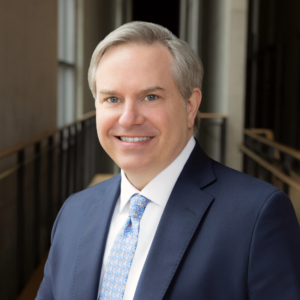
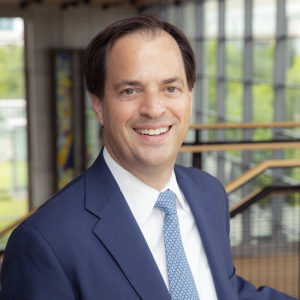
As patients increasingly seek more personalized and preventative health care, practices are rethinking traditional care models. In this episode, Dr. Matti Palo, a board-certified orthopedic surgeon and entrepreneur, shares how he integrates wellness, direct care concepts, and emerging therapies into his practice while navigating the complexities of balancing cash-pay services with insurance-based care. Tune in to learn what it takes to build a modern health care practice that aligns innovation with patient expectations and regulatory realities, and how a disciplined, patient-centered approach can position practice owners for the future.
Listen to the full episode using the player below, or by visiting one of the links below. Contact ByrdAdatto if you have any questions or would like to learn more.




Transcript
*The below transcript has been edited for readability.
Intro: [00:00] Welcome to Legal 123s with ByrdAdatto. Legal issues simplified through real client stories and real-world experiences, creating simplicity in three, two, one.
Brad: [00:13] Welcome back to Legal 123s with ByrdAdatto. I’m your host, Brad Adatto, with my co-host, Michael Byrd.
Michael: [00:19] As business attorneys for health care practices, we meet a lot of interesting people and learn their amazing stories. This season’s theme is The Future of Wellness, where longevity, advanced weight loss solutions, and anti-aging innovations collide. Get ready for insights from the people driving the evolution of the medical industry.
Brad: [00:38] Now, Michael, I’m excited to bring on the guest for the show. Today, we’ll be talking about the intersection of orthopedic surgery and wellness service. I know that sounds weird, but yes, they’re coming together. And Michael, this is a legal show, as you know, and I thought we should address legal updates that happen every once in a while. I’m not sure if you heard the really, really big legal news coming out of the Fifth Circuit of Louisiana. I want to be very clear before we start, this is not legal advice, this is legal nostalgia.
Michael: [01:08] Well, Brad, anytime you start with legal nostalgia or any time of nostalgia, I get nervous because that usually means one of two things, either you’re going to go into 1980s movie talk or some sort of college story.
Brad: [01:22] Well, you’d be correct on both. But in this case, the Fifth Circuit just ruled that the federal ban on home distillery of moonshine is unconstitutional, which means, legally speaking, my freshman year at TCU just got retroactively vindicated.
Michael: [01:40] I’m quite sure, Brad, that the court did not do anything relating to your activities at TCU.
Brad: [01:47] Okay.
Michael: [01:47] But I do want to learn more.
Brad: [01:48] All right. Now, Michael, if you promise not to tell anyone, I have a confession to make.
Michael: [01:54] Well, it’s just the two of us and Kennedy and our guest here. You’re among friends. This is a safe place.
Brad: [02:00] Safe. Okay, safe.
Michael: [02:01] So please, bare all.
Brad: [02:02] All right. Freshman year in college, Easter weekend, Longview, Texas, was the first time I ever drank moonshine. It was served to me in a mayo jar. It was not very aesthetic looking. Luckily, there was no mayo residue added, of course. But it was. I have no regret.
Michael: [02:21] I mean, if this were the red flag season, my first ding would be you said the first time you ever drank moonshine.
Brad: [02:29] Hey, you got that, huh?
Michael: [02:30] Yeah. And it explains a lot about you and explains, for the audience, the potential long-term effects of drinking moonshine even one time. Just look at my partner over here. But excluding the fact that you drank out of a mayo jar, how was it?
Brad: [02:48] Well, I’m not a connoisseur of moonshine, but let’s just say it was not the best tasting drink I ever had. But it should not have been criminal, I guess, is the way I’m thinking about it, Michael.
Michael: [02:59] Okay. Are we still in that safe place I mentioned?
Brad: [03:02] Yes. Yeah, I think so.
Michael: [03:03] Okay. Well, I have to confess too, Brad, I’ve also tried moonshine one time, many years ago. Now, I can’t use the college excuse. I was actually a young adult with young kids when I decided to do it.
Brad: [03:16] Oh, no.
Michael: [03:17] And mine was even more stereotypical. It was at a ranch in rural Oklahoma. And I agree with you on the taste, and I am grateful that it did not blind me.
Brad: [03:29] Yeah, me too. Well, I guess the legal takeaway we can give our audience is that a 150-year-old law struck down still does not mean you can distill moonshine in your backyard. I’m sure there are permits and state laws and other regulations and things you have to worry about.
Michael: [03:44] Yeah. We’re definitely not moonshine attorneys. But that does raise some questions on federal overreach, regulation, and where constitutional limits actually are.
Brad: [03:58] Yeah, agreed. But Michael, it also raises the last question, should anything ever be served out of a mayo jar?
Michael: [04:04] That’s really the lead question that we should be talking about today. And everyone in the audience has heard my opinion on mayonnaise. I believe there needs to be an amendment to the Constitution banning this type of behavior.
Brad: [04:18] Why do you have to be such a hater of mayo, Michael? All right, audience members—to be clear, we’re not encouraging drinking or distilling of moonshine.
Michael: [04:26] Or mayo.
Brad: [04:28] Even if the law allows both. But let’s bring on today’s guest before he regrets joining us.
Michael: [04:34] Okay. Joining us today is our client, Matti Palo. He is a physicist and a board-certified orthopedic surgeon. He has a practice in the New Orleans area. He’s been in practice over 24 years, has 5,000 operations, and he has a unique background, education, and worldview that is really geared towards changing the way health care is delivered and is really interested in this conversation. He’s also a serial entrepreneur, so a doctor after our own hearts. He founded Palo Medical in 2012 with the express purpose of improving solutions in the areas of post-orthopedic surgery recovery and to aid in the treatment of common orthopedic issues. He’s also founded a health care platform that facilitates direct connections between patients and practicing clinicians, and is a co-founder of another startup that manages the entire surgical process for all stakeholders from scheduling through capturing charges involved in surgery. He’s a first-time guest. Welcome.
Matti: [05:52] Hey, thanks guys. I appreciate it, and I’m glad you brought up the blindness associated with moonshine, because that’s the one thing I remember about moonshine that I learned in medical school. So that’s pretty pertinent. Appreciate the intro. Thanks for having me.
Brad: [06:08] Well, since you learned that in med school, which I did not learn because I did not go to med school, does that mean that because you’re in the Greater New Orleans area right now, you’ve never had the opportunity to drink moonshine or distill it yourself?
Matti: [06:24] I definitely have not distilled it myself. True story, I went to the Bourbon Trail to check it out, and I got so fired up after going to one of the distilleries that I started looking up how to distill this at home. I do not know anything about the history of moonshine. And you can imagine, I got about ten minutes into my search and realized that it’s illegal. And I guess that’s where all the moonshine talk came from. Because I was so fired up. They gave me such an in-depth explanation at one of the distilleries that I thought, “I’m definitely doing this. I’m a science guy. I am so in.” And yeah, I was disappointed. So maybe that will change with the new information, the bomb you dropped today.
Michael: [07:13] Yes, exactly. It kind of lines up with health care. Like, every time you want to do something, you find out there’s some law that affects what you can do.
Matti: [07:21] Oh, my gosh, that is so true. So true.
Michael: [07:24] Well, I’d love to start with some introduction and talk a little bit about your path as a physicist and a board-certified orthopedic surgeon. If you want to talk a little more about any of your startups that we talked about in the intro, I’d just love for the audience to learn a little bit about you.
Matti: [07:42] Yeah, I think it’s kind of a meandering course. My undergraduate degree is in physics. I was always drawn to systems, problem-solving, kind of getting to the root cause of how everything happens. It’s so funny, I’m sure there’s other doctors who have undergraduate degrees in physics, but I haven’t met them. And I kind of made the switch. I was in my third year, and I was at a physics party. It was like an episode of “The Big Bang Theory.” AdI was kind of walking around, working the crowd. I’m talking to all the guys, and we’re all at tables of two, and it was all guys. And I kind of flashed forward to the future and thought, “Gosh, I just don’t know that this could be the rest of my life.” Then the next semester I took an honors zoology course, and two things struck me. First, I was really drawn to the biological systems, kind of getting to the root cause of biology. And the second thing was there were girls in my class. So those two things were highly instrumental in my transition from physics to biological science and ultimately medical school. But yeah, it’s pretty interesting, and that background affects how I look at wellness and all those pieces too, getting to the root cause of everything.
Brad: [09:06] Well, that’s smart. I think you made some good decisions there.
Michael: [09:10] And talk about your practice. Tell us about your practice now.
Matti: [09:14] Yeah, sure. I am in private practice. I have run the gamut. I’ve been employed, I’ve been in a group practice, and I’ve been in private practice. I’m a sole practitioner. I do predominantly surgery of shoulders and knees, but I kind of do everything. Like you mentioned, I have been a bit of an entrepreneur. Besides the software and my medical practice, I was a co-founder in a hospital around here, which has been great. It’s physician-owned, which is really, to me, instrumental in how health care should be delivered. A lot of different things have come together with the way I practice. Even the way my clinic is set up is a little bit different. I have patients enter directly into the rooms, and then I have kind of a racetrack around the building. It keeps me efficient, on time, operationally well-grounded, and I just think it’s a great way for me to practice.
Brad: [10:20] Well, that brings us into our first question from the audience perspective. As you heard in the beginning, this season we really are focusing on The Future of Wellness. And when we say wellness, we’re including longevity, weight loss, and anti-aging. But what’s your why for moving into wellness, and what are the problems you’re trying to solve from a traditional orthopedics perspective, which again does not normally fall into that category?
Matti: [10:52] Yeah, I think the why is this big gap between the way traditional medicine practices and what patients are actually looking for. I’ll never forget one of my first businesses in Palo Medical, which you mentioned in my introduction. I had the IP around a cane that helps you stand up from a seated position. Long story short, I did everything for this. I was a surgeon, so I thought I knew how to do everything. We could have a whole podcast on that stupidity in my past. But I manufactured in China, went on QVC, and got it registered and cleared through the FDA as a one-man show. I was on fire, and this was all while I was running my orthopedic practice. One of the things I got humbled by was sales and customer service, because I did all the customer service myself. I would do outreach and talk directly to people, often senior citizens. They would get me on the phone and talk to me for an hour about this cane and how it changed their life. It really gave me a sense of the problems people have and what they’re looking for. I do think there’s a gap between what we provide as clinicians and what people are looking for. People are looking for that Starbucks experience. You walk in, order your coffee, they call you by your first name, look you in the eye, and teach you the vernacular. It probably took me five or six years to learn venti and grande, and I still get it backwards sometimes. But that consumerized experience is what people are looking for in health care as well. From an orthopedic standpoint, there’s also a big fragmentation issue. I’m a surgeon, so you come to see me for surgery, but oftentimes you’re not optimized. We have all these rules from insurance, like requiring a body mass index under 40 before surgery. These people have tried everything, and now they can’t exercise, and they can’t get the weight off. And that’s just one side of it.
Michael: [13:18] Right.
Matti: [13:18] And then the other thing too is affordability. You try to keep the cost down for these guys. So the patients have the same problems. It’s access, it’s cost, they have these things that they’re trying to solve, and we are kind of in the position to help them along the process. I do different things in my practice, and it’s not just the wellness side, but it’s also the financial side, and kind of talking to them. And look, this is something that’s completely changed in my career because probably 15 or 20 years ago, if a patient came in, I never talked money, ever, about what a service is going to cost. And I just assumed if I ordered physical therapy for somebody that they were going and they were getting their physical therapy. They’re going two to three times a week, and then when they would come back to see me and they would say, “Well, I couldn’t afford the copay,” I was like, “What? What are you talking about?” Right? “I ordered it, you have to do it,” right?
Michael: [14:15] Yeah.
Matti: [14:15] So that piece has kind of changed too. But I think the biggest thing honestly that has drawn me to the wellness side is that optimization of the patient, kind of helping them as they are trying to figure these pieces out. How do I keep my bone health good? How do I get the weight off? All of these things, and even some of the other wellness things that are less well-known. Red light therapy is an example that I use all the time. As a physicist, I was fascinated by red light. I was totally going into it expecting it to be bogus and not a real modality, and as I got into the research behind it, I realized there’s more research around red light therapy than there is around a lot of the things that we give every day. So it really is pretty interesting and funny how these things have morphed. But to me, the wellness and orthopedic mix is natural, right? People are trying to thrive. They’re trying to live healthier lives. I’m in a position with my knowledge and expertise to help them in that direction, and if I just take a shoulder, Brad comes to see me for his shoulder, and I’m like, “Well, Brad, you got a rotator cuff tear,” that’s only part of the story. How did it tear? What happened? What led up to it? Number one, how do we optimize you for surgery as we go in to do it? And then ultimately, how do we help you recover better, right? And a lot of these things are kind of in the wellness side. So I see it as an intersection between the two, and I see that as where the future is going.
Michael: [15:44] I’m interested too, that’s so fascinating and it makes so much sense. For the audience sake, an orthopedic practice typically has a heavy insurance bent to it. Do you have a mix of cash pay elements to your practice and insurance? Or talk a little bit about those things that you face as you’re integrating some of these wellness concepts into your practice.
Matti: [16:12] And then the other thing too is affordability. You try to keep the cost down for these guys. So the patients have the same problems. It’s access, it’s cost, they have these things that they’re trying to solve, and we are kind of in the position to help them along the process. I do different things in my practice, and it’s not just the wellness side, but also the financial side and talking to them. And look, this is something that’s completely changed in my career because probably 15 or 20 years ago, if a patient came in, I never talked about money. Ever. About what a service was cost. I just assumed if I ordered physical therapy they were going and getting it two to three times a week. And then when they came back and said, “Well, I couldn’t afford the copay,” I was like, “What are you talking about? I ordered it, you have to do it.”
Michael: [17:18] Yeah, it’s super complicated, and we could probably talk for a long time. That’s a big problem that we’re helping clients solve across multi‑specialties. But it’s really fascinating because you’re coming at it from a place of a gap that you see for the patients that will help them and why they believe they’re showing up. Kind of the Brad shoulder example.
Brad: [17:45] By the way, all that’s correct. I do have a torn rotator cuff, and I do need surgery.
Matti: [17:50] Sorry, I don’t think I broke any HIPAA there because I don’t know if we’ve ever talked about that.
Brad: [17:53] No, we haven’t.
Michael: [17:55] I’ve talked about it on the podcast because I’ve had phases where I had to lift his bag into the overhead on the airplane, and I’ve made sure to tell the audience about it.
Brad: [18:07] Yeah. It’s gotten better.
Matti: [18:08] You’re a good friend.
Michael: [18:11] There’s strings attached to the help I provide.
Matti: [18:14] Yes, that’s right. Your name is listed first.
Michael: [18:20] Oh. Well, another interesting thing about biologics is that it’s a hot topic, and it’s kind of on the cutting edge of medicine. And so what we’re seeing is that there’s a lot of bad actors out there. There’s a lot of differing phases on not just the research, but where it stands with the FDA from an approval process. So what recommendations do you have on how to talk about the health benefits that can come from these treatments?
Matti: [19:08] Yeah, that’s so hard. First off, I have an interesting practice in that I have kids all the way up to 90, 90, 100. One was probably the oldest patient I’ve seen in the last month that I know of. So you kind of have this range of people, and first of all, it’s very interesting to me where they get their information. So a lot of these guys, this is a true story, and it seems like I’m making this up, but I’m not, and maybe you guys hear this all the time, but I had a 19‑year‑old college student. I did a stabilization procedure for his shoulder. Basically, he was dislocating his shoulder, and I fixed it so it didn’t dislocate anymore. He always came in with his parents to the appointments, but this one appointment he comes in without his mom and dad. Toward the end of the appointment he says, “Hey, Doc, I’ve been using BPC.” I’m like, “What? Really?” And he’s like, “Oh, yeah.” I hear this kind of thing all the time, but this one was interesting to me because I asked, “Where are you getting it?” He said, “I ordered it from the equivalent of an Amazon.” And I’m like, “And then you injected yourself with it?” The hard part is I’ll probably be using it someday. Right now I’m not because it’s on the do not compound list. It just got through Category 2 status. If I’m saying that wrong, I apologize, but it’s not able to be compounded yet. So if you’re getting it online, you’re either using it for research purposes or you’re using something from an unregulated pharmacy, which is just crazy to me. I try to explain this to these guys. I’m not trying to poo‑poo it. It’s probably great, but there’s not a lot of research and studies around it. So my first rule when I’m trying to evaluate these things is humility. The more exciting the claim, the more disciplined we have to be before we start spitting it out there. These kids are getting all their information from influencers, from TikTok and Instagram. I get these things forwarded to me all the time. I went on spring break with my son and four of his friends, and the first night we’re sitting around the table and they’re pelting me with peptide questions. I’m like, “How do you even know what peptides are?” They honestly knew more about it than I did. So I thought, “I guess I better learn about these.” To me, the right approach is to not be cynical but also not reckless. You have to have disciplined curiosity. Red light is a great example. If you would have asked me before, I would have said it doesn’t work. But you go into it, you look at the research, and you study up on it. You have good conversations with patients, explain the pros and cons, and talk about what the evidence might support. You also have to be honest and tell them you don’t really know because there aren’t a lot of great studies. In orthopedics in particular, about 67% of our studies are level four studies, meaning, “I did this to 20 patients and these were my results.” It’s not real evidence. And if you think about what it would take to do a prospective double‑blind study on peptide therapy, you’d need 100 people to agree to the procedure and 100 to get a placebo. No one’s going to do that. And from the wellness side, I’d have to do it for free, paying for the compound myself, because it’s not like I have a sponsor.
Michael: [23:25] Yeah.
Matti: [23:25] So it’s really hard to kind of get there with this. So I approach it with a framework. First, what’s the claim that’s being made? Is that real? It can’t be generic. It can’t just be for optimization or regeneration. We really need to say, “Hey, specifically, what is the outcome that’s being implied?” Second, is there evidence? Is there any evidence around it? What is the quality of the evidence? That speaks to what I was talking about a minute ago. You might have a small case series. Are there big meta‑analyses? And then the third is, is it standardized? PRP is a great example of this. PRP is technically a biologic. It’s not a peptide, and I don’t mean to conflate the two, but for years we didn’t really know if it worked or not. It turns out there’s not a lot of standardization in how many platelets you’re getting. There’s a big difference between a 10X platelet dose and a 4X platelet dose. That’s pretty interesting as well. And then we alluded to the risks. What are the risks of this procedure? Is it worth the risk? Do we have enough evidence in that second bucket? And then finally, probably just as important, is who’s benefiting from it financially. I’m not saying that financial benefit is wrong. It just needs to be transparent. I think it’s an interesting space, and everybody has to develop their own framework that works for them. But I think that’s one of the roles we have as physicians. We’ve had the training, we’ve learned about it, and we can have these conversations with our patients about what works and what doesn’t work, and what we think. And of course, I know you guys as attorneys know how important informed consent is. Let’s make sure we have all the information out there, documented properly and explained properly, and that’s a whole other conversation.
Brad: [25:36] Well, that’s awesome. And we got time for one question left, so this will be like a speed round question. But I want you to look out into the future. You’ve been coming at this over the last almost decade, it sounds like, looking at being a doctor‑preneur and a lot of different things that are changing in medicine. Coming at it from the orthopedic side, but then looking at other ways to help improve your patients’ outcomes. Now I’d like you to think about the next five to 10 years. How will this wellness space impact orthopedics in general? What will change for the typical orthopedic practice when they start thinking about wellness?
Matti: [26:15] Yeah, I think it’s applicable across all specialties for the future of longevity and wellness. Like I mentioned at the beginning, I think people are going to be looking for less fragmentation. They’re going to be less transactional. You want an integrated plan. Weight loss—how do I lose weight without losing muscle mass? How do I build up my bone health? Where do I get my information from? How do I sleep better? All of these things influence the orthopedic space too. It’s really the same all the way across. I think direct care models are going to be the future. That’s a model that’s growing all the time, including direct primary care and even direct orthopedic care. I think that’s one potential way of removing some of the friction we see in the current health care system, and it also allows better integration of these pieces. I really think that’s going to be a big part of the future. I think wearable data has big‑time orthopedic implications, but also general wellness implications. I have my own wearable, and I track my sleep. They say you can’t change what you can’t measure, and I’m a testament to that because I’ve gone from averaging four to five hours of sleep a night up to seven, which is huge for me. It really does work. I think recovery is going to become a legitimate part of health care. I hope we shift the wellness continuum from sick care on one end to preventative longevity and wellness. I also hope some of the regulations become clearer over time, and I know you guys help a lot with those pieces. That’s my hope for where this goes, not just in orthopedics but across medicine in general. Improving access and cost for patients, improving the doctor‑patient relationship on the physician side, reducing administrative burden, and maybe limiting burnout. These are all things I hope we move toward, and I think that’s where things are heading. People are very frustrated with how things are right now, and there’s a lot of opportunity. I’m excited about it. I think there are a lot of cool things coming.
Brad: [28:55] Fascinating. Well, we’ve, believe it or not, sped through our time. Thank you so much for joining us on The Legal 123s with ByrdAdatto. We’re grateful for you, and we’ll go to break and come back with a quick wrap‑up. Appreciate you.
Matti: [29:10] Sounds great. Thanks, guys.
Access+: [29:11] Many business owners use legal counsel as a last resort, rather than as a proactive tool that can further their success. Why? For most, it’s the fear of unknown legal costs. ByrdAdatto’s Access+ program makes it possible for you to get the ongoing legal assistance you need, for one predictable monthly fee. That gives you unlimited phone and email access to the legal team, so you can receive feedback on legal concerns as they arise. Access+, a smarter, simpler way to access legal services. Find out more. Visit byrdadatto.com today.
Brad: [29:45] Welcome back to The Legal 123s with ByrdAdatto. I’m your host, Brad Adatto, with my co‑host Michael Byrd. Now, for those who don’t know, this season our theme has been The Future of Wellness, and we had an amazing conversation with Matti Palo. Coming from the orthopedic world and hearing everything, we liked it so much that we let him go a little bit longer than usual because we wanted to keep going. But unfortunately, audience members, believe it or not, we are out of time today. But don’t worry. We’ll be back next Wednesday with a fan favorite, Can a Medical Practice Offer Stem Cells or Exosomes, with Dr. Jordan Plews.
Brad: [30:22] Thanks again for joining us today. And remember, if you liked this episode, please subscribe. Make sure to give us a five-star rating and share with your friends.
Michael: [30:30] You can also sign up for the ByrdAdatto newsletter by going to our website at byrdadatto.com.
Outro: [30:37] ByrdAdatto is providing this podcast as a public service. This podcast is for educational purposes only. This podcast does not constitute legal advice, nor does it establish an attorney-client relationship. Reference to any specific product or entity does not constitute an endorsement or recommendation by ByrdAdatto. The views expressed by guests are their own, and their appearance on the program does not imply an endorsement of them or any entity they represent. Please consult with an attorney on your legal issues.