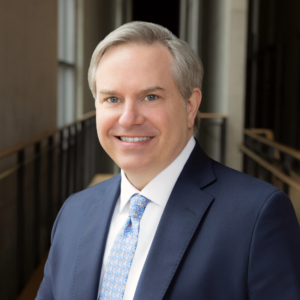
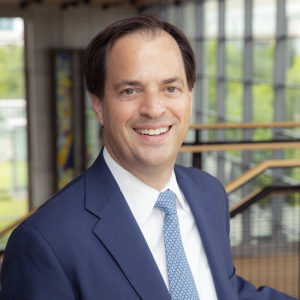
The future of aesthetics is non‑surgical, but strategy matters more than speed. In this episode, plastic surgeon and industry leader Grant Stevens, MD unpacks how longevity, weight loss, peptides, and emerging technologies are rapidly outpacing surgery—and why that shift creates both opportunity and risk for aesthetic practices. As innovation moves faster than ever, the real challenge becomes deciding which services actually fit your patients, your business model, and your tolerance for financial and regulatory risk. Tune in for insights into how practices can evaluate these innovations and decide what to prioritize now to stay competitive without falling out of compliance.
Listen to the full episode using the player below, or by visiting one of the links below. Contact ByrdAdatto if you have any questions or would like to learn more.




Transcript
*The below transcript has been edited for readability.
Intro: [00:01] Welcome to Legal 123s with ByrdAdatto. Legal issues simplified through real client stories and real-world experiences, creating simplicity in three, two, one.
Brad: [00:13] Well, welcome back to Legal 123s with ByrdAdatto. I’m your host, Brad Adatto, with my co-host, Michael Byrd
Michael: [00:20] As business attorneys for health care practices, we meet a lot of interesting people and learn their amazing stories. This season’s theme is The Future of Wellness, where longevity, advanced weight loss solutions, and anti-aging innovations collide. Get ready for insights from the people driving the evolution of the medical industry.
Brad: [00:42] Well, Michael, I’m excited about our world-famous guest for today’s show. In fact, this is his third time on our podcast, and we’ve actually been on his podcast twice.
Michael: [00:52] Me too, Brad, but first, while I was doing a little show prep, I was reminded of a story about cloning.
Brad: [01:00] Ooh.
Michael: [01:00] This is not a new story, but I am realizing that you and I have not talked about it.
Brad: [01:04] Okay.
Michael: [01:05] Did you see the story a while back about Tom Brady cloning his dog?
Brad: [01:09] Absolutely. It was a very fascinating read.
Michael: [01:11] Well, apparently, for those who haven’t heard, his pet dog, Junie, was cloned from his beloved pet, Lua, who had died in twenty twenty-three. Brady is an investor in a company, Colossal Biosciences, and he had collected a blood sample from Lua, and Colossal Biosciences took it from there.
Brad: [01:34] Well, first fun fact, audience members, is Colossal Biosciences is actually based in Dallas. Second, I guess not fun fact, but assumption here, we’re assuming that Juno and Lua were good dogs.
Michael: [01:47] Yeah, I would think so, yes. I am curious, Brad, if money was not a factor, how would you feel about cloning one of your pets?
Brad: [01:58] Well, actually, the funny thing is, as soon as I actually read that article, I was talking to my wife, Micah, about it, and we were talking about if we would do the same, and we both simultaneously agreed that we would clone our dog, Biscuit, because he was the goodest of all dogs. What about you, Michael?
Michael: [02:14] Samson would theoretically be a candidate. I’d have wonder if I would be able to eliminate bad habits like barking at cars, people, and dogs that walk in front of our house, and from eating women’s panties. Think they could clone that out of him?
Brad: [02:34] Well, besides that, I guess he’s a good dog. But audience members, if we had more time, I could tell you so many stories about why Samson should never be cloned.
Michael: [02:42] We do love Samson so much, but yes, you’re right. He probably should not be cloned.
Brad: [02:49] All right. So do we know how Tom’s dog, Juno, is doing?
Michael: [02:54] Junie.
Brad: [02:54] Junie!
Michael: [02:55] I don’t. I kind of got trapped whenever this came out and all the memes. The funniest one I saw was someone speculating that Tom Brady himself actually seemed like a clone.
Brad: [03:06] Well, that’s a fair assessment. All right. Well, let’s bring on today’s guest.
Michael: [03:10] Okay. Longtime close friend, Grant Stevens, is joining us today. He is a plastic surgeon and has a long list of accolades. He is a University of Oregon grad, WashU School of Medicine, heavily, heavily involved with USC Division of Aesthetic Surgery, ran fellowship for many years. He’s the past president of the Aesthetic Society and has published countless scientific research articles to better the field of plastic surgery, and he has a podcast himself that we’ve been on. We mentioned The Technology of Beauty. Grant, thanks for being here.
Grant: [03:54] Hey, thank you so much, guys, for having me. It’s an honor and a true pleasure to be on your show for the third time. Thank you.
Brad: [04:02] Awesome, Grant. Well, we know that you also are a huge dog person. Can you see yourself cloning one of your beloved dogs?
Grant: [04:11] Absolutely. I was sitting here thinking of all the wonderful dogs I’ve had, and I have three here now. I would clone all three of them, especially Tuxedo. But I can think back on the dogs I’ve had in my youth and earlier years and absolutely, I would clone my dogs. No question.
Michael: [04:32] I don’t think I think it’s an understatement to say that Grant’s a huge dog person.
Brad: [04:39] Well, I love the name Tuxedo. That’s a very cool name.
Grant: [04:43] He goes by Tux, but his formal name is Tuxedo.
Michael: [04:46] Love it.
Brad: [04:47] Clearly his formal name.
Grant: [04:48] He responds to Tux.
Michael: [04:50] All right, Grant, let’s jump in. So this season, we’re focusing on the future of wellness. I know you and I have had many conversations about this. When I use the word wellness, I’m talking about kind of the catchall for longevity, weight loss, anti-aging. There’s that whole new area, new-ish area that’s kind of invading medicine and particularly invading aesthetics. But first I want you to introduce your podcast to the audience. Talk about The Technology of Beauty, and then when this on release, we’re just days away from the Aesthetics Innovation Summit. I’d love for you to talk a little about that as well.
Grant: [05:35] It’d be my pleasure. Thank you. So, The Technology of Beauty is a podcast. We have about two hundred shows on it. It’s a feed through all the typical podcast feeds. The one I like the best is YouTube because you get to see it and listen to it. And the podcast has been around for a few years, and I have a chance to interview the movers and shakers of the beauty business. I have the opportunity to interview both industry as well as providers, but it’s primarily geared towards new technologies, new goods, services. It’s exciting things. Varied, varied guests. We have a studio in Manhattan Beach, California, and every Tuesday we have a new program. However, some Tuesdays we’ll play an older program that is germane to news or a reason for it. But I would encourage you to check out The Technology of Beauty if you’re interested in aesthetics, both surgical as well as non-surgical. And as we’re going to find out today, there’s a heavy emphasis on various non-surgical aesthetic services, goods, products, and so forth. So that’s The Technology of Beauty. And along with that, with no direct relationship, but over time it has started getting related, is an event we started seven years ago called Aesthetic Innovation Summit, or AIS. And that is on the Wednesday before the Aesthetic Society show that is now called MEET, capital M-E-E-T, all caps. And that is our annual meeting of the American Society for Aesthetic Plastic Surgery, or what we now call the Aesthetic Society. I am the co-founder and chair of something called Aesthetic Innovation Summit, and that is a lot like Technology of Beauty, but it’s all in one day, and we include industry, finance, as well as clinicians and entrepreneurs. It’s extremely exciting. This year it’s on May 13th, which is Wednesday, and it’s in Boston, immediately preceding the Aesthetic Society show, MEET. And you guys have been on it. You’ve been to it many times. We film there. We film Technology of Beauty at AIS, as well as I get the chance to interview people on stage, kind of like a fireside chat, almost like what you’re doing with me right now, and bring people on that people wouldn’t otherwise get a chance to hear what they’re planning. This year we have Nadeem, who’s the CEO of Revance. A lot of people don’t know him, although he’s been on Technology of Beauty, and he recently took over as the CEO of Revance. As you know, Revance was sold to Crown. He was the CFO of Crown. Crown and Revance came together. He’s now the CEO. And he’s a very exciting interview, and what he’s doing is somewhat novel, and I’m going to pull that out of him during the fireside chat in the morning of Wednesday, May 13th. So I encourage you, if you’re interested and coming to Boston, we have tickets online. We have some complimentary passes for Aesthetic Society members, and I would encourage you to come check it out.
Brad: [09:25] That’s awesome. And I can vouch for you, Grant. We’ve been invited multiple years to come see it. It is fascinating what is going on there. Going back to your movers and shakers, they’re all there, and I’ve really enjoyed some of the panel talks y’all have had up there. Even Michael and I just being silly lawyers, hearing what’s going on in the industry has been fascinating, so I’m glad that you continue to promote that event. But that easily bleeds into what I was thinking of while you were talking. Our focus for this is really on the wellness side, and based on all the people you’re visiting with, we’re seeing this wave of interest in wellness. How is it impacting the aesthetic industry?
Grant: [10:08] Well, I like how you bundled up all of them into the concept of wellness. And for me, it’s really has to do with looking and feeling the best we can at any age. That’s really the way I sort of personalize it. And it includes those areas that you talked about at the top of your show, and we’ll touch on them. But really, it’s more than just surgery. It’s way more than just surgery. And plastic surgeons originally started as surgeons, but as we look at this and we look at the influence of non-surgical and minimally invasive technologies, it just keeps on going. And we can start anywhere, and right now, because it’s such a hot topic, we can talk about weight loss, and then out of that, what happens. We all know that we have a problem in America, overweight, obesity, and so forth. But now with various modalities, and they’re not just one anymore, there’s various pharmacologic interventions which lead to ten, fifteen, and sometimes twenty percent weight loss, which originally started to minimize the effects of diabetes in people right on the cusp of becoming diabetic. But out of that grew this huge industry of weight loss, pharmacologic weight loss. And with that came people feeling better and potentially looking better. In fact, they do look better, and they’re healthier. But, oh, by the way, they’ve got extra skin, or they have skin laxity, or they lost weight everywhere, including places perhaps they didn’t want to lose weight. So that opens the door to skin tightening and body contouring, both surgical and non-surgical. It also opens the door to literally putting fat back in or other fillers. Say the gaunt face, because you may look great, your tummy may be flatter, but what if your face looks gaunt and you look worse on your face, potentially? And I’m not saying that happens all the time, but there’s an area there. There’s also the concept of better living through chemistry, and I use that euphemistically, but people on peptides and hormonal replacement. We’ve had hormonal replacement for a long time. We think of women on birth control pills or perimenopausal women on estrogens and progesterone’s. But now we have people of every age group coming in and being tested, men and women, and then supplementing the hormones. Take men with testosterone, women with testosterone sometimes, as well as estrogen and progesterone. So there’s the hormones. Then there’s also the peptides, and you know about all these IV clinics where we’re injecting IV peptides. We also have topical peptides and transcutaneous delivery of these various peptides and other biologically active substances, and that’s a whole other subject we could go into, and maybe we’ll talk about it a little bit later. But we have these companies, and they’ll be on AIS, Aesthetic Innovation Summit, that are bringing very novel technologies to touch on and help us solve the problems I just talked about. And I could keep going nonstop, and I don’t want to do that. So I hope I’ve given you somewhat of an answer, and we’ll leave it at that. And you can take me on from there.
Brad: [13:35] Yeah. No, that’s great. And what I’ve always loved about you, Grant, is you’re so passionate about this industry, and it just comes through so quick, so easily. Just hearing you talk about it makes me so excited for the industry and where it’s going. But I’ll let you jump in, Michael.
Michael: [13:50] No, I’m curious. I want to tap into this. For years when you were at your practice, you would be adding these new technologies all the time. How do you advise the practices? There’s so much exciting stuff about how to consider what to add and how to add some of these new services.
Grant: [14:18] You know, Michael, I did the fellowship for twenty-seven years, and my fellows, after their residency, would be with me for a year. They’d always say, “Dr. Stevens, what should I add? I’m going to go into practice. What should I buy, or what should I provide?” And there’s a lot of ways of looking at this, but the bottom line is it’s got to be profitable or you’re not going to have a practice. So to answer that question, it depends on the audience I’m speaking to, vis-a-vis, am I talking to a person starting a practice? Am I talking to private equity that owns a number of practices? Am I talking to an established surgeon or physician or even derm ENT, and so forth? And then is it driven by the technology, or is it driven by the fact that we need to make a profit? Now, not everything does make a profit. Some things attract patients for other things. And as you know, I was never one to shy away from new technologies. I’m addicted to it. I mean, that’s why I started The Technology of Beauty, and that actually came from my practice. That was my mantra for the practice. But I don’t think that’s for everyone because you could take devices for a moment. You could buy so many devices, you bankrupt the practice, and now you don’t have a practice, and we’ve all seen that. So before I answer the question, I ask back to the person, “Who’s the audience?” If a person asks me and they’re going into practice, I’d say, “Well, if you’re non-surgical, you have to have some sort of IPL device.” And I’m not here to endorse any particular brand of IPL, but I found that to be a good starting point for people over the years. It doesn’t really get to what we’re talking about per se, but there are some things we’re talking about that take very little capital to put in your practice. So when we talk about non-surgical weight loss or we talk about peptides and other things to improve health and wellness, those things are easy to put into your practice and very inexpensive. Now, when we start talking about technologies and capital acquisitions, one has to do some very serious research and soul searching. What do you want to put at risk? How much capital do you want to put at risk? Thankfully, there are a lot of ways these things can now be obtained or financed depending on how companies sell, lease, or provide them. And there are some very ingenious models that are coming out right now. They’re going to be discussed at AIS. I’ll give you an example, and I’m purposely going to be a little vague because I don’t want to steal the thunder. Imagine eight or ten capital devices that are on the table, and imagine you can pick three of them. Maybe it’s a non-surgical skin tightening device, a fat reduction device, and a skin quality device. Or it could be a laser. You pick three. You pay a flat monthly amount to the company that has access to all of them. At the end of a year, you reassess. Which ones have been most effective in your practice? What’s the ROI? Maybe one’s a dog, so you get rid of it. In a traditional model, it becomes a coat rack pushed into the corner, collecting dust, and you’re out the capital or lease. But imagine if you could send that back and replace it with a better-performing device. You still have three. Over time, your payments go toward ownership. After three, four, or five years, you own the three that are doing well. Or imagine a new technology comes out, and you trade one in and apply that credit toward the new technology. There are many exciting new technologies on the horizon right now. Some are commercially available, some aren’t, and they’ll be presented at AIS. We also have a Shark Tank area, and every year it gets the highest ratings at AIS. Some of the technologies presented there this year are revolutionary because people are moving away from surgery. They don’t want anesthesia, risk, downtime, or scarring. We’ll never totally replace surgery, but if someone loses twenty, thirty, or forty pounds and has loose skin, they may not want surgery. But if they can get sixty or seventy percent improvement with non-surgical technology using ultrasound, radiofrequency, laser, or other energy sources without downtime or anesthesia, most people would say that’s a great deal. And I’ll tell you right now, that exists – and that’s exciting.
Michael: [20:25] Wow.
Grant: [20:25] And so when we talk about overall health and wellness, again, it starts with the things we’re talking about, weight loss and improved quality of life, but there are non-surgical, minimally invasive technologies out there that will improve the final result and contribute to that wellness that you were talking about.
Michael: [20:43] That’s amazing.
Brad: [20:44] Yeah. I can tell you, Grant, you nailed it on the mistakes that people make. Nothing against these trade shows. Everyone who works at those shows is doing a great job of trying to explain to doctors why they need products, but sometimes they get so excited they buy that hundred-thousand-dollar machine, and their patients don’t need it. Then they want to return it and can’t, because it’s not returnable. The number of times Michael and I have had this conversation with clients who want to try something different but can’t, or where the newest machine comes out and they’re stuck with the old one, is countless. So what you’re describing is very exciting just to hear as something that’s coming down the pipeline. But Mike, I know we have time for maybe one more question, and I was thinking you were already leaning that way with the technology, but I’d love to hear your thoughts on where longevity, weight loss, and anti-aging are going to be five years from now, especially in the aesthetic society.
Michael: [21:40] Space.
Brad: [21:41] Space, yeah.
Grant: [21:41] Well, obviously I don’t have a crystal ball, but I think the past and the present help us predict the future. We’ve already identified a few things. There’s a trend away from surgery. We know that. Non-surgicals have increased tenfold faster than surgery. Five years from now, we will have more non-surgical options. As a surgeon, I’m not suggesting we won’t do surgery. Surgery will continue to improve and become less invasive. It already is compared to ten or twenty years ago. But I believe non-surgicals will continue to grow at their current pace, and they’ll address things like skin quality, appearance, laxity, and redundancy. There’s also redistribution of volume. It won’t all be fat, but many companies presented at AIS and elsewhere are processing fat and making it more effective. And it’s not just fat. There has been some movement away from hyaluronic acid fillers, though they’ll still have a place, but there are other fillers that stimulate the body to produce collagen and improve both skin quality and contour. People are losing weight across the board. We talked earlier about midface volume and the gaunt face. The same applies to the breast. Breasts are largely made of fat, and women are losing weight, which leads to breast volume loss and sagging. We now have ways to restore volume with fat and other approaches, and those techniques will continue to be refined, including non-surgical and minimally invasive breast lifts. Looking five years ahead, surgery will continue to grow, but it won’t keep pace with non-surgicals. Non-surgical treatments will likely grow at ten times the rate. We’ll also see broader access to these technologies beyond plastic surgeons. In Brazil, for example, many fillers and toxins are administered by dentists. Globally, aesthetics are no longer limited to plastic surgeons, dermatologists, and facial plastics. There are other extenders and non-traditional providers entering this space. I don’t make the rules; I’m just describing what I see. Right now, it’s estimated that ten percent of dentists in the United States provide aesthetic services. That’s roughly thirty-five thousand dentists. In five years, that could easily be twenty or thirty percent. Dentists are increasingly moving into the aesthetic market, particularly the face and neck. I’m not suggesting I agree with all of it or that they should work below the clavicle, but it is happening. I’ve seen it already in Brazil over the last fifteen years. I think we’re going to continue to see dentists providing aesthetic services.
Michael: [25:33] Do you think-
Grant: [25:34] And I think it’ll crawl into laser and light-based technologies, as well as various capital acquisitions and injectables.
Michael: [25:41] Do you think, Grant, that aesthetic practices, whether it’s a med spa or even a traditional plastic surgery practice, will start offering or further offering some of these wellness-type services like IV peptides and exosomes if that ever becomes FDA approved?
Grant: [26:08] Yeah. We haven’t talked about exosomes, and that’s one of the things that really could be a whole other show, with topical and now injectable options. But yes, if they don’t, they’ll be left in the dust, Michael. It’s like the seven twenty-seven study we talk about, which we don’t have time to get into right now. But in a nutshell, if they’re not providing non-surgical and wellness services, patients will get them from their dentist, gynecologist, or general practitioner. As we move into the next five, ten, fifteen, or twenty years, plastic surgeons must provide these health and wellness services. If they don’t, they’ll become dinosaurs. It’s an absolute essential, and I’ve said this for years. I said it during the early days of CoolSculpting, and even going all the way back to liposuction. If we’re talking to plastic surgeons or plastic surgery roll-ups, they must include this as part of their offerings. Clint and I co-founded a series of med spas called Orange Twist, and they’re now all over the country, including several in Texas. It’s physician-light and focused entirely on health and wellness, providing injectables, lasers, light-based technologies, and services like exosomes and topical therapies. We also haven’t touched on hair yet. Looking and feeling your best includes hair for both men and women, perhaps especially women. During COVID, many women lost hair, and as they enter perimenopause, hair density and thickness become a major concern. That business is gigantic, and women love it. That’s where Get Hair MD comes in. There are topical, oral, light-based, energy-based, and injectable approaches. There are many ways to improve hair for both men and women. I could go on.
Michael: [28:21] Fascinating. Yeah. That was great.
Grant: [28:25] And I know we said twenty-five minutes. We could talk for five hours.
Michael: [28:29] Well, our time flew by. It was amazing. I’m grateful to have you joining us on The Legal 123s with ByrdAdatto for the third time. We’ll go to break and do a quick wrap-up. Thanks for joining us.
Grant: [28:45] It’s my absolute pleasure. I hope you come back on my show, and I look forward to seeing you in Boston on Wednesday, May thirteenth, at the Aesthetic Innovation Summit.
Access+: [28:54] Many business owners use legal counsel as a last resort, rather than as a proactive tool that can further their success. Why? For most, it’s the fear of unknown legal costs. ByrdAdatto’s Access+ program makes it possible for you to get the ongoing legal assistance you need, for one predictable monthly fee. That gives you unlimited phone and email access to the legal team, so you can receive feedback on legal concerns as they arise. Access+, a smarter, simpler way to access legal services. Find out more. Visit byrdadatto.com today.
Brad: [29:29] Welcome back to Legal 123s with ByrdAdatto. I’m your host, Brad Adatto, with my co‑host Michael Byrd. Now Michael, for those who don’t know, our theme this year is The Future of Wellness, and we had such a great conversation with Grant that we probably went on technologies and wellness. Probably went over a little bit today.
Michael: [29:44] Yeah.
Brad: [29:44] But, I think we can just have one quick takeaway for our audience members.
Michael: [29:48] Yeah. If you’re going to be adding these services, the reminder on scope of practice is so important that you figure that out. A lot of these longevity peptides and related treatments are outside the normal course of aesthetic training. Everyone has to make sure they’re properly trained and that they have the right licenses involved in the treatment.
Brad: [30:12] Well, audience members, that’s all the time we have today. But next Wednesday, we’ll be back as we continue to explore the future of wellness when our good friend and client, Dr. Paul Frank, joins us to discuss the impact wellness is having on the dermatology industry.
Brad: [30:26] Thanks again for joining us today. And remember, if you liked this episode, please subscribe, make sure to give us a five-star rating, and share with your friends.
Michael: [30:34] You can also sign up for the ByrdAdatto newsletter by going to our website at byrdadatto.com.
Outro: [30:41] ByrdAdatto is providing this podcast as a public service. This podcast is for educational purposes only. This podcast does not constitute legal advice, nor does it establish an attorney-client relationship. Reference to any specific product or entity does not constitute an endorsement or recommendation by ByrdAdatto. The views expressed by guests are their own, and their appearance on the program does not imply an endorsement of them or any entity they represent. Please consult with an attorney on your legal issues.