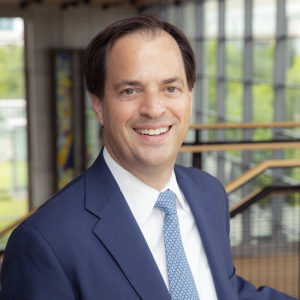
What happens when patient demand pushes medical practices beyond their traditional scope? In this episode, Manhattan‑based dermatologist and educator, Dr. Paul Jarrod Frank shares the growing pressure providers face as wellness, longevity, and preventative care reshape patient expectations. From GLPs and peptides to broader lifestyle conversations, Dr. Frank shares how practices can thoughtfully expand services while navigating compliance, training, and the evolving standard of care. Tune in to learn how to evaluate new opportunities, meet patients where they are, and grow without chasing trends or compromising patient trust.
Listen to the full episode using the player below, or by visiting one of the links below. Contact ByrdAdatto if you have any questions or would like to learn more.




Transcript
*The below transcript has been edited for readability.
Intro: [00:04] Welcome to Legal 123s with ByrdAdatto. Legal issues simplified through real client stories and real-world experiences, creating simplicity in three, two, one.
Brad: [00:16] Well, welcome back to Legal 123s with ByrdAdatto. I’m your host, Brad Adatto, with my co-host, Michael Byrd
Michael: [00:22] As business attorneys for health care practices, we meet a lot of interesting people and learn their amazing stories. This season’s theme is the future of wellness, where longevity, advanced weight loss solutions, and anti-aging innovations collide. Get ready for insights from the people driving the evolution of the medical industry.
Brad: [00:42] Well, Michael, I’m real excited to bring on the guest for today’s show. He’s going to come in and talk to us about wellness and the services of dermatology.
Michael: [00:51] I’m excited too. We have a longtime friend and client joining us today. Before we start, need a little test for you again.
Brad: [00:59] Oh, okay.
Michael: [01:00] You surprised me recently when we discussed looksmaxxing, and I did not think you would be familiar with it.
Brad: [01:07] Yes. First, I’m excited that I know these things. And second, I’m sure I’m going to disappoint you again with something that you’re about to ask me.
Michael: [01:17] I’m hoping so. Are you familiar with the term regularmaxxing?
Brad: [01:25] Well, scratch what I just said about being so smart. I have no idea what regularmaxxing is. If it has anything to do with looksmaxxing, which is looking better, I do not think regularmaxxing has anything to do with looks, so it would be too obvious.
Michael: [01:39] Yes. I read an article in Business Insider recently, and this is the latest Gen Z trend. The idea with regularmaxxing is a retrofit idea that we grew up with. They are looking to find a local bar, restaurant, or coffee shop where they spend all their time and everyone knows their name. They are exhausted from years of chasing exclusive reservations, trendy foods, and viral videos.
Brad: [02:08] Well, Gen Z, welcome to my world. Apparently, I love regularmaxxing.
Michael: [02:14] Right? Gen X love language. It’s actually a bit refreshing to see the younger generation seek the human connection. Silicon Valley is looking to capitalize on this thirst for regularmaxxing. There’s an app called Resy that focuses on loyalty rewards for restaurants in a handful of cities, including New York.
Brad: [02:36] Yep, very familiar with Resy.
Michael: [02:38] Do you h- have any haunts where people know your name, Brad?
Brad: [02:42] Well, as you probably know, and audience members, I do like to have a cocktail sometimes, and there is a place called RND Kitchen that is known as the west office because I go there so often. I went there so much that not only did I know all the bartenders, but I got Valentine’s Day cards and Christmas cards from the bartenders. And then there’s a few other restaurants that we hit a lot also. What about you, Michael?
Michael: [03:10] Well, first, audience, I can confirm, because I was sitting with Brad there years ago when they handed him a Christmas card. But yeah, there’s a place that I’ve gone to since I was a little kid called New York Sub in the Park Cities in Dallas. Sadly, they just closed a month ago.
Brad: [03:35] I saw that.
Michael: [03:36] They had two owners, and the prior owner, who I knew since my childhood, I ordered from as a kid and into my adulthood when I was taking my kids there. Around the time that I got divorced in 2010, he had also recently gotten divorced, and he tried to take our relationship to a new level. Instead of just talking when I was getting a sandwich, he wanted me to go hit the town with him. I never took him up on that because I think he lived a faster lifestyle than I did. But yes, I do feel like I accomplished regularmaxxing with New York Sub.
Brad: [04:24] Very well done. Well, I think we should bring on today’s guest, Michael.
Michael: [04:27] Okay. Our friend Paul Frank is joining us, who is a dermatologist in Manhattan. He was born and raised in Manhattan, went to New York Medical College, and trained in New York. He practices traditional dermatology and cosmetic dermatology. He has up to 275,000 followers on Instagram and has street cred with my kids because he’s certified. Our common bond is that he is passionate about education and training like us, and we’ve bonded over this over the years. Paul, thanks for being here today.
Paul: [05:08] Thank you so much. I learned a new word today, regularmaxxing. I thought it was more in pursuit of the dad bod. I thought that was going to be regularmaxxing.
Michael: [05:20] That makes a lot of sense.
Brad: [05:21] It does.
Paul: [05:21] We have plenty of spots like that in New York too, restaurants and bars that have been around for 40 plus years since I was a kid that pride themselves on regular customers. I’m glad some people are doing that. I actually think it’s a very important part of medicine as well. In a world today where a lot of big business has entered medicine, dentistry, and health care, I think it’s so important to create an environment much like the old version of solo practitioners and family‑owned businesses, where different generations of doctors would join and where it gives a sense of regularity and continuity to patients. I always kind of looked at my practice like regularmaxxing for people, as opposed to situations where there’s a different PA, nurse, or doctor every time someone comes in.
Brad: [06:18] Yeah.
Michael: [06:18] Yes, you know their name. Yeah.
Brad: [06:20] Well, that’s awesome. And since you grew up in New York, Upper East Side most of your life, is there a place that you regularmaxed in, that you walk in and they’re like, “Hey, it’s Paul”?
Paul: [06:31] Well, if you’re talking the Upper East Side, I grew up going to the Carlyle Hotel and Bemelmans Bar, which is a famous jazz club there. Carlyle is a staple of New York. And believe it or not, me and my dad still go there. He’s eighty‑four. And we walk in, and the doormen that have been there for 40 years and the bartenders who have been there, that’s our regular. I mean, it’s kind of high‑end regularmaxxing going to the Carlyle Hotel. It’s not like going to Cheers. But there are some great spots like that in New York for the people who really want to be real New Yorkers.
Brad: [07:07] That’s amazing. Very cool.
Michael: [07:08] Well, so we’ve had you on before, but I’d love for the audience who doesn’t know you, hasn’t met you yet, to tell us a little bit more about you and PFrankMD.
Paul: [07:19] I’m a general dermatologist by trade. Over time, my expertise specialized in more dermatologic surgery, minimally invasive aesthetic surgery, and I was in solo practice for many years. Over the last decade, I’ve expanded the number of offices and the number of providers so that we really have more of a full spectrum of dermatologic care. Everything from insurance‑based body checks, melanoma screenings, and basal cell removal, all the way up to tumescent micro liposuction and putting people under anesthesia for CO2 re‑resurfacing. I really pride myself on practicing the type of dermatology and aesthetic medicine that a lot of other providers don’t do. We don’t just take syringes off the shelf and have one machine. We have about 40 different technologies in each of our offices.
Brad: [08:20] Wow.
Paul: [08:20] And we like to stay on the cutting edge. One of the big things, which I know is the topic of today, is really entering the field of longevity and wellness and health span, of which the terminology is very confusing, especially the word longevity.
Michael: [08:37] Yeah.
Brad: [08:39] Well, going back to what you said, for our audience members, we are really focused this entire season on the future of wellness. And you are hitting it, Paul, which is that people hear the term wellness and they think longevity or weight loss or anti‑aging. And it ends up kind of incorporating all of it. So tell us about the wellness services that you are offering in your practice right now.
Paul: [09:02] Well, I’ve always felt just theoretically that the wellness and beauty industries used to sit on opposite ends of the cafeteria and gossip about each other. One was considered spiritual and frou‑frou and didn’t want to do anything, and the other was considered really vain and something only women who “lunched” did. And now, mostly because of marketing and the opportunity for people to make money, everybody’s getting along.
Michael: [09:29] Yeah.
Paul: [09:29] Feel good, look good. I wrote a book in 2020 called The Pro‑Aging Playbook, which is really a spin on the bad terminology of anti‑aging. We want to pro‑age. To look your best, you have to take care of yourself. It starts from the inside, not the outside. Over the years, I’ve had so many patients who want to keep putting lipstick on the pig. They don’t exercise, they don’t watch their weight, they stress, they drink, they may smoke or use extracurricular intoxicants, and they think Botox, fillers, chemical peels, and lasers are going to help them out. I’ve always taught people that we have to work from the inside. What’s great now is that both aspects of medicine finally get along, and there are newer technologies and more acceptance, including weight loss drugs, not just facelifts, hair transplants, fillers, and Botox. Since I came out with that book, over the last five years I’ve been talking to my patients about these things, offering weight loss treatments, supplements, and things of that nature. I even have another doctor, a functional medicine physician who is not a dermatologist, because one doctor can’t do everything.
Brad: [11:00] Yeah.
Paul: [11:00] One doctor can’t do everything.
Brad: [11:02] When your patients are arriving now, Paul, you were talking about marketing earlier. Are they asking for it, or are they blindsided? Let’s say a typical dermatology patient comes in for an annual checkup. Are they walking in asking if you do weight loss, or are they saying they want to learn more about the wellness packages you offer? How is that flow working in a dermatology practice right now?
Paul: [11:31] I think the way my practice is set up, the way it’s marketed, its digital footprint, and how we present ourselves, people know that when they come to PFrankMD, even if they’re removing a mole or getting a body check, that we’re an aesthetic health care organization. Given my social media presence, I’m always talking about wellness and educating about cutting‑edge things people see online. So patients usually have a preconceived notion. If they have cosmetic concerns and we believe other mechanisms beyond working from the outside will help, we bring it up. If it’s beyond our expertise, we refer them out. There are things we don’t want in our wheelhouse, like treating true obesity. I think it’s a combination, and providers have to present themselves the way they want to be treated.
Michael: [12:38] Yeah.
Paul: [12:38] Just like we do on a personal level. You know what I’m saying?
Michael: [12:41] I want to expand on that. One thing you said that makes a lot of sense is working from the inside out as a complementary approach to looking good and feeling good. Brad also asked about meeting patients where they are. They show up at a certain point, and I’d love to hear more about how you approach where to start with someone who comes in asking for aesthetics but might need something more wellness‑focused.
Paul: [13:29] Well, I think it’s like what you said, it’s meeting them where they are. It’s first about making people feel comfortable about wanting to better themselves. Because it’s not just about wrinkles or a sagging neck. People are uncomfortable having extra weight. They’re uncomfortable with the fact they may drink too much. They’re uncomfortable if they’re tired and middle‑aged and just don’t feel like the best version of themselves. So you have to desensitize them a little bit. To me, that’s the fun in it. It’s making people feel comfortable not only with cosmetic procedures, but with wanting to better themselves overall. I think dermatology is such a great field of medicine to address these issues because so many things that are medical are also cosmetic, and things that are cosmetic are also medical. Take acne. No one’s dying from acne, and some people say it’s just cosmetic, but it’s a true inflammation of the largest organ of your body. It can be caused by PCOS, which requires lifestyle changes and intervention. As part of our wellness program, we treat women with mild to moderate urinary incontinence after pregnancy using magnetic field stimulation to strengthen the pelvic floor muscles. Some people call that medical, some call it cosmetic or lifestyle. There’s a lot of overlap, and dermatologists are used to having these conversations because some things people consider medical and others consider cosmetic.
Michael: [15:07] How do you train your providers? You mentioned having a lot of them. How do you teach them how to approach these conversations?
Paul: [15:22] I think every aspect of medicine, including the business side and patient care, comes from setting an example. It always comes from the top. On my website and social media, I show a passion for this. Younger associates want to be like their mentors, and they pick things up over time. They develop their own approach and niche. Some providers are better at certain procedures or conversations than I am. But it’s undeniable that the integration of health span and longevity into aesthetic medicine is here to stay. You have to be cautious because it’s highly marketable. You and I have talked about this before. We want growth and education, but we have to watch out for hyper‑commoditization. Even the word longevity is a marketing tool. We don’t have proof that anything makes us live longer, but we do have proof that certain things help us live better and improve our health span.
Michael: [16:43] Yeah.
Brad: [16:44] In your case, you were looking at this six or seven years ago because you wrote a book about wellness. For audience members who are running practices and thinking about adding a wellness component, talk to me from a business perspective about what they should start thinking about as they add these elements to their medical practice.
Paul: [17:09] The first step is staying within your expertise. You can build a good business doing what you know. Expanding your expertise takes work, education, and bandwidth. If you’re willing to invest in that, you can expand services. But I see a lot of practices try to do everything and end up making very little. It starts with understanding your patient population through conversation. Talk about nutrition, supplements, and demonstrate knowledge. Then you can gauge demand. That might mean offering NAD IV drips or using GLPs if you have the appropriate education and medical responsibility. The problem is people jump on bandwagons for money and forget what actually drives their practice.
Brad: [18:20] Yeah.
Paul: [18:21] I’ve made that mistake myself. I’ve gone into things and realized they weren’t fruitful for my patients or my business, and I went back to what I know.
Michael: [18:30] That’s fascinating. You mentioned the importance of staying within your expertise and the standard of care. You talked earlier about how the discipline of these treatments differs from many practices’ training. There’s a jump from aesthetic treatments to weight loss and determining the appropriate standard of care. From our perspective, these cutting‑edge treatments create gray areas because the science isn’t always fully developed yet. How do you evaluate the standard of care, especially with things like microdosing and other offshoots?
Paul: [20:03] This is a risk‑reward balance every physician has to make. As you educate yourself on prescription medications or procedures outside your usual scope, it’s important to consult with attorneys like you and colleagues who have experience in those areas. Having a support system outside your office is critical. Ultimately, it comes down to protecting your practice and patients. Sometimes it’s not worth stepping out of bounds. For example, with GLPs, I’m not treating true obesity. I’m using them for dermatologic‑related applications. I do a lot of tumescent liposuction, and my patients are within ten percent of their ideal body weight. Many still want to lose a few pounds. Anecdotally, small doses for one to two months improve recovery, reduce inflammation, and help maintain ideal weight. If someone has complex medical issues or is significantly above ideal body weight, I refer them to an obesity specialist. Start small. Not every patient needs to be complex.
Brad: [21:58] And I think a couple different things you said were interesting. I know we’re getting close to time, Michael, but first off, as someone who goes to the doctor often, even a dermatologist, you’re there for an issue, they see you for that issue, and then they move on to the next patient. What I heard from you is that’s not how your team works with your clientele. You’re looking at them from an overall perspective, which I think is huge. And thinking about the future of wellness, especially in dermatology, if you’re looking at a typical dermatology practice, aesthetics came along fifteen or twenty years ago and became part of dermatology. Where do you think wellness will be in the next five years for a typical dermatology practice?
Paul: [22:46] Wow. I think we are at a point in aesthetic and wellness medicine identical to where it was in two thousand and one, just as Botox and fillers were getting FDA approvals. It is a potential boom, and I think the central part of that is the peptide industry, which we could talk about for another hour. Right now, it’s the Wild West. I do believe in the next five years we are going to be able to harness data, regulation, and real medical experience to see where this goes. We know GLPs are powerful peptides. We know topical peptides have real science, and I use them in my practice. I think this is the future. Time, experience, and mistakes in the medical community will show how valuable they are. They could become the new injectables of the future, and I look forward to using them with safety and efficacy for my patients.
Brad: [23:53] I have a bonus question. It’s not directly connected to wellness, but looking ahead five years, what is your perspective on AI in a practice and its role?
Brad: [24:12] Have you started adopting it?
Paul: [24:14] We absolutely have started adopting AI in our practice. I see it as a tool like anything else. I have no fear that it’s going to replace me. It will only replace me if I don’t learn how to use it. Like a laser or a device, it can make things more efficient. If you don’t start learning now, you’ll be behind the eight ball. That said, it’s hyper‑marketed, hyper‑commoditized, and overhyped. I’m not relying on it to do my job yet.
Brad: [24:54] Yeah. So exciting.
Michael: [24:56] Other than emails.
Brad: [25:00] Well, these are exciting times. Being grounded in continual learning, which we’ve talked so much about, is so important.
Michael: [25:11] That’s what’s great about medicine. You’re always a teacher, always a student, and the best is always yet to come. I feel very positive about it, whether it’s aesthetic medicine, wellness medicine, or just staying healthy.
Brad: [25:24] Yeah.
Michael: [25:24] That’s awesome.
Brad: [25:25] And as the audience can probably tell, you have a passion for all of this, which makes it fun to be both the student and the lecturer at the same time.
Michael: [25:31] Yeah. It’s great.
Brad: [25:35] Well, thank you so much for joining us on Legal 123s with ByrdAdatto. We’re grateful for you. We’ll go to break and come back with a few legal wrap‑ups.
Paul: [25:49] All right. I’m going to go regularmaxxing. I’ll see you later, guys.
Access+: [25:53] Many business owners use legal counsel as a last resort, rather than as a proactive tool that can further their success. Why? For most, it’s the fear of unknown legal costs. ByrdAdatto’s Access+ program makes it possible for you to get the ongoing legal assistance you need, for one predictable monthly fee. That gives you unlimited phone and email access to the legal team, so you can receive feedback on legal concerns as they arise. Access+, a smarter, simpler way to access legal services. Find out more. Visit byrdadatto.com today.
Brad: [26:28] Welcome back to Legal 123s with ByrdAdatto. I’m your host, Brad Adatto, with my co‑host Michael Byrd. And for those audience members who don’t remember, this season we’re focusing on the future of wellness. And my gosh, Michael, we had a great conversation with Paul Frank. A dermatologist who brings so much insight into dermatology, aesthetics, and now, more importantly for this season, the wellness vertical. He had some really interesting takeaways on peptides that I thought we could dive into. I know we’ve talked about it on other shows, but things are changing.
Michael: [27:03] Yeah, this is a great example of cutting‑edge treatments. We’ve done an entire episode with our partner, Sam Pondrom, on peptides, but there’s a lot of noise out there. I’ll wrap up with the reminder that it really matters which peptide you’re talking about.
Brad: [27:21] Yes.
Michael: [27:21] It matters how you’re using the peptides.
Brad: [27:25] Yes.
Michael: [27:25] Paul talked about how he’s used peptides topically for a long time, but there’s a lot of question and controversy around injecting peptides. There’s also a lack of clarity at the federal level about which list a peptide might be on and what the compliance implications are. And you can’t stop the compliance analysis there. State laws come into play, and typically the medical board will regulate these treatments. Each state varies in how it views the use of peptides, depending on how they’re used, which peptides are involved, and whether special consents are required. To bring it full circle, Paul emphasized that you shouldn’t rush into offering something outside your expertise without proper training, and you also shouldn’t add a service like this without doing your compliance due diligence.
Brad: [28:45] Absolutely. Well said, Michael. Audience members, we’ll be back next Wednesday as we continue exploring the future of wellness. Our partner, Dr. Jeff Segal, will join us to discuss medical board risk when adding wellness to your practice.
Brad: [29:00] Thanks again for joining us today. And remember, if you liked this episode, please subscribe, make sure to give us a five-star rating, and share with your friends.
Michael: [29:08] You can also sign up for the ByrdAdatto newsletter by going to our website at byrdadatto.com.
Outro: [29:14] ByrdAdatto is providing this podcast as a public service. This podcast is for educational purposes only. This podcast does not constitute legal advice, nor does it establish an attorney-client relationship. Reference to any specific product or entity does not constitute an endorsement or recommendation by ByrdAdatto. The views expressed by guests are their own, and their appearance on the program does not imply an endorsement of them or any entity they represent. Please consult with an attorney on your legal issues.