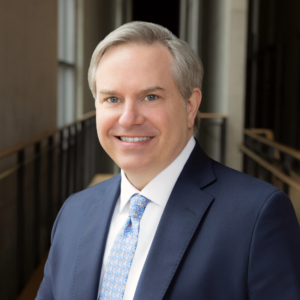
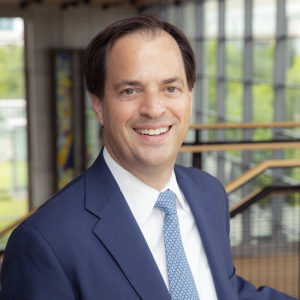
The future of wellness and aesthetics includes telemedicine, but states are paying close attention to how it is used. In this episode, Paulina Riedler, CEO and Co‑Founder of Spakinect, shares how practices can leverage telemedicine to deliver compliant, cost‑effective good faith exams while maintaining proper physician oversight. Tune in to learn what changes when you expand your practice across state lines, how to responsibly evaluate emerging treatments, and the compliance fundamentals needed to build scalable systems that protect patients and long‑term success.
Listen to the full episode using the player below, or by visiting one of the links below. Contact ByrdAdatto if you have any questions or would like to learn more.




Transcript
*The below transcript has been edited for readability.
Intro: [00:01] Welcome to Legal 123s with ByrdAdatto. Legal issues simplified through real client stories and real-world experiences, creating simplicity in three, two, one.
Brad: [00:13] Well, welcome back to Legal 123s with ByrdAdatto. I’m your host, Brad Adatto, with my co-host, Michael Byrd
Michael: [00:19] As business attorneys for health care practices, we meet a lot of interesting people and learn their amazing stories. This season’s theme is The Future of Wellness, where longevity, advanced weight loss solutions, and anti-aging innovations collide. Get ready for insights from the people driving the evolution of the medical industry.
Brad: [00:40] Well, Michael, I’m excited to bring on our guest for today’s show, but before we do, you and I have been running down some rabbit holes the last few shows on looksmaxxing and regularmaxxing and all these terms.
Michael: [00:53] Yeah. I do feel slightly more hip when we talk about terms being used by the younger generation. Now, my daughters definitely do not agree with me being hip when I use these words. I think they say it’s cringe.
Brad: [01:08] Yes. That’s probably about right. Same with mine. Well, I decided to go a little bit deeper into the GenZmaxxing world to better understand the future of language.
Michael: [01:18] Okay.
Brad: [01:18] And as such, I thought I’d be asking a few new words. Are you familiar with jestermaxxing?
Michael: [01:24] I’m not, but I have a pretty good idea what it means.
Brad: [01:28] All right, for those who don’t know, jestermaxxing is for acting silly to get laughs.
Michael: [01:34] So you’ve been jestermaxxing the entire 20 years we’ve known each other?
Brad: [01:37] Yeah, pretty much. That’s a fair assessment.
Michael: [01:39] Okay.
Brad: [01:40] I also learned a few new words that do not have the word maxxing in it, such as I’m mogging, Michael Byrd.
Michael: [01:48] I do not like it when you say a word I’ve not heard yet.
Brad: [01:51] Okay. For those that know, mogging is the act of one-upping another person, AKA the end goal of maxxing.
Michael: [01:58] Okay. We also have been mogging each other the whole time we’ve been friends. Where are you going with this?
Brad: [02:03] Well, now that I better understand this new language, I really wanted to speak to our Gen X audience. So this is to our Gen X audience. I was regularmaxxing at R&D Cafe, and I started jestermaxxing with my friends. And I know that when people looked at me, they were impressed, as I was looksmaxxing the last few months.
Michael: [02:21] I don’t think you pulled this off, Brad. You need to let the game come to you a little bit.
Michael: [02:28] I think we should bring our guest on.
Brad: [02:30] Okay, fair
Michael: [02:30] Before she runs.
Brad: [02:32] Okay.
Michael: [02:32] All right. Joining us today is Paulina Riedler. She is the CEO and co-founder of SpaKinect, Bachelor of Science in Nursing is background, a working mom always trying to achieve work-life balance, a longtime friend and client of ByrdAdatto, and a second-time guest on our podcast. Paulina, thanks for being here today.
Paulina: [02:58] Thank you both. And now I don’t know if I should be doing any maxxing not in this interview, but hopefully the Gen Z audience will still think we’re cool.
Brad: [03:09] Yeah. Well, I was going to ask you, you have a younger team. You’re much younger than Michael, obviously. He’s 900. But I didn’t know, are you familiar with any of these max words?
Paulina: [03:18] I’ve never heard any of these terms.
Brad: [03:22] You’re probably better off.
Michael: [03:22] Yeah, you’re better off. Your brain is more, is in a better place.
Paulina: [03:29] Well, we’ll find out today because Gen Z is actually making up a huge sector of the wellness and aesthetics market now. So I think for everyone listening, it probably is a good thing to learn some of the vocab.
Brad: [03:42] Great.
Michael: [03:43] And Brad, that is how you do a segue.
Brad: [03:45] Oh, that is a good segue.
Michael: [03:46] I love it.
Brad: [03:47] Can we just go back and me start over?
Michael: [03:48] Yeah. No, I think we’re good.
Brad: [03:50] No? Okay.
Michael: [03:50] Let’s get into it. All right, well let’s start with the easy stuff. So talk to us, tell the audience who doesn’t know, more about you and SpaKinect.
Paulina: [04:02] Yeah. So I started SpaKinect with my husband about 14 years ago. We saw a problem that wasn’t being solved in the market, and that was access to good faith exams in a cost-efficient way. And so what we really strive to do is give medical spas access to good faith exam through telehealth, allow them to scale without needing additional overhead, and also to give them resources on compliance overall. As we all know, the regulatory landscape is shifting and changing very rapidly, and so that’s something that we are always keeping up with. So we have a team of nurse practitioners primarily, who are available on demand to do good faith exams for all of the aesthetic treatments that you would need, as well as now branching into more wellness and longevity treatments.
Brad: [04:56] That’s awesome. And it’s amazing an area of needs that you guys saw and were able to step into with the telemedicine component. But I definitely want to shift a little bit and kind of jump into, as you heard at the beginning of this episode, this season really focuses on The Future of Wellness. And when we say wellness, audience members, we’re talking about longevity and weight loss and anti-aging, so it’s kind of all combined together. And for you, how is the rise of wellness reshaping the interaction with telemedicine and just in general
Paulina: [05:33] Well, people are not coming to med spas anymore just for aesthetics, right? So they want weight loss support, they want hormone optimization, they want peptide protocols now. And so these are all medical services, which aesthetic treatments are also medical services, but these types of medical services tend to be more highly scrutinized, especially when we’re talking about weight loss medications. So really, telehealth has allowed a lot of our practices to turn their programs into more scalable programs across state lines. So we’re removing that geographic bottleneck where if that physician can’t physically be on site to do the good faith exam, they can rely on the telemedicine solution like SpaKinect, and they don’t have to turn patients away. Also, longevity overall is, and we’ll talk about this in a little bit, it’s the fastest-growing vertical in the space of wellness right now. So if you’re going to implement longevity services or wellness services, likely you’re going to increase your compliance overall, and that’s going to help kind of shore up your aesthetic side as well. If you’re doing prescribing with GLP-1s, any of that, there’s so much more regulatory framework that you need to adhere to, that it’s going to help to boost up your compliance overall.
Michael: [07:00] I’m curious, when did you-because y’all, with the services y’all provide doing the GFEs, you’re kind of on the front lines as things start to shift-when did you start noticing a movement, at least in the aesthetic space, of starting to add on these kind of wellness-type services?
Paulina: [07:22] Yeah, I think it depends on what you classify as wellness. But I will say, right, in 2023 we started to really see an increase in the requests for GLP-1s. That really started the boom, I think. Since then, we’ve seen this increase now into what we call wellness, which is sort of this open, broad term that can include many things, right? We’re talking about IV hydration, now peptides, a lot of interest in the longevity space. But that actually is the primary, I think it’s the fastest-growing vertical in aesthetics right now, outside of cosmetic elective procedures. And people who are calling us for services who are just starting their med spas, they’re actually more interested in what type of wellness services do you provide versus just aesthetics. I think the market for aesthetics has gotten more competitive, and so as that happens, people are going to generally look at what other services can we offer. So I think what we’ve had sort of a front row seat to is all of this growth across all of these different states, and what that’s done with this sort of patchwork of state-by-state regulations, which makes it really complex for people who are running these enterprise organizations. And also, there’s this sort of lack of regulations when it comes to who can do peptides, what peptides are allowed. I mean, there’s just so many questions. You guys probably get them all the time, right? And so we’ve really just been able to see, over the last two years, the explosion of getting into the wellness space overall.
Michael: [09:11] Yeah, we are doing an entire podcast season on it for those same reasons, and you experience the same things that we do in the sense that it is so nuanced by state. And it is an extra layer of compliance risk compared to traditional aesthetic medical services. Another thing that we’ve been talking about, and want to talk to you about, is that wellness is a different discipline than aesthetics. How has SpaKinect approached the training and education for your team to be able to perform the good faith exams for these types of treatments, for these kind of, quote, “broad brush” wellness services? And I’m lumping in weight loss in there as well.
Paulina: [10:07] Yeah. I’m glad you asked that question because there’s a lot that we’ve had to do behind the scenes to get ready for what we’re facing right now, this increased demand, and to be able to service our clients effectively. Because right now, our providers can evaluate for over 175 different treatments. So that’s 175 different contraindications, and SOPs, and protocols, and all of these things that they have to know. So number one, we had to build a system that was going to be scalable for us, and that our providers can access at a moment’s notice when they’re evaluating a patient, as there’s just no way you can hold all of those in your brain. Number two, we bring in experts to train our staff. So we have monthly mandatory trainings where we get, oftentimes, vendors, pharmaceutical reps, and physicians from the industry to come and train our staff every single month. That’s mandatory if you want to work for SpaKinect. And it’s a fantastic way for all of us to get this training. Oftentimes this is not even stuff that you’ll get in continuing education, so it’s an opportunity for them to learn and grow. And we have a backlog of trainings that we want to get through for all of our providers, so there’s a lot. There’s so many things coming out. And we do a really thorough job, in my opinion, of evaluating what are those treatments that we want to even bring on and evaluate for. Because as this industry grows, there’s going to be lots of entrepreneurial opportunities, and then obviously some bad actors that are going to take advantage of that. And so not everything that gets brought to our desk is something that we’re able to accommodate and evaluate for. It has to go through a whole process that’s reviewed by our clinical team and our chief medical officer to make sure that this is actually a vetted and verified treatment that we can evaluate for.
Michael: [12:06] And it gets super nuanced. Not just the medical side of it, but a lot of these wellness treatments have some pretty serious compliance risks too. So there’s an element of there may be some science out there, but if it’s not FDA-approved for any purpose, is that something that, kind of hypothetically, SpaKinect would be comfortable clearing a patient for, even if there is, according to the medical professionals, some science behind that treatment?
Paulina: [12:47] It’s a hard question, and there isn’t a black or white way that we could evaluate these, because it would make our lives easier, right? If I could just train an AI agent to review all of these treatments and save my team a bunch of time. Unfortunately, like you said, there’s nuance there. Where we really sort of stand, in my view, is that if something appears that it is safe and it’s been tested, if it’s FDA approved, that’s a pretty hard, or an easy yes.
Michael: [13:18] Yeah.
Paulina: [13:18] But if it’s something that is newer where there’s not enough data, for example, if there’s something that has come out, it’s been tested topically but not for injection, we may evaluate for that for topical use only. Not for injection, and pray that people actually follow the guidelines that we give to them.
Michael: [13:41] Absolutely.
Paulina: [13:41] And document that appropriately. So yeah, if people want to sort of go off label or use a product that might not be intended for an injection, you want a defensible stance to be able to show why you feel confident clinically to do something like that, and that’s not something that we will recommend.
Brad: [14:05] I think it’s so important what you said, and hopefully the audience members have realized what opportunities they have in having these outside vendors or individuals come in and continually educate the team. Because obviously y’all, you’re in the front line trying to determine if that patient’s a good candidate for those services, and to get there is constant education. And then obviously, hopefully the end users, whether it’s one of your clients or not, understand how important it is if their staff is touching that patient to do the same thing from that perspective. And I think.
Paulina: [14:37] And there’s safeguards too that we’ll put in place, like if you’re going to be offering weight loss medications and you want us to evaluate those patients, there are certain things that we’re going to need, like their height and weight, so you better have a scale at your office. If you don’t, that’s a problem for us, and we can’t really do a thorough evaluation. So for certain treatments and procedures there may be things that we do ask the practice to have or to perform so that we can do the safest evaluation as possible. Because, again, we’re not physically present, and so for that reason, I feel like we do take a bit of a more conservative approach because we’re not there, and we can’t make every determination via telehealth.
Michael: [15:20] How do y’all think about weight loss? Because there’s a lot of science behind certain doses, but there’s a big wave of microdosing and other strategies that go with that. How does that affect you guys and y’all’s role?
Paulina: [15:39] Yeah. For those instances, I always recommend that people work with a physician who’s specialized or at least has knowledge and is comfortable working with microdosing. Because our providers, we can’t give a specific tailored approach for each patient. We’re not the ones following up with that patient either, and so we want to make sure that they’re getting a thorough, patient-specific protocol, not just for a one-time prescription, but for longevity. And so because we are not able to put those parameters in place for our clients in terms of how often we want this patient coming back and that kind of thing, in those situations we’ll evaluate the patient and determine whether we feel they’re a good candidate for weight loss treatments at all, do they have contraindications, but then we would hand it off to the physician or the prescribing provider who’s going to be prescribing those specific dosages.
Michael: [16:46] Compliance is a team sport. You have your role and your very important role from a compliance perspective in that initial clearance. But to your point, you have the boots-on-the-ground medical professionals, and then you also have the broader compliance considerations because this conversation can look different state by state and often patient by patient on whether they can be prescribed a microdose, which implies that there would be compounding involved, which is a whole additional conversation.
Paulina: [17:33] Right. Right, exactly.
Brad: [17:34] Well, and then you were kind of leaning on this earlier, Michael, but I’m going to get to it. Paulina, you were mentioning this too, but y’all are a national platform. You’re in multiple different states. As you said, you’re constantly trying to revisit what’s going on within the medical model. But you’ve also experienced different states where they start bringing out different regulations. So take the states out of it for a moment. If you were going to talk to the industry at large, what are some of the things that they should consider implementing to really protect this fast-growing area? Because obviously it’s better for the industry to police itself versus the states.
Paulina: [18:18] Well, I love that you said that. I 100% agree the industry needs to police itself. There’s really three things I tell people that are the most important. Number one, you need real physician oversight. That means an actual doctor – in some states that may be an NP – who can be your medical director. But you need a provider who’s engaging with your practice and not just a signature on paper. That won’t suffice. It’s not good practice anyways, but that’s where we see a lot of practices getting in trouble lately. So real physician oversight: a real person engaging with your practice, showing up, reviewing protocols, all of that. Number two, good faith exams. We’ve been talking about it since 2012, but it’s still not happening. That’s why we’re here, and it keeps me in business. Good faith exams done, and not just done, but documented. Because if you get audited, you’re going to want to produce the reports that show that these patients had good faith exams. And I think number three is, if we’re not going to talk about state regulations, this wellness industry is a huge opportunity, but it’s also a big risk. Like you mentioned before, if you’re going to introduce a new service, make sure that it’s something that is going to stand the test of time. A lot of these trends come and go, and you don’t want to be stuck in a position where you’re having to defend your position in front of a board for why you were using a specific product – for example, a research‑use‑only peptide that’s clearly labeled research use only – and giving it to patients. So don’t follow trends necessarily, and really do your due diligence. Just because some people are doing it and getting away with it is not a great position to be in.
Michael: [20:16] Yeah. And so you’re very active. First of all, that’s a great answer because you’re leaning into compliance, which we love. But the second part is, because you’re in so many different states, you are seeing how states are reacting to the industry. Maybe you can give the audience some insight into what you’re seeing states do right now, either as it relates to the industry in general or, more importantly, how it’s impacting telemedicine when it comes to aesthetics and wellness.
Paulina: [20:44] Yeah. It’s unfortunate. It’s a patchwork. It’s a game of Whack‑A‑Mole, like I’ve been telling my team. You think you’ve spent a lot of time in one state, maybe getting a lobbyist like we have in the past, and you feel like you’ve got a win, but you don’t have much time to celebrate because there are other states coming out with regulations, and you need to get involved. So what I see mostly is that the easy targets are people who are obviously operating without any physician oversight. Now, there’s also a lot of peptide activity going on. In terms of telehealth, what we’re seeing is a bit of a misconception surrounding telehealth and aesthetics in general. Some states tend to be more conservative in how they look at telemedicine. In Wisconsin right now, we’re dealing with a task force that has been trying to take the stance that telehealth is not a standard of care for elective cosmetic procedures. This is something that we strongly disagree with, so creating and documenting our case and being able to speak up in those situations is really important, not just for us, but for the whole industry. It’s really important that people understand what’s going on. Sometimes I talk to people about this and they’ll say, “Oh, it’s Wisconsin. I don’t have a practice there,” or “I’m not looking to expand there.” But it doesn’t matter, because one state can set precedent for another state. And just in the last 12 months, seventeen states have come out with regulations specifically for med spas, aesthetics, and wellness. So you should be paying attention.
Michael: [22:38] What the audience may not realize is that a lot of times the reason why a state like Wisconsin may come after telemedicine is because of something that a bad actor did or some incident. And so there’s just collateral damage, whether it’s, in this example, them coming after telemedicine and thinking that’s not appropriate in aesthetics. But when you look at these seventeen different states, there’s often a legislative solution to some problem that’s happened. In Texas last year it was IV hydration with Jennifer’s Law, and there was a terrible situation that happened a couple of years ago. As the lawmakers got involved, there was a lot of potential collateral damage in the early versions of the law that eventually got whittled down. So there’s a lot that goes into it to try to manage or protect the industry.
Paulina: [23:52] Yeah. And you’re right – a lot of people don’t understand that. That’s what I’ve been preaching from the mountaintop since we got involved with the Texas legislature last year, and I got to see how the sausage was made. And I’ll be honest, you guys, I was surprised. I come from a medical background. I’ve never spent time working with lawmakers, and I realized why it’s so important for us as an industry to get involved. People just assume that these things are going to take care of themselves, and they don’t. The only reason that bill didn’t pass as it was drafted originally is because we got involved and had time to talk directly with the person who wrote the bill. And what you find is that none of these lawmakers are trying to do damage to the industry. They’re not trying to put people out of business. It’s really that they don’t understand the implications of the bill. They have hundreds of bills to read through.
Paulina: [24:55] So they simply don’t understand. And if we don’t have a unified voice, it’s going to damage the industry. And that’s why I started the nonprofit last year and have really started to cut out a portion of my time to dedicate to having discussions like this and making sure people know that it’s really important to have your voice be heard and to get involved.
Michael: [25:17] And to connect it to wellness, I think that’s only going to increase with you know, there’s so much, as we said, escalated compliance risk with it, and that’s just going to put more pressure on, on the, the potential law changes.
Paulina: [25:35] Yeah. Yeah.
Brad: [25:35] So I think we have time for one speed round question here, and this is going to be a – so in your view, just looking out for the next five years, what do you think is going to happen with the wellness space overall?
Paulina: [25:47] Oh my gosh. Well, I will say AI obviously is at the forefront right now. Everyone’s talking about it. I do think the practices that are adopting what we would consider AI diagnostics or AI‑driven diagnostics are going to have an upper hand, so that’s like biometrics, wearables, things like whole‑body MRIs. These are a sector of the market that are becoming really, really popular. So if you can figure out how to be able to take that data from a patient – if a patient comes in and they’re coming in for weight loss – you want to be able to understand their whole system and all of the data that goes along with it, creating a system that can intake that type of data. And I think obviously using compliance as a competitive advantage and not an afterthought. I think those practices that are doing that now are thinking about, “Is this a scalable solution?” Maybe I have one location now, but what if in a few years I want to have 10 or 20 locations? Is my infrastructure sound enough to be able to scale and scale compliantly? So I think if you’re thinking about those two things, you’ll be in a good position.
Michael: [27:04] Amazing. I can’t believe we’re out of time. Paulina, thank you so much for the second time joining us on the Legal 123s with ByrdAdatto. We’re grateful for you, and we’ll say goodbye, go to break, and come back with a quick legal wrap‑up.
Paulina: [27:22] Perfect. Thank you both.
Access+: [27:23] Many business owners use legal counsel as a last resort, rather than as a proactive tool that can further their success. Why? For most, it’s the fear of unknown legal costs. ByrdAdatto’s Access+ program makes it possible for you to get the ongoing legal assistance you need, for one predictable monthly fee. That gives you unlimited phone and email access to the legal team, so you can receive feedback on legal concerns as they arise. Access+, a smarter, simpler way to access legal services. Find out more. Visit byrdadatto.com today.
Brad: [27:58] Welcome back to Legal 123s with ByrdAdatto. I’m your host, Brad Adato, with my co‑host Michael Byrd. Now Michael, for those who don’t know, our theme this year is The Future of Wellness. We had an amazing conversation with the CEO of SpaKinect, Paulina, and really understanding the impact telemedicine is having in the wellness space. She said some really great things, but one of the things I heard her say is that a lot of people tend to follow trends, and she had a good take on that. And this is something we often talk about – retail versus medicine.
Michael: [28:33] Yeah. Like in normal retail, the customer can drive demand, and in an elective medicine space, you’re going to have that very same thing. And we are seeing it happen. Patients are coming in with hopes and expectations for these cutting‑edge wellness treatments that you’re hearing about. And so Paulina’s point was don’t just jump at a trend and jump into it in a reactionary mode. I think the other aspect of that is remembering that this is the practice of medicine, and the practice needs to dictate what is appropriate and compliant. You can’t just fully respond to the cries of patients coming in and what they’re wanting.
Brad: [29:35] Perfect. Well, audience members, that’s all the time we have today. But do not panic, we will be back next week when we continue to explore The Future of Wellness when Dr. Grant Stevens joins us to talk about technology in the wellness space. Thanks again for joining us today. And remember, if you liked this episode, please subscribe, make sure to give us a five-star rating, and share with your friends.
Michael: [29:58] You can also sign up for the ByrdAdatto newsletter by going to our website at byrdadatto.com.
Outro: [30:05] ByrdAdatto is providing this podcast as a public service. This podcast is for educational purposes only. This podcast does not constitute legal advice, nor does it establish an attorney-client relationship. Reference to any specific product or entity does not constitute an endorsement or recommendation by ByrdAdatto. The views expressed by guests are their own, and their appearance on the program does not imply an endorsement of them or any entity they represent. Please consult with an attorney on your legal issues.