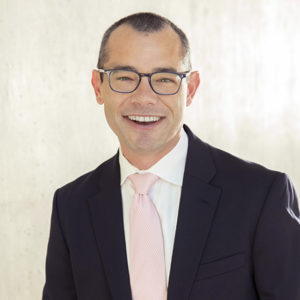
A thriving practice can unravel overnight when everything depends on one person. In this episode, partner Jay Reyero shares the story of a successful cosmetic surgeon who built a thriving aesthetics practice alongside her husband, who managed the business side. When she unexpectedly passed away, he was left trying to hold the practice together while facing strict ownership laws, no physician coverage, and no succession strategy. Tune in to learn how quickly things can fall apart without a plan, and how the right legal structure and safeguards can help maintain continuity and protect your practice’s long-term success.
Listen to the full episode using the player below, or by visiting one of the links below. Contact ByrdAdatto if you have any questions or would like to learn more.




Transcript
*The below transcript has been edited for readability.
Intro: [00:00] Welcome to Legal 123s with ByrdAdatto. Legal issues simplified through real client stories and real-world experiences, creating simplicity in three, two, one.
Brad: [00:13] Welcome back to Legal 123s with ByrdAdatto. I’m your host, Brad Adatto, with my co-host Michael Byrd.
Michael: [00:19] As business attorneys for health care practices, we meet a lot of interesting people and learn their amazing stories. This season’s theme is “What Now?” Each episode will involve a real client story with a high-pressure moment for that practice.
Brad: [00:33] And before we get started, those watching us in TV Land probably already notice, we want to welcome back again our partner and series regular, Jay Reyero.
Jay: [00:41] All right. Thanks, guys. Thanks for having me. It’s a great day. I don’t know if you guys know, but today Katie and I are celebrating our 21st wedding anniversary.
Brad: [00:49] Oh, congrats.
Michael: [00:50] Wow.
Jay: [00:50] And, in October of this year, we will have been together for 30 years, which will be exactly two-thirds of my life. It’s a great day. But speaking of pairs–
Michael: [01:00] And congrats to Katie also.
Brad: [01:02] Yes.
Jay: [01:02] Yes, yes. She’s a saint. But speaking of lifetime pairs, have you guys heard of the story of Nick and Nora?
Brad: [01:11] Yes, and it almost feels like there’s a daily update coming from the Dallas Morning News metro section, and sometimes even the front page.
Jay: [01:19] Yep.
Michael: [01:20] No idea.
Jay: [01:22] Well, don’t worry, they’re not movie characters, not this episode. Nick and Nora are the two bald eagles that have nested down at White Rock Lake since 2021.
Brad: [01:32] Yes. And my son, Ellis, went to high school near there, and during their first round, they took lots of field trips down there. They did drawings, they did papers on eagles, so it’s kind of part of the family lore now.
Jay: [01:46] Yep.
Michael: [01:47] And audience, yes, I definitely know this story. I just didn’t have any idea what they were named or that they had names. The bald eagles, if you lived in Dallas, has been a massive story. I guess you mentioned some newspaper. They still make those, Brad?
Brad: [02:04] They do.
Michael: [02:05] Yeah.
Brad: [02:05] I have them at my house. I’ll show you sometime.
Michael: [02:07] Okay.
Jay: [02:08] Yeah. So their story over the last several years is something straight out of an animated movie. So they built their first nest at the edge of a rugby field over in Lake Highlands Park near the lake. But unfortunately, that nest was completely destroyed in the winter of 2022. They had to find something else, and 10 days later, they took over and remodeled a red-tailed hawk’s nest. Unfortunately, severe storms in the spring of that same year tore that nest completely down. They found a new spot, built another nest, but there were too many wildlife gawkers and photographers, so they ended up abandoning it. Then in the spring of 2024, they built a new nest and had two eaglets hatch. Again, bad Texas spring thunderstorms and high winds knocked that nest down. Unfortunately, one eaglet did not survive, but one did–Henley. They found him on the ground, sent him to a rehabilitation center, and he was well cared for.
Brad: [03:24] It really does sound like a story that would be an animation of these two eagles and the trials and tribulations. The first nest didn’t work, the second didn’t either, but the fourth one held, sort of.
Jay: [03:34] Fourth time’s the charm.
Michael: [03:36] I’ve lived in Dallas for over 50 years of my life, and it’s weird, because I’m only 40. But I don’t think I’ve ever heard of an eagle being in Dallas, or even the idea that you would have one here. I think that’s why it’s been such a huge storyline these past few years.
Jay: [04:05] Yeah. Great news–Nick and Nora have set up a new nest down by the lake on my running path. And more importantly, yes, Henley was successfully reunited with his parents. All is good there. This brings us to today. Did you know they successfully hatched a rare brood of three eaglets in March 2026?
Brad: [04:34] Yes. Referencing that piece of paper I read every morning called The Dallas Morning News–they’re working overtime covering every angle of these eaglets.
Jay: [04:41] Yes.
Brad: [04:41] Covering every angle and aspect.
Michael: [04:46] Yeah. I’m more of a modern person and only get my news from social media, so my feed’s not optimized for the three-eaglet story. That is news to me.
Jay: [05:02] Yeah. And the other weekend when I was running, there were all these barricades set up, and you had to wind around them, and I didn’t know what was going on. And I came up, and there’s all these people there, which isn’t unusual for the eagles around the lake. But instead of looking up in the sky, they’re actually looking down at the ground.
Brad: [05:19] And again, as a reader of The Dallas Morning News–
Jay: [05:23] Yeah
Brad: [05:23] And they have not paying sponsorship, well aware of why they were looking down, Jay, why don’t you let our audience know?
Jay: [05:28] Yeah. So I looked down as well, and there’s an eagle hopping along the ground, just hopping around. And apparently, the three eaglets have reached the two-month mark, which means that they are in this critical development stage known as branching. That’s where they start walking out on tree limbs, flapping their wings, and building their flight muscles. They’re getting ready to fly. And as you can imagine, trying to do that on a branch, they are going to fall to the ground while learning to fly. And because of this, the City of Dallas has closed the nearby playground, set up barricades to block vehicle traffic, and established a very strict perimeter around this area where these eaglets are all hopping around and learning how to fly.
Michael: [06:11] I think we might need to do this for Brad
Jay: [06:13] You know, that wouldn’t stop him. Come on now. But don’t worry, Nick and Nora don’t have to worry about them. Walkers and cyclists have been allowed to continue through this. They have to keep respectful distances. I kept my distance and went on my run after watching them. But if either of you plan on going down there, be careful because officials warn that disturbing them could result in fines because they are federally protected birds, and if you happen to do something to cause the death of one, fines could exceed $100,000.
Michael: [06:48] So what I’m hearing is don’t be an idiot.
Jay: [06:51] Yes.
Michael: [06:51] Give the eagles and eaglets their space.
Jay: [06:55] Yes. And news alert, just yesterday, all three eaglets did take flight and they are expected to be fully flying by Juneteenth. So Brad, I got you flying eagles for your birthday.
Michael: [07:08] Thank you. I appreciate that.
Jay: [07:09] But I thought this would be a great heartwarming story for today, especially given the topic of our real client story.
Michael: [07:17] Cue the music, I guess. Let’s get into today’s story then.
Jay: [07:20] Yeah. So let’s start today with a married couple out in California. We’re going to call them, surprise, surprise, Dr. Nora and Nick. Dr. Nora was a cosmetic plastic surgeon who owned a practice called White Rock Aesthetics.
Michael: [07:35] I love how we all just really stretch ourselves when we’re changing their real names to something. I have no idea where you pulled that from, but good, I like it so far.
Jay: [07:41] I know, yeah
Michael: [07:41] Yeah.
Jay: [07:43] AI helped me come up with that one.
Michael: [07:44] Yeah.
Jay: [07:44] So White Rock Aesthetics was a thriving practice. Dr. Nora was highly successful, highly sought-after skilled surgeon. Nick, with a business background, ran the weight loss and the hormone replacement aesthetic service lines. He was just as instrumental in the business, having made the wellness aesthetic a real important component of the overall practice.
Michael: [08:09] I remember this story well. Both Dr. Nora and Nick had really important roles that contributed to the overall success of the practice.
Jay: [08:19] Yeah, so one day we got a call from Nick and his emotional state and tone were completely different from all of our prior conversations. We asked him what was going on, and that’s when Nick let us know that Dr. Nora had unfortunately passed away the prior day. His question was, “What about the practice? What do I do now?”
Michael: [08:42] I’m glad, Jay, you started off with that almost animation-like, warm, heartwarming story about the eaglets because this just got real, real fast. And I have to say that having these hard calls like that, even for us cold-hearted attorneys, is pretty hard.
Jay: [08:59] Yeah. These conversations are so hard, and you have to balance empathy for the tragedy and remember we have a relationship with that person, so we’re processing that news and at the same time responding to a request for direction from the client. It’s awkward trying to figure out when to go from being a friend into being the attorney, and the expectation from the client is that we’re a stable force even when we’re not feeling that.
Michael: [09:41] Yeah, the last thing you want to do in that conversation, even though you know it’s your role, is to start going into the minutiae and the details of the cold, hard legal aspects of keeping White Rock Aesthetics going during an emotional time. It’s very difficult to navigate. When we were talking to Nick, we got through that piece, and one of the things we wanted to focus on–and what Nick wanted to focus on–was the practice ownership, because Dr. Nora owned White Rock Aesthetics 100% and Nick had no ownership, yet he was left trying to keep the business going.
Jay: [10:23] And so let’s take a step back, taking our hearts off the table since it’s a tragedy they’re going through. But for the audience members keeping up, we have a doctor and a non-doctor, and you said this was in California. For those who don’t know, California does have the corporate practice of medicine, restricting non-physicians from having any ownership in a medical entity unless they meet certain licenses. There are certain situations where 49% can be held by other licensed individuals, but in this particular case I don’t think you said that her husband Nick had any type of license associated with it, so pure non-physician with no additional license behind it, meaning that there was a massive restriction on him having any ownership in this practice.
Michael: [11:12] Yeah, I mean, if you think about the scenario with that you’ve got a husband who’s a key contributor to the business, an entire service line is on his shoulders and of course 100% dependent on Dr. Nora as the licensed physician and rock star in her world. And so all of a sudden he’s looking at not just the loss of her revenue stream from her not being there, just from a business evaluation perspective, but this corporate practice of medicine issue. Does he even– is there a path forward for him to continue this business?
Jay: [11:57] Yeah, I mean, so obviously this was structurally the problem that we were trying to solve and needed to solve, and we couldn’t just make Nick the owner of the entity. Instead, we needed to build a compliant structure, and so this meant that we were having to start the conversation about MSOs during this difficult time, which is never an easy time to talk about MSOs. It’s a complex thing if you’re not dealing with it from the very beginning and you’re not familiar with it. So now add on the piece of it being a very tragic, emotional time, and we’re trying to have this conversation about what it’s going to look like.
Michael: [12:30] And the good news is there is a solution. There are, as we’ll get into, some things you need to deal with to get to that solution, but there was a path forward.
Jay: [12:43] Yeah. And so as with any MSO model that we’re putting together in a CPOM state, the first place you have to start is by having a physician available to be a part of it. That had never been an issue or a thought, obviously, with Dr. Nora being the physician. And so White Rock Aesthetics didn’t even have a junior physician at the time to step in, so it was just Dr. Nora as the only physician involved. So we were left with having to start from scratch.
Brad: [13:09] And just some context for those who don’t know, we’ve been throwing out the term MSO. That means management service organization. We’ll talk a little bit more about that in the second half. But also understand the impact of the loss of one physician. So this person may have been supervising NPs or RNs or PAs, so it’s not just the ownership issue, it’s the overall complete impact it has on the practice because you said she was the sole physician. So what happened next, Jay?
Jay: [13:36] Yeah, I mean, so Nick had to go to work trying to find a physician that would not only be qualified for what they were doing and what they needed, but also willing to come on board into this practice and be part of an MSO model. And as you can imagine from all of our clients who are building these from scratch, that’s not a very quick process.
Michael: [13:58] Yeah, when you’re talking about this ownership component, what do you do when all of a sudden you’ve got an estate as an owner of the practice, and how do the medical boards look at it? A lot of the states do give some grace for that transition when that owner dies, at least as it relates to the ownership piece.
Jay: [14:24] Right. Exactly. And the problem was this went beyond the corporate structure issue as well because there was also the clinical side of things. Brad, you alluded to this because since Dr. Nora was the only physician involved, that meant no collaboration for the nurse practitioner, no supervision for the registered nurse, not to mention nobody to perform the surgeries for the patients who were already scheduled as it was.
Brad: [14:48] Yeah, and let’s just take the surgery component out of it, Jay. I mean, for our audience understanding, clinical decision-making and how things can be approved, there’s a branch you have to follow through, and typically, especially in California right now, you still have the physician who has to be overseeing these other individuals. So just because a nurse practitioner could approve maybe non-invasive services, he or she still has to have a supervising physician. And although the NP can oversee what the RN’s doing, there still is a need for a supervising physician to be overseeing the RN. So it’s the inability to even do clinical services right now another issue they’re faced with.
Michael: [15:28] So I’m curious, Jay, how did things go?
Jay: [15:31] Yeah, unfortunately, the practice ended up losing months of revenue because of these issues that needed to be solved while we worked trying to find this physician to come on board. Fortunately, after just a few months, Nick was able to secure a new physician to be the head of the practice, and so we immediately worked to restructure the business model to use the MSO model.
Michael: [15:56] Okay. So we can start implementing and start having a business path forward to keep this practice going.
Jay: [16:05] Right. And one of the difficulties that we encountered was shifting all the value from the practice to this MSO where Nick was going to be the sole owner. And so we really needed to give Nick ownership of the value of the practice, and we had to transfer a lot of the things that were in this established professional entity to a brand new LLC. There were some tangible and hard assets of value that were really important to move over.
Michael: [16:29] Yeah, and if you look back to when it was Dr. Nora and Nick, even though Dr. Nora owned it, it was their business together. They’re married, it’s a community property state, they built it all there. Well, now because Nick can’t own that business, he owns the MSO under this new model, we need to mimic what they used to have and make that true in the MSO. So we’re making all the assets live in the MSO and, in a compliant way, building the value proposition so that the professional entity’s true purpose is the compliant treatment of patients, but the economics and value rest in the MSO.
Brad: [17:16] Yeah, and this is pretty common when it comes to management service organizations where when you have that non-physician who’s a part of it, you’re trying to build up value inside the management service organization. This is how private equity typically does it, so it’s not uncommon. And to be clear, if you have the right physician, that physician may be on both sides. They may be an owner of the medical practice and also an owner of the management service organization, but it’s another way of building up value of the overall enterprise of what’s occurring at the practice level.
Jay: [17:49] Yeah, and let’s not forget, taking it all the way back, this is all happening while the practice is trying to get back to treating its patients and during an incredibly difficult emotional time for Nick.
Brad: [18:03] Yeah, I mean, think about this, audience members. It’s one thing to have a personal issue that you’re suffering through, but in this particular case, it’s professional and personal at the same time because it was the practice that he and his wife were running together. Think about the unbelievable burden he has to be carrying because now he’s in charge of making sure how are these employees–are they still going to stay with us? How can he still employ them? And at the same time, mourning the loss of his wife, but trying to save her legacy through the practice.
Michael: [18:33] Let’s go to break, and on the other side, we can talk through how Dr. Nora and Nick were acting prior to the death using our framework from this season, and then what it would have taken for them to be acting like Navy SEALs.
Access+: [18:51] Many business owners use legal counsel as a last resort, rather than as a proactive tool that can further their success. Why? For most, it’s the fear of unknown legal costs. ByrdAdatto’s Access+ program makes it possible for you to get the ongoing legal assistance you need, for one predictable monthly fee. That gives you unlimited phone and email access to the legal team, so you can receive feedback on legal concerns as they arise. Access+, a smarter, simpler way to access legal services. Find out more. Visit byrdadatto.com today.
Brad: [19:25] Well, welcome back to Legal One, Two, Threes with ByrdAdatto. I’m your host, Brad Adatto, with my co-host Michael Byrd, series regular Jay Reyero. And for our audience members trying to remember what our theme is this season–”What Now?” Now, Jay, during the season we’ve talked a lot about different ways practice owners can act. But prior to her death, let’s take a step back. How were Dr. Nora and Nick acting?
Jay: [19:53] Yeah, I think they definitely weren’t acting like pirates. They had built a solid foundation and had a lot of things in place for an established practice. They weren’t, as we like to say, moving fast and breaking things at that point, and they were actually quite the opposite.
Brad: [20:09] Yeah, and audience members, I know that throughout this season we’ve talked about a lot of different stories, but we do acknowledge that people can be acting in one capacity and then eventually become pirates because of something tragic happening–in this case a death or other circumstances like cash flow issues that Michael and I talked about on another show.
Michael: [20:32] Yeah, and so they’re not acting like pirates, to your point, Jay. I agree with that, but they are missing something. They didn’t have a succession strategy in place, and they built this entire business mutually dependent on the two of them, and then of course, according to California law, even more dependent on Dr. Nora. And so they didn’t have that plan, that strategy in place before something happened that could threaten the very existence of the practice.
Jay: [21:02] Yeah, and because of the way they ran the practice, they weren’t acting like pirates. I would say they were acting more like cruise directors. They checked all the boxes you would expect from a business startup. They had the foundational pieces, the operating agreement, the ownership structure correct with Dr. Nora owning 100%. They had employee documents and a handbook–just the basics you’d expect. They were really just steering straight ahead, and things were going well from that perspective.
Michael: [21:36] This makes sense. They had an infrastructure but were missing the strategic element.
Brad: [21:41] Yeah, a mistake that many doctors acting like cruise directors make is they feel safe having that long list of documents that you described. But in reality, until you really pressure test your agreements, what you have in place, what you’ve confirmed, and whether you’ve thought through your short-term and long-term goals, you don’t actually know how it’s going to work. So Jay, let’s go to the million-dollar question. What would Dr. Nora and Nick have done if they were acting like Navy SEALs?
Jay: [22:16] Yeah, I think Michael keeps hitting on the key word–the strategic element. Here it would be strategic exit planning or strategic what-if scenarios. In their case, it would have been using an MSO model even though it wasn’t required because Dr. Nora could own 100%. But having the MSO in place earlier would have set them up so that the transition after her death would have been much smoother, and things wouldn’t have been so difficult to manage during such an emotional time.
Brad: [22:55] Yeah, and audience members, we actually have an e-book out there where we talk a lot about MSOs–management service organizations. It’s a field guide on how to use MSOs in different scenarios like this. But stepping back, this is really the kind of conversation you should have with a client about their exit strategy. What does that plan look like? We typically talk through five different plans. The first is the fixer-upper plan, where you take a hard look internally–financially, structurally, and from a regulatory standpoint–and identify what needs to be improved to move forward. Then there’s the sensei plan, where a physician brings on a younger doctor who eventually buys them out. You teach them how to be a great doctor and hopefully a great owner.
Brad: [23:44] Then there’s the mic drop plan, where you’ve done well enough that you can walk away, though there are still obligations like handling medical boards and patient records. Then there’s the Gordon Gekko plan, where you build value and sell to private equity and stay on for a few years. And finally, Michael, we have the family heirloom plan–maybe you can jump in and talk about that one. Yeah, this speaks to the circumstance we’re talking about now, and in particular, the use of the MSO to build that succession planning. So the idea here would be that while Dr. Nora was alive, they would have built the MSO model, and they would have built the value proposition in the MSO because they recognized that this was a family business and that Nick was an integral part of running it, and that they hoped he would be able to continue the business if something ever happened. And so it really solves a huge part of the problems they faced because in their life, while they were together, they would have had the operational infrastructure of the assets and the business functions all resting in this MSO, and they would have had the planning in place for succession so that when Dr. Nora died, there would be continuity on that end. Now, the critical piece to this that they also could have done is to have a succession doctor in place who could step in and at least provide the supervision and ownership solution on the medical side on an interim basis, and that would have solved for this period of time where they had no revenues.
Jay: [25:40] And I think that’s the most important part during this process, because the strategic element from acting like a Navy SEAL is just having that conversation to know and to be thinking about who would be stepping in in that situation.
Brad: [25:57] Yeah, and especially in a CPOM state that we’re describing today, developing that strategy ahead of time. And I’ll say it this way, it’s never an easy conversation to start talking about exit plans, especially when death and disability are a part of it. But it’s an important element of acting like a Navy SEAL to understand that sometimes you get punched in the face, and when you do, how are you going to react? What do you have in place to protect you from that perspective?
Jay: [26:24] Yeah. Look, when we’re talking about exit strategy planning, it’s really difficult to think about that kind of stuff when it’s so far away or feels like it will never happen. But that’s part of what acting like a Navy SEAL is all about. It’s the strategy discussion of knowing when to be thinking about that. Implementing an MSO from day one may not be necessary, but you should understand that it should be a topic of conversation at some point in the overall planning. And so I think that’s where acting like a Navy SEAL, having the team, and having the strategy conversation is really beneficial because you can choose to have those conversations at a time when it’s not so chaotic or emotional.
Michael: [27:07] I think it’s intuitive when we talk about acting like a Navy SEAL and being strategic to think about opportunities and growth, but not so intuitive to think about these protective measures to protect the business. This is a sad story that illustrates that point, and I agree with you, Jay.
Jay: [27:30] Yeah, so going back to the story, we started off with a heartwarming story about Katie and me celebrating our anniversary, and talked about Nick and Nora. I think the theme across both is resilience. Nick was able to get the practice restructured and up and running, and it continues to be a thriving practice. That resilience is really why this ends up being a heartwarming story in the end for Nick.
Brad: [28:00] Yeah, and I agree with you, Jay. If you think ahead of time, you can take some of the emotion out of it. In this particular case, Nick was grieving both professionally and personally, but I’m glad it worked out for him.
Brad: [28:17] So Michael, final thoughts.
Michael: [28:19] Yeah, I think it’s natural human nature to push down the road things like planning for death and disability–things you hope never happen. And yet, if you’re going to tap into that Navy SEAL mindset, you should rely on your team to guide you through those conversations so that you’re optimizing your business in the short term and protecting it in case that event does occur.
Brad: [28:57] Well, great. Jay, thanks again for joining us.
Jay: [29:00] Absolutely.
Brad: [29:00] And audience members, we’re back next Wednesday when we continue to have these discussion. This time we’ll be talking about I’m a board member, “What Now?”
Brad: [29:10] Thanks again for joining us today. And remember, if you liked this episode, please subscribe. Make sure to give us a five-star rating and share with your friends.
Michael: [29:16] You can also sign up for the ByrdAdatto newsletter by going to our website at byrdadatto.com.
Outro: [29:22] ByrdAdatto is providing this podcast as a public service. This podcast is for educational purposes only. This podcast does not constitute legal advice, nor does it establish an attorney-client relationship. Reference to any specific product or entity does not constitute an endorsement or recommendation by ByrdAdatto. The views expressed by guests are their own, and their appearance on the program does not imply an endorsement of them or any entity they represent. Please consult with an attorney on your legal issues.