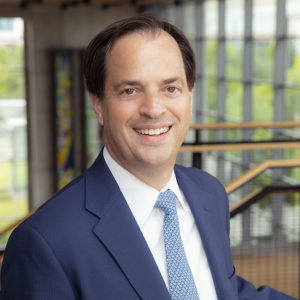
Is the best AI strategy in health care actually using less AI? In this episode, Dr. Ryan Neinstein, a board-certified plastic surgeon and founder Neinstein Plastic Surgery, shares lessons from growing his practice, partnering with private equity, and navigating the rise of AI in health care. Dr. Neinstein explains why the practices that thrive may be the ones that use technology to improve efficiency while investing even more in human relationships. Tune in to learn how successful practices can embrace innovation without sacrificing the personal connection patients value most, and why strategic growth, the right investment partner, and a commitment to human connection may be just as important as the latest technology.
Listen to the full episode using the player below, or by visiting one of the links below. Contact ByrdAdatto if you have any questions or would like to learn more.




Transcript
*The below transcript has been edited for readability.
Intro: [00:00] Welcome to Legal 123s with ByrdAdatto. Legal issues simplified through real client stories and real-world experiences. Creating simplicity in three, two, one.
Brad: [00:14] Welcome back to Legal 123s with ByrdAdatto. I’m your host, Brad Adatto, with my co-host, Michael Byrd.
Michael: [00:19] As a business law firm for health care practices, we meet a lot of interesting people and learn their amazing stories. This season, Brad, our theme is AI in Health Care. We’re bringing in people a lot smarter than the two of us, which isn’t that hard, to help decipher the business risk of using AI in a medical practice.
Brad: [00:36] And remember, Michael, because this is all new, we don’t really have client stories, but instead we’re having a series of interactive conversations with people who are in the know because this is a once-in-a-lifetime shift in the world of business.
Michael: [00:50] Yes, and today, we have a guest joining us to talk about private equity, artificial intelligence, and where those two worlds collide inside a plastic surgery practice. But before we get there, Brad, I read an article that illustrates the powerful influence of television. Do you know the story about Ryan Reynolds and Rob McElhenney buying an English soccer, I mean, football club?
Brad: [01:14] Yes, I know the story well. I didn’t see the documentary, but I understand these two Hollywood stars bought a struggling soccer team. Sounds like a sports strategy, maybe. I don’t know. It sounds like maybe it’s a tax deduction more than anything else.
Michael: [01:28] Probably is.
Brad: [01:28] Yeah.
Michael: [01:29] For context, for those who haven’t heard, they purchased the Wrexham AFC club in Wales, and it was a low-level club in the English football system.
Brad: [01:41] So they bought low, invested heavily, and turned the whole thing into television. Seems like a great idea, Michael.
Michael: [01:47] Yeah, yeah. Well, the English Premier League, for those not familiar, is the top level, and then they have all these levels below that. At the end of each season, clubs can be promoted to the next level if they win or relegated to a lower level if they come in last. This documentary that you mentioned was a Disney docuseries called Welcome to Wrexham, as they walked through their journey to try to go from the low levels and move up.
Brad: [02:19] Yeah, I love that system. You win, you move up. You lose, you go down. If law firms had that system, one bad quarter, Michael, would you have me go practice in a kiosk in the mall, maybe?
Michael: [02:30] Yeah, I mean, I would make fun of you first.
Brad: [02:32] Okay.
Michael: [02:32] But then, yeah, maybe. We’ll see. That seems too generous to let you do a kiosk. But the show’s been a hit, and with all the money that they’ve poured into the team, they actually now are in the second tier. They’re right below the Premier League, and they started at the fifth level and were able to be promoted three straight years, which is unprecedented.
Brad: [02:56] That is. That’s three straight years in a row. It’s pretty incredible. And Ryan Reynolds apparently brings the same thing to football, or soccer, that he brings to his interviews: great timing, quick decisions, and just enough money to make the rest of us feel like underachievers.
Michael: [03:11] Yeah. But here’s where it gets fun.
Brad: [03:13] Okay.
Michael: [03:13] This is the article. It’s about a couple from Texas. They loved the show. In fact, there’s some local band featured on the show, and they thought it’d be fun to order sweatshirts from that band. I guess when they ordered them, there was a mix-up in the order, and they started a pen pal friendship with this band and decided that they would visit Wrexham because the band said, “Why don’t you come see us?” Fast-forward seven trips later to Wrexham, they have now listed their house for sale in Texas and are moving there.
Brad: [03:47] Okay, well, that escalated pretty quickly. I mean, watching a show on food might make you want to eat a bit. Well, moving across the country, that’s pretty big. Or, moving to another country, it’s a pretty big deal.
Michael: [03:58] Yeah, no doubt. Well, I guess Ryan Reynolds caught wind of it and posted, “Thank God they didn’t watch Chernobyl.”
Brad: [04:06] Well, this is why I like Ryan Reynolds. He has some of that quick wit that gets him out there. Good timing, like you said. Maybe there should be some disclaimers next time on some of those shows.
Michael: [04:17] Right. Well, I’m curious, have you ever been inspired to visit somewhere just based on watching a show?
Brad: [04:22] Does outer space count?
Michael: [04:24] Hmm, yeah, I don’t know. I don’t think so.
Brad: [04:28] Okay, yeah.
Michael: [04:29] I kind of have. I mean, we did go to Montana this summer, and we were spurred on by watching Yellowstone. It was technically already on our list, but that was the final push.
Brad: [04:43] There you go. Well, Montana has always been on my list, too. But I’m very impressed with you, Michael, that you went on a trip without buying a house or a ranch there. Good job.
Michael: [04:51] Yeah, okay, well.
Brad: [04:52] Let’s bring in our guest, though.
Michael: [04:53] All right. Joining us today is a longtime friend, Ryan Neinstein. He is a board-certified plastic surgeon in New York City and the founder of Neinstein Plastic Surgery, located on Manhattan’s Upper East Side. His practice has been a leading destination for patients in New York since 2012. He’s often called the surgeon’s surgeon because other plastic surgeons choose him and his team. He did a five-year plastic surgery residency at the University of Toronto and a fellowship at the premier Manhattan Eye, Ear, and Throat Hospital in New York City. He’s board-certified by the Royal College of Physicians and Surgeons of Canada. He’s an active member of the American Society for Aesthetic Plastic Surgery Safety Committee and has authored the American Society of Plastic Surgeons’ Safety and Procedural Guidelines on Liposuction, published in Plastic and Reconstructive Surgery and the Aesthetic Surgery Journal.
Michael: [06:05] He has been featured in Bloomberg, the Huffington Post, Glamour, Women’s Health, and the Daily Mail. I’m very grateful to have him as a guest today to share some wisdom he’s learned, particularly over the last year. Ryan, thanks for being here.
Ryan: [06:20] Thanks for having me, guys. Longtime listener of the pod, so it’s great to be on. I was sure you were doing this Ryan Reynolds story because we’re two Ryans from Canada, living in New York, the same age. I thought you were going to make that connection. That’s where I thought the story was going.
Michael: [06:40] The doppelganger connection was meant to be subtle. It’s destiny.
Ryan: [06:43] Me, Ryan Reynolds, Ryan Gosling, we’re all the same. We’re all from Canada living here, and I throw myself into that bucket. I don’t think they know that I do that, but I do.
Michael: [06:54] Hey, triple threat.
Brad: [06:55] Yes.
Michael: [06:55] I love it.
Ryan: [06:56] Yeah.
Brad: [06:56] Well, I’m sure they know now that you said that in public. I’m sure.
Ryan: [07:00] Exactly.
Brad: [07:00] The Ryans out there who are big fans of our show probably are listening right now. Talk about being inspired. Obviously, those Ryans are inspired by you, but have you ever been inspired to move somewhere or visit someplace just by watching a show?
Ryan: [07:18] Yellowstone probably created all the travel. I have gone to a ranch in Montana multiple times since I’ve started watching Yellowstone, done all the things, and loved it. Absolutely loved it. And I could see myself retiring as a cowboy one day.
Michael: [07:40] Yeah.
Brad: [07:40] There you go. That’s awesome.
Michael: [07:41] It’s a good show. I’m right there with you. All right.
Ryan: [07:45] There’s something visceral about the outdoors in that way. It’s rugged. It’s like sexy. It’s visceral. It seems evolutionarily appropriate that you’re hunting, gathering, in mountains, near water, moving with the animals. It just seems right in so many different ways, and it’s really a great vacation.
Michael: [08:13] Oh, you’re going to get Brad to go with that sell.
Brad: [08:15] Yeah, exactly. I’m in.
Michael: [08:18] All right. Let’s jump in. Why don’t you first introduce the audience to your practice? Tell them about Neinstein Plastic Surgery.
Ryan: [08:25] Sure. So we’re a body practice here in New York City. We keep it super simple. If you’re in a room full of plastic surgeons and you ask them, “What do you do?” They’re all like, “I’m a plastic surgeon.” And then you say, “But what do you do?” And, “I have breast, butt…” They give you this long thing. People say, “What do you do?” And I say, “We help make moms look and feel sexy after babies.” That’s it. And they’re like, “I don’t know what that is, but I’m in, because I like that idea.” So we keep the business model very simple. All the surgeons do the same thing. So it doesn’t matter if you’re going to me or one of the other surgeons, you’re getting the same method, and we put in our own little luxury experience, because we’re in the heart of the Upper East Side of Manhattan, and we want that brand association or those associations between luxury and what we do. And that is the basis of Neinstein Plastic Surgery.
Ryan: [09:19] We have four surgeons now. And the model that I created was similar to the Tesla model: when you come out, create something that people really want that’s very expensive, but it’s only offered to a limited few. And then once you’ve gotten an inflection point of demand, you can build out the infrastructure to offer what you do at a lower price, right? People all want the Tesla for a certain type of car, but they make all their money on the other type of car. So that’s what we do. We have this great brand. We are hyper-focused on the mommy makeover, which is now plus weight loss. We don’t confuse people. They know who we are and what we do. And we put a lot of sizzle into that experience. So that’s the practice.
Brad: [10:18] That’s awesome. It’s a good way to describe it. I like it. You and I were talking just before the podcast started, but you had an interesting experience almost a year ago when you sold to private equity. So I’d love to hear, from your perspective, what did you learn as a plastic surgeon selling to private equity?
Ryan: [10:36] Well, I learned a lot. But I would tell people the key takeaways I have are: if you’re going to sell, you sell for the right reasons and at the right time. And I think the right reason is you get to a certain magnitude of size. I’m at 50 staff, four surgeons, and there’s only so much risk I’m willing to take that’s on a handshake or personal risk. So a lot of it is simply de-risking if you want to keep growing, taking chips off the table because anyone who gets to a certain size is likely going to have a significant amount of debt. And if you want to keep growing, every time you keep growing, the bills get way bigger exponentially. So the reason was, hey, I think what we do is really great. I want to keep growing. I’m not going to keep growing this out of pocket, because you’re getting into huge numbers, and if something goes sideways for whatever reason, like a global pandemic, you could get wiped out. So it’s worth it, if you want to keep growing to a certain extent and keep going forward, to de-risk and take chips off the table.
Ryan: [11:52] And also, on a personal note, give yourself a sunset that you can see versus just staying on the treadmill. You’re like, “Okay, I’m 45. And I know I don’t have to stop in whatever amount of years, but at least I know I can. There is an exit.” And so I think I had the right reasons and the timing. The key, I believe, and I’m interested in what you think, is this: beginning of your career, you have nothing to sell because you have no brand. End of your career, you have nothing to sell because you might have a brand, but there’s no substance behind it because you’re on the way out. You’re not going to stay. So the real optimal time is at your apex, when you’re peaking in earning potential, but you’re also not going anywhere. I don’t want to leave. I’m not going anywhere, but this is the time when people are really interested. So that worked out in terms of realizing that.
Ryan: [12:52] And then the biggest thing for me was I run this practice top to bottom, left to right really well. I don’t need any help, okay? I don’t need any help with anything, really. So I wanted someone who was a quiet partner, who was looking for a black belt practice, who was going to do nothing unless I asked. Literally nothing. Not changing the payroll, not asking me any questions. We don’t even really have any meetings. Because our numbers speak for themselves, so they don’t care. For them, this is great. We don’t really have to do anything.
Brad: [13:28] I think that’s such an important part of describing that you had a vision for what life looked like after you sold, and I think that’s a really important piece because you had the ability to think about it well in advance. As you said, the beginning and the end are the worst times to sell, but you were at the apex. That’s an interesting take.
Michael: [13:47] Yeah, I agree.
Ryan: [13:48] The apex is the hardest time for a surgeon to do it, because that’s probably when your ego’s the biggest. But I’m not saying my ego is the biggest, because ego is the enemy, but that is your highest value for a purchase. Your EBITDA’s probably the highest, and your multiple is high because you’re going to stay for a while and commit to 5 to 10 years. That’s really key. But I think the biggest key for a surgeon who likes to run their practice, who doesn’t mind HR and who doesn’t mind marketing, is to look for someone who’s willing to be a silent or quiet purchaser. They roll the ball out and get out of the way.
Michael: [14:34] That’s the part that is fascinating, because that’s unique. And I think that part of what enabled it, of course, is finding the right partner, but another part is the fact that you sold at the apex, and you were able to demonstrate that you knew how to run the practice. And most of what we observe in these kinds of PE partnerships is that PE’s capitalizing on the inefficiencies they see and how they can squeeze more juice out.
Ryan: [15:10] Without getting into the details, a lot of the groups in our space have realized it’s really hard to change a practice. It’s really hard to come in and fundamentally change everything, from culture to aesthetics to the way things are done. And I think the more sophisticated groups, even with deeper pockets, are like, “Let’s just go get the black belt practices and pay what they’re worth,” because they can grow. And even if they don’t grow, there’s a significant cash flow that we don’t even have to do anything for.
Michael: [15:48] That’s no doubt. I’m also struck by the timing of selling a year ago, while this AI chaos is happening around the world. I’m curious about where the practice was in the AI journey leading up to it. Had y’all started adopting it or experimenting with it?
Ryan: [16:16] I’m so glad that we get to talk about this because I saw 35 consults yesterday. Everyone is a referral, okay? Either from a physician or a patient, and they’re there because my doctor does house calls every day. The nurses are available. If I text him, he calls me back. So AI is something we use for efficiency in some things. We make our money by being analog. We all do more face-to-face, hand-to-hand interaction than anyone else, and the analog is the brand. I always tell people at meetings, “I don’t do anything in an operating room you can’t do, but everything I do out of the operating room, you just won’t do. Because I know you’re not going to round 90 minutes every morning before surgery. I know you’re not going to make all those extra calls back.” But that’s what you have to do if you want to be in that higher-end luxury world. Go to any fancy hotel in the world. Just do what they do, right? Basically, they’re there, they’re hands-on, and they’re available. So we use AI. Obviously, we use AI in the practice, but on the back-end stuff. It improves efficiency. Nothing really client-facing. And we don’t use it for any patient interaction.
Michael: [17:48] That’s fascinating, and I actually could see why that would be even more refreshing in this day and age. That human connection seems like it’s more and more of a commodity or something of high value.
Ryan: [18:04] Look, even something as simple as reminders for an appointment. I’m like, sure, the software has an auto reminder, but that’s green. I’m like, everyone’s getting a blue text. They have to know there’s a human texting them, who’s thinking about them, who cares about them. Nobody cares about green text. I don’t. I’m sure you don’t. You’re getting a blue text, and you’re getting a phone call the day before, the morning of, and a week before. We layer in all the technology. I call it this: all the technology to me is the green, and the human stuff is the blue. So I have all the green, so that if we make a mistake, it’s already cooked in. But then we layer in the blue on everything. It’s technology and then analog everything.
Michael: [18:56] Were you doing any of that before joining private equity with the AI? Or did they boost you to start utilizing it more when they came on?
Ryan: [19:07] I mean, I hope they’re not listening, but they really don’t impact the day-to-day in any way.
Michael: [19:15] Yeah.
Ryan: [19:17] We’ve never had a meeting about marketing or AI.
Michael: [19:21] Well, they’re going to get a lot of interest from any of our clients listening. They’re going to call and say, “Find out.”
Ryan: [19:27] I know. Listen.
Michael: [19:28] Yeah.
Ryan: [19:28] They’re amazing, and I do meet with them and stuff. But for bigger concept ideas, they are very helpful. They have over 1,000 practices, right? So they, at the mothership, use AI a lot for going through insane amounts of data from a thousand practices on everything. But in our practice, we don’t use much. The company itself does, but more on an enterprise level than the customer-facing level.
Michael: [20:05] I was just going to say, I’d love to hear a little bit about the green stuff that y’all do use. So do you use things like Open Evidence, or what are some other things that y’all use?
Ryan: [20:21] We use CRMs that are cooked into our EMRs and stuff.
Michael: [20:25] Yeah.
Ryan: [20:25] But I’m still like, “Just call the patient. Just see the patient.”
Michael: [20:29] Yeah.
Ryan: [20:29] When you have surgery with me, each surgeon has a team. So you have surgery with me and my two nurse practitioners start a group text with that patient. They say, “Hey, we’re available 24/7. We’re also going to do a FaceTime every morning at 9:00 AM for a month,” okay? And while they’re in town staying in the hotels across the street for the week, I see them every day. So they’re seeing the surgeon every day. Another team member, a concierge medical assistant, is physically seeing them. They have a 24-hour nurse with them, and my nurse practitioners are either seeing them or FaceTiming them every day. It’s a lot. We hand-hold, but that’s the luxury experience. That’s what people are paying for. They’re paying for access to de-stress. The stress and anxiety of surgery is not the operation. They know I’m going to do whatever in the OR and it’s going to be fine, but when they wake up, that’s when the reality kicks in of what’s happening.
Michael: [21:35] Have you tried to systemize or build efficiencies into the white-glove stuff that y’all do?
Ryan: [21:44] Yeah, that’s where we’re always playing around and trying to find better ways to do it. One thing we use AI for with the white-glove stuff is sending flowers on people’s birthdays. It’s a lot of work when you have thousands of patients. So AI can do that automatically through the florist, so we don’t even have to do that manually.
Michael: [22:15] That’s pretty smart. It’s a good way to use it. So in your perspective, for right now, for your practice, AI is really just helping you with some of the back-office aspects.
Ryan: [22:24] Yeah. And some of the marketing. But again, in marketing we’re pretty simple, and it’s just us holding our phones, telling people what we’re doing, showing them what we’re doing. But you can use AI to maybe help you tell a story better using some graphics or anything. But I know a lot of practices are trying to use AI, and it’s still mostly word-of-mouth referrals. I know it seems weird with how big our practice is, but it’s still mostly word-of-mouth referral. If Michael wanted to refer me a patient, he’s going to text me, “Hey, my friend Sue is in New York and she wants to see you.” Great. Text me Sue’s number. My coordinator will call her. They’re going to talk. She’s going to come into the office. I’m going to see her personally. Then she and the coordinator are going to have this cell phone number. We try not to allow technology to replace that human touch because that’s really what we’re known for and what people want.
Michael: [23:26] Yeah, makes sense. Well, I guess we have time for one more question, and I’m going to ask you to look into your crystal ball. In your practice or just in general with plastic surgery, how do you think AI will be used with plastic surgeons in the next five years?
Ryan: [23:42] I think if I zoom out and I’m in the PE space, I’m going to use AI to try to find the practices that are going in the right direction. And I think that if you can get some basic financials from people, you’ll be able to predict who is going to become the kind of practice you want to purchase, and it’ll allow you to look at the practice and the community they’re in and see if there’s symbiosis. That data’s just based on gut instinct right now. You’re like, “I think Phoenix is growing, and I think there’ll be more breast surgery to do,” and this, that, and the other, but it’s really hard to do.
Ryan: [24:19] In the office, I do think a lot of practices are going to be using it clinically. There’s software right now for liposuction, which I’ve authored a lot of papers on, for predicting blood loss based on the information you enter about the patient and what you’re going to do. It can predict blood loss and tell you how much lipo to do and where to do it from to minimize the risk that their hemoglobin will drop to a certain degree. I don’t really use any of that, but it sounds pretty cool, and I think you’re going to see an interface. I really do. I think you’re going to see an interface where people are going to do consults. I think it’s going to be like, “Hey, you can meet with Dr. Neinstein for 500 bucks, or you can meet with Dr. Neinstein’s hologram for nothing, and your consult can be 12 hours long if you want.”
Brad: [25:10] That would be interesting. That’s fascinating.
Ryan: [25:12] Because the data is compelling. I don’t know how much you guys read from the AMA or in the psychology literature. It’s actually very interesting if you do. Not that I read a ton of psychology literature, but I do have exposure to it. Patients love interacting with AI physicians, okay? The data is crystal clear because if you get me two hours from now, I’m tired. I’m probably not my best self, okay? And I know this is a really big moment for you, but you’re not getting the best me because I’ve been in the OR for six hours, this, that, and the other. They love talking to these bots, who are totally empathetic, sympathetic, and never in a rush. No eye-rolling.
Brad: [25:56] That’s magical.
Ryan: [25:57] You can talk to them about whatever. If you want to ask them how to make blueberry pancakes, they’ll talk about blueberry pancakes. So patients love it. I just think in surgery right now, for us, we haven’t gotten there.
Brad: [26:14] Yeah.
Ryan: [26:15] I do think there’ll probably be a point where people say, “Hey, it’s eight months before you can meet me in person, but you can meet me as a bot now. Literally right now, and maybe you’ll get a good sense of things. And that will give you some more information on whether or not you want to wait for that in-person consult.”
Michael: [26:34] Wow, that’s fascinating. Well, thank you so much for joining us on the Legal 123s with ByrdAdatto. That just flew by. We’re grateful for the time, and what we’ll do next is go to break and come back with a quick wrap-up. I really appreciate it, Ryan.
Access+: [26:52] Many business owners use legal counsel as a last resort, rather than as a proactive tool that can further their success. Why? For most, it’s the fear of unknown legal costs. ByrdAdatto’s Access+ program makes it possible for you to get the ongoing legal assistance you need, for one predictable monthly fee. That gives you unlimited phone and email access to the legal team, so you can receive feedback on legal concerns as they arise. Access+, a smarter, simpler way to access legal services. Find out more. Visit byrdadatto.com today.
Brad: [27:26] Welcome back to Legal 123s with ByrdAdatto. I’m your host, Brad Adatto, with my co-host, Michael Byrd. Now, Michael, for those who don’t remember, this season we’re focused on AI in health care, and my goodness, we had a great conversation with Ryan. Not to be confused with the other Ryans, right? But it was interesting hearing about how he partnered with private equity and how he’s utilizing AI throughout his plastic surgery practice. He had a lot of cool takeaways, and I’d love to hear one of your main takeaways in the last minute we have left.
Michael: [27:57] Yeah, I loved his unique and fresh perspective. In particular, when he was talking about his deal work, the premise of selling at your apex. Because you and I have seen so much resistance to that being too soon, because people don’t want to be working for someone else during their prime earning years. But it was a really interesting takeaway. Not to mention the fact that he was able to find a partner who was going to let him keep doing his thing. I found that really unique and fresh, and I was refreshed by the idea of him maintaining the human element in the way he runs his business. Yeah.
Brad: [28:48] The way he treated it. No doubt. Well, audience members, that’s all the time we have today. We will be back next Wednesday when we bring on an outside vendor who actually has an AI company, who almost is a series regular because he’s been on so many times with us, the Godfather, the person who helped start our podcast, Tim Sawyer.
Brad: [28:59] Thanks again for joining us today. And remember, if you liked this episode, please subscribe. Make sure to give us a five-star rating and share with your friends.
Michael: [29:14] You can also sign up for the ByrdAdatto newsletter by going to our website at byrdadatto.com
Outro: [29:21] ByrdAdatto is providing this podcast as a public service. This podcast is for educational purposes only. This podcast does not constitute legal advice, nor does it establish an attorney-client relationship. Reference to any specific product or entity does not constitute an endorsement or recommendation by ByrdAdatto. The views expressed by guests are their own, and their appearance on the program does not imply an endorsement of them or any entity they represent. Please consult with an attorney on your legal issues.