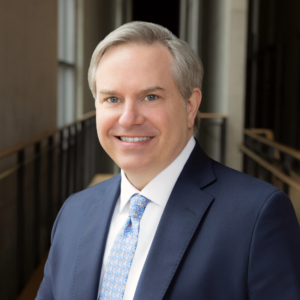
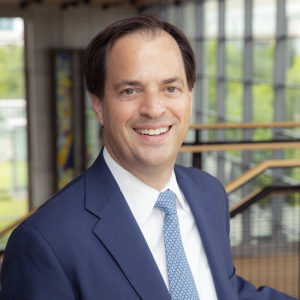
As more practices expand into wellness, the question is no longer whether to enter the space, it is how to do it strategically. In this episode, Ben Hernandez, founder and CEO of Skytale Group, breaks down how wellness, longevity, and functional medicine have evolved from emerging trends into serious, investor-backed medical platforms. Tune in to learn what’s driving valuations, from recurring revenue and memberships to compliance risk and service mix, and what founders should be thinking about now to build long-term enterprise value as the wellness market continues to mature.
Listen to the full episode using the player below, or by visiting one of the links below. Contact ByrdAdatto if you have any questions or would like to learn more.




Transcript
*The below transcript has been edited for readability.
Intro: [00:01] Welcome to Legal 123s with ByrdAdatto. Legal issues simplified through real client stories and real-world experiences, creating simplicity in three, two, one.
Brad: [00:13] Welcome back to Legal 123s with ByrdAdatto. I’m your host, Brad Adatto, with my co-host, Michael Byrd
Michael: [00:19] As business attorneys for health care practices, we meet a lot of interesting people and learn their amazing stories. This season’s theme is The Future of Wellness, where longevity, advanced weight loss solutions, and anti-aging innovations collide. Get ready for insights from the people driving the evolution of the medical industry.
Brad: [00:40] Now, Michael, I am actually really excited for our in-studio guest today for today’s show. But before we bring him on, Michael, I know you’re a big fan, and you’ve been to a bunch of K-pop concerts. Do you watch the K-pop videos just to learn any of their dance moves?
Michael: [00:56] Brad, you have tapped into my world now. Audience, I actually had ChatGPT tell me the 20 most popular K-pop bands, and I’ve been to one through nine of the concerts, plus number 12, 15, and 17. So that means I’ve been to 12 out of the top 20 K-pop bands’ concerts. So you asked about the videos.
Brad: [01:28] Yeah, do you, do you watch the dance videos?
Michael: [01:29] Yeah. Well, I’ve seen far more of these videos watching my daughter learn the dance moves than I care to remember, but I have not, despite her trying to get me to learn them, actually partaken. How about you?
Brad: [01:44] Yeah, I’ve never watched one of those things. But I’m more of a dad dancing kind of guy, which is mostly chair dancing or jiggling a little bit here and there. With that, it actually perfectly brings us to today’s opening story because somewhere in the world, a lawyer decided, “You know what my marketing needs? Less professionalism, more club lighting.”
Michael: [02:05] This sounds… I’m not sure if this is a bar complaint waiting to happen or your inspiration.
Brad: [02:12] Fair question. So picture this: South Korea, a lawyer, very confident, very online-ish, decides to come up with this new marketing idea for his legal services by dancing. That’s not metaphorically, yes, dancing, actual dancing in front of a nightclub billboard, and the titles flashing behind it were “Gangnam’s No. 1” and “King of Seocho.”
Michael: [02:34] Okay. It’s very bold branding, and what I’m really hoping is that you’re presenting this story as an extreme complaint, not an idea that you want us to use.
Brad: [02:48] First off, yes, you’re correct, very bold. We’ll hold off on whether or not it’s a good idea yet. But less ABA Model rules, more like America’s Best Dance Crew maybe rules. And the regulation, although in South Korea, we’re not as dazzled with his moves, believing that he crossed the professional line, doing the electric slide, I guess, on top of that billboard.
Michael: [03:08] Okay. Well, let me guess. He argued that there was no rule that said he couldn’t dance?
Brad: [03:14] Yes.
Michael: [03:14] Okay.
Brad: [03:14] But the court basically said, “You don’t need a rule for every bad idea.”
Michael: [03:19] That’s a pretty good legal principle, one I would advise you to start living by.
Brad: [03:24] Damn it. Well, for his case, he got a one-month suspension. He appealed. The judge ruled against him saying that your credibility kind of moonwalked out the door when you start doing all these K-pop moves.
Michael: [03:37] I’m not sure moonwalking is a K-pop move, but I get it. You have to tap into the ’80s.
Brad: [03:42] Yes. All right. For our audience, to be clear, this isn’t just a South Korean thing. Every state bar has some type of advertising and professionalism rules. So the geography may change, but the rules don’t. Before anyone asks, no, our guest, Ben, today is not a labor lawyer, though he does occasionally play one on TV. So for those wanting to help Ben out the next time he thinks he’s going to advertise his labor law skills with some wicked dance moves, don’t do that.
Michael: [04:11] Okay.
Ben: [04:11] At a K-pop concert.
Michael: [04:15] All right. Joining us again is our friend Ben Hernandez. He’s the founder and CEO of Skytale Group. Skytale is a strategic financial and M&A advisory firm. For a little background for those who have not met Ben, earlier in his career, he worked with an international banking group, a hedge fund, and financial services and advisory institutions. He went to A&M for undergrad, BBA in finance, and we don’t hold that against him. And then he has his MBA from the SMU Cox School of Business. We have co-hosted the MSS M&A Summit with Skytale for many years, and the next one is coming up on April 8th, where we’re also co-hosting. Skytale is co-hosting with ByrdAdatto and Eskow Law Group. And this is your fifth time on our podcast, Ben.
Ben: [05:07] Wow. Thank you for having me. What’s the record, by the way?
Michael: [05:10] You may be tied.
Brad: [05:11] Yeah, I think you’re tied actually right now with our partner, Jeff Segal. Now, Ben, we were talking before this podcast about advertising and marketing. Skytale Group is out there all the time doing a lot of stuff. Has one of the marketing blitzes with you dancing in front of a nightclub billboard been brought up?
Ben: [05:30] We tried that. It didn’t go well. We lost a lot of leads, a lot of clients, a lot of team members.
Brad: [05:39] Oh, well, at least you tried.
Michael: [05:40] Yeah.
Ben: [05:40] Yes, you have to give it a shot.
Michael: [05:41] That’s right. All right. Let’s jump in and get right into it. So you heard us mention we’re talking about wellness this year, so we’re focusing on the future of wellness. It’s the craze, and when we say wellness, we’re really talking about all that implies: longevity, weight loss, anti-aging.
Brad: [06:02] And I’m curious, Ben, what signals investors that wellness has moved from a fringe or a consumer trend into kind of a serious, durable medical service line?
Ben: [06:16] Yeah, it’s interesting, and we haven’t talked about this. Our firm this year also is doubling down and hyper-focusing on what we call precision health care wellness, functional medicine, and longevity. The reason for that is this really started a few years ago, and it’s been picking up steam around the time of COVID. Generally, the worldwide population started prioritizing this, so we’ve been keeping an eye on it. Currently, I think there was a report out there by McKinsey. They polled everyone on whether they consider wellness to be a priority or top priority, and eighty-two percent responded yes, among other findings. When you look at where we are today, investors are taking it seriously because this is driven by patients right now. Gen Z and millennials are driving this trend, shaping the future of the United States, which is extremely exciting. You start combining this with employers moving to high-deductible plans, using HSA and FSA dollars. Patients are saying, “Dr. Michael, it’s no longer enough for me to see you one time a year. You run a lab test. I see you for five minutes. I can sense that you’re rushing, not really paying attention to my personal health.” Those biometrics really only show when you’re out of range. Patients now want longer consult times, concierge-level medicine, and ask, “How do you hack my health?” They take deeper lab tests every quarter. So you’re combining longer visit times, telehealth, and concierge-level medicine. On their way out, they’re asking about nutraceuticals or supplements. This is becoming a mainstay. Current medicine increased lifespan, but this next phase aims to increase health span, closing the gap of poor-quality years late in life. People want to make decisions today to help tomorrow. It’s here to stay. Not only are investors looking at it, but financial sponsor-backed groups are creating wellness platforms, including those in medical aesthetics with med spa platforms. It’s very exciting times.
Brad: [09:30] So forgive me if I put words in your mouth, but the last time you were on our podcast and at MSS last year, the weight loss craze was going pretty strong. You had mentioned, or your team had mentioned, that one of the problems they were having was how to value weight loss by itself, and y’all were almost devaluing it because of FDA changes, shortages, and all the other factors at play. With that background in mind, weight loss is a small piece of anti-aging and longevity. How are they now looking at these new lines, and how are you evaluating them?
Ben: [10:12] Yeah, good question. For the wellness platforms, when we started researching what these were trading for, to start getting a thesis on exactly what you’re talking about, we formed a thesis on GLP-1s, for example. Now we need to form a thesis on what wellness overall looks like. There are two main types that we found: one is physician practice management-led practices or organizations, and the other is direct-to-consumer. We primarily focus, and so does private equity, on the first one, the PPM model. We’re seeing multiples slightly higher than medical aesthetics overall, which is fascinating, especially because we’re in the early innings. Those are trading very healthily, comparable to aesthetics, but slightly higher, which I didn’t initially expect. The direct-to-consumer platforms are even higher than that, which is also quite fascinating.
Brad: [11:13] I’m curious, too. I mean, maybe we don’t know yet, but do you think that they’re on par or even slightly higher because this is the trend? Patients seem to be looking at this as a long-term play, and that may be predictive of stable revenue.
Ben: [11:34] I think so. If we go back to the beginning of our discussion, these patients are asking to effectively come in and see you every quarter, and they’re asking you to run tests, whether it’s testosterone, or in males, testing for Lyme disease. In females, there’s a lot of testing historically underfunded and overlooked. The female portion of it is going to be a big driver, with a lot of menopausal-type medicine emerging, which is exciting. These patients come in every quarter. Anytime you see a model like this, Michael, that has recurring revenue, it’s very different from certain types of procedures, like plastic surgery, where you might see a patient once. Here, you could have a patient for multiple years.
Ben: [12:31] And by the way, it’s also driven by Gen Z and millennials, so these patients, if you do a great job, patients could be around for a long time, and I don’t think it’s anything they’re going to stop doing. It’s something that I think they’ll continue for the rest of their lives. So yes, I think a big driver of the valuations we’re seeing is that recurring revenue theme.
Brad: [12:49] And there’s been a big shift. I know I started it when we were talking about weight loss, but now that some of these name brands like Eli Lilly are starting to drop their prices, is that going to impact the valuations too?
Ben: [13:02] I think so. On the GLP-1 side maybe. It could do a couple of things. Number one, we still have the same view on medical weight loss that you were referencing, Brad, meaning anything around eight to ten percent or above, we start getting a bit nervous because of that pen stroke risk you mentioned, whether from a governmental body or litigation, that it could go away at any point in time. Is it on or off the shortage list and so forth? So we continue to have that view. As you mentioned, the name brands are coming down in price. Another thing it could do, and we’re actually seeing some consolidating groups in aesthetics doing this, is they’re starting to partner with some of these name brands so you can get them through the medical aesthetic practice. I think that might be another avenue. I don’t think it’ll be a total loss of revenue because we have stats showing that if a practice offers medical weight loss in addition to all their other offerings, it’s actually accretive to the practice. So it becomes a double-edged sword. It’s actually a positive. Patients stay longer with the practice. Many people want all their health care under one roof. If you have to go to eight different entities for your care, that’s very different. Whereas if one practice knows everything about you, they can provide more personalized health, which is really what consumers are asking for.
Brad: [14:38] Yeah. And staying on that real quick, on weight loss just in general, you know, these name brands are starting to come out with pills versus the shot. Have you seen any data showing what impact that’s going to have on increasing the number of potential patients because they were afraid of shots or the regimen they would have to follow with shots versus a regimen with pills? Have you seen any data out there on how that could impact valuations?
Ben: [15:07] We haven’t seen any data. We assume and expect that it’ll be accretive because, as you pointed out, it’s a lot easier to take a pill than a shot that requires planning and refrigeration. We think it’ll be accretive if it’s effective and can just be another pill to take during your day. I don’t know that any studies have been done on expected results, but I imagine it will be accretive.
Brad: [15:40] Yeah. I mean, I agree with that statement.
Ben: [15:42] Yeah.
Michael: [15:43] So I want to go back into some of these wellness services and the valuations that you are seeing. In any of the data or reports, have you seen a concern or risk about compliance that either is pressing the valuation, holding it back a little, or creating risk for the future? Has that conversation come up?
Ben: [16:14] There hasn’t yet, but I imagine. It’s interesting, we were talking about this the other day, and I imagine you’ll see in wellness and functional medicine the same thing that we’re seeing in aesthetics. At some point, as this grows and the microscope gets a little closer on you, we are going to see those things. Right now, there hasn’t been much concern around it.
Michael: [16:38] Yeah, to be fair, we’re painting with a broad brush right now, even calling it and breaking it down to longevity and anti-aging. I mean, we’ve had specific conversations about exosomes, which is not the same conversation from a compliance perspective as something that’s more well-established, FDA-approved, et cetera.
Ben: [17:02] Yeah, exactly. Like you said, that’s a good question of what exactly is wellness. Is it simply supplements, nutraceuticals? Is it NAD? Is it peptides? Is it medical weight loss? What exactly are you doing within your practice? And then from there, to your point, Michael, maybe some do have different risk profiles.
Michael: [17:23] Yeah. I think it’ll be interesting to see how the market responds to it. Our perspective when we’re talking to clients is that they do, right? Like peptides, even peptides is pretty generic because there are different types of peptides and how you’re using them. We had an entire episode just on that where we had to bring in someone smarter than us, surprise, surprise, to talk about it.
Brad: [17:50] Well, and I think, I want to ask a follow-up question on this, sticking with the wellness platform. For our audience members out there, we’ve talked about aesthetics for so long. Most of the aesthetics that we talk about when it comes to valuations have to do with cash-paying patients. With wellness, have you seen a shift, or at least with some of the potential clients you’re talking to who might be dealing with certain commercial payers for hormone replacement and other services, and how does that impact their overall valuation if they have a wellness clinic that’s partially cash and partially commercial? Do you see a difference in the overall valuations?
Ben: [18:27] Typically, we do see a difference in those valuations. If you’re comparing two clinics and clinic A is all cash pay, the valuations are generally higher because you don’t have to manage all of the complexities that come with insurance.
Brad: [18:44] Right.
Ben: [18:44] If you have clinic B, very similar but taking insurance, valuations are typically slightly lower depending on the type of insurance. From a clinic perspective, one key factor is the cultural difference between a cash-pay-specific clinic and a hybrid clinic. We ran into this in dermatology. A clinic that is cash pay specific often has a very different patient base, marketing approach, treatment style, and overall patient expectations compared to a hybrid clinic. For example, does the practice have the feel of a traditional dermatology office with carpet and rugs, or more of an aesthetic-focused space with stone floors and a curated environment? These cultural differences can be challenging to execute successfully.
Michael: [19:42] That reminds me of when we had Alan Durkin on. He has a med spa, a dermatology practice, and a plastics practice. He mentioned that he had a huge breakthrough with his business when he started running traditional non-cash businesses like a med spa with that same service level and attention to look and feel. It made a massive difference in the overall performance of those businesses.
Ben: [20:12] That makes a lot of sense. I think a lot of people don’t come to that realization and don’t fully execute on it, so it’s great that he did.
Michael: [20:21] Yeah.
Brad: [20:22] So for our audience members trying to keep up here, you kind of already mentioned it a little bit, but let’s just talk about that recurring revenue and lifetime patients you’re mentioning. How do investors evaluate that, especially as wellness platforms start going to these clinical sales and potential roll-ups?
Ben: [20:39] Sure, yeah. So I think the way they evaluate it is what percentage of the clinic is recurring revenue. Interestingly, and maybe this is part of the reasoning for the higher valuation, in wellness clinics we actually see a higher recurring revenue than in others. It’s a combination of people truly coming in every quarter, and the other piece is that there are a lot of membership programs in wellness that work very well. What we’re seeing is the percentages are a bit higher, they can be in the thirty to forty percent recurring revenue range. That’s extremely valuable because every month when a business owner wakes up, they know that X dollars are going to be in the door, and that’s extremely accretive.
Brad: [21:25] So that’s good.
Ben: [21:26] That’s very good.
Brad: [21:27] Okay, good. Just making sure I’m playing, catching up.
Ben: [21:29] That’s right. On top of that, if Michael tells me, “Hey, you should go to my clinic. It’s great,” I’m going to go. I’m going to be a new patient. From a marketing spend perspective, if you look at lifetime value divided by marketing dollars spent, the acquisition cost is much lower, and the stickiness of new patients is much higher, which is exciting. I think because of that, we’re seeing some tremendous value coming out of these clinics. They are growing twenty to thirty percent a year on average, which is fantastic. You compare that to aesthetics, where we have the inverse problem. We have more med spas opening relative to growth. The space is growing, but there are so many new ones that a lot of the long-standing clinics are struggling to gain revenue. Here we’re seeing twenty to thirty percent gains, partially because we’re in the early innings, but also because of strong patient demand.
Brad: [22:32] Are you seeing then a shift? For our audience members, not only does he have the M&A side, but you have a consulting side. Are you seeing on the consulting side the traditional aesthetic practice now saying, “Hey, we want to bring wellness and longevity into our practice. What do we need to do to get there?”
Ben: [22:49] We’re seeing a lot of questions around that, yes. And I would say that to those, it depends.
Brad: [23:01] The legal answer.
Ben: [23:01] That’s right. There’s some owners that have that history to where they already understand wellness. They already know what they’re doing. I think you have to be really careful, do I really understand the medicine and the science, or am I chasing a fad? You have to be confident that you’re going to do right by your patients, because the other thing here is if you implement it, we see some that, for example, have added NAD or peptides or weight loss, so it’s episodic. I think the ones that are very successful have a true treatment plan vision in their mind of, “This is what I’m offering, and this is why I’m offering it. I’m taking care of your 360 health.” But we get those questions a lot and we’ve seen a lot of what was previously core medical aesthetics. We’ve seen them add wellness, longevity, functional medicine. Now, I will say the ones that do it well work extremely well because really what happens, if you think about it, I had someone tell me this, and I thought it was fantastic. If you’re a patient, medical aesthetics take care of your outside, right? You’re like, “Okay, I look good outside,” so that’s great. Now, the natural progression was: what about medical weight loss? Okay, now I’m looking good and feeling better. So it’s a very natural progression if you do offer wellness, well, I want to feel better too on the inside. And so that’s a very natural bridge that I think the two do a very good job of taking care of external beauty, taking care of internal health, and then there are some, I think this will be the next phase. There are some that also work with the brain. Like, “Hey, I feel good inside. I look good outside, but I’m still not happy.” And so some people are actually bringing that piece into it as well. I think it’s a fascinating time right now.
Brad: [24:55] Well, and what I loved about your answer is maybe it’s cause you’ve been hanging out with lawyers enough, you said, “Don’t just bring it in for commercial purposes. Understand the science and, in our words, standard of care aspect to it,” so you get an A+ for that answer.
Ben: [25:09] Yeah. I saw something in Michael’s hand that looked threatening, so I had to make sure to say that.
Michael: [25:16] All right. Last question, kind of speed round, but it’s a broad question. If you’re, if you’re advising a wellness clinic founder today, what strategic decision should they make now to maximize enterprise value over the next decade?
Ben: [25:32] If I’m opening up a wellness organization and I want to maximize value, I think step one would be: what am I really taking care of? To have that entire, we talked about what patients are asking for. They want to sit down with you, they want to have a longer consult, and they want to be on this journey with you for quite some time. So I would bring in the breadth of scope that I feel comfortable with, and I would bring that in. So that’s number one. I think number two is lab tests. Those are extremely valuable. People are asking to come in every quarter, and they’re asking for deeper, more expansive diagnostics. I would add that in because then what that allows you to do is test for things like testosterone, Lyme disease, menopause, and so forth, and it allows you to continue to refer out if you need to. But if you’re offering these within the clinic, there’s always something that you can be working on to optimize your health. I would also focus on women’s health. Women’s health has historically been overlooked and underfunded, and right now is a very good time for that to flip and change, and if you’re able to offer that, it would be extremely accretive to an organization as well. I would round it out by having really good membership programs. Be very careful with those. Make sure not to discount. This should truly be a membership program to keep folks coming in. Keep them on your program because when they see their health changing, you’ll never lose them as a patient. So those are some of the things I would focus on from a clinical perspective.
Michael: [27:21] Amazing. Well, we made it through our fifth time together. Thank you for joining us on the Legal 123s with ByrdAdatto. We’re grateful for you as always and look forward to our time together on stage in Vegas on April 8th. We’ll go to break and come back with a quick legal wrap-up.
Ben: [27:40] Thank you so much for having me. Always a pleasure and honor to be here with you guys and always love to see you. And, yes, very excited for MSS and MSS M&A Day. That’s going to be a really fun one with everything we have planned. Thank you guys.
Access+: [27:54] Many business owners use legal counsel as a last resort, rather than as a proactive tool that can further their success. Why? For most, it’s the fear of unknown legal costs. ByrdAdatto’s Access+ program makes it possible for you to get the ongoing legal assistance you need, for one predictable monthly fee. That gives you unlimited phone and email access to the legal team, so you can receive feedback on legal concerns as they arise. Access+, a smarter, simpler way to access legal services. Find out more. Visit byrdadatto.com today.
Brad: [28:29] Welcome back to Legal 123s with ByrdAdatto. I’m your host, Brad Adatto, with my co-host Michael Byrd. And Michael, as we know, this season we’re concentrating on the future of wellness. We had a great guest. Ben Hernandez came in and really talked about the impact M&A is having on wellness. But, you know, we only have a few seconds left, but what, what are some takeaways you have?
Michael: [28:47] I loved your point about standard of care earlier and that when you were jumping off of Ben’s point about having a purpose behind adding a wellness service line in a med spa scenario. Just recognize that this is a completely different discipline, wellness, longevity, anti-aging, than skincare or aesthetics. Just because you have the right licensure doesn’t mean you have the right training, and there is a real compliance risk with just tacking something on without making sure all ducks in a row are both science and compliance.
Brad: [29:29] Great points. Well, and just we’ll make sure we get the dates right for everyone. As we were saying in the beginning of this podcast, we are co-hosting, we’ll be, basically tomorrow, we’ll be in Vegas, at the Med Spa Show where we have M&A Summit Day with Skytale and the Eskow Law Group, and that’s going to be actually April 9th, 2026. So if you’re in Vegas, come find us. We’ll have more time to spend with you. But Michael, that’s all the time we have, so we will be back though next Wednesday when we continue to explore the future of wellness. We have on Jason Kunz, who’s going to come in and talk about the impact insurance is having on wellness.
Brad: [30:07] Thanks again for joining us today. And remember, if you liked this episode, please subscribe. Make sure to give us a five-star rating and share with your friends.
Michael: [30:13] You can also sign up for the ByrdAdatto newsletter by going to our website at byrdadatto.com.
Outro: [30:20] ByrdAdatto is providing this podcast as a public service. This podcast is for educational purposes only. This podcast does not constitute legal advice, nor does it establish an attorney-client relationship. Reference to any specific product or entity does not constitute an endorsement or recommendation by ByrdAdatto. The views expressed by guests are their own, and their appearance on the program does not imply an endorsement of them or any entity they represent. Please consult with an attorney on your legal issues.