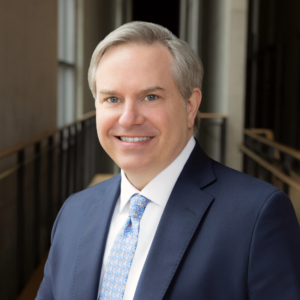
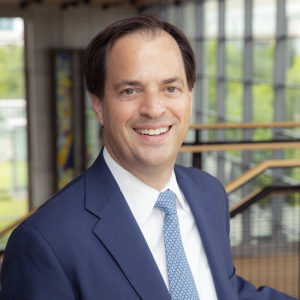
What if AI changes how physicians practice medicine more than we expect? In this episode, Dr. Akash Chandawarkar, a board-certified plastic surgeon and founder of Mirror Mirror Plastic Surgery, shares how using AI tools helped him launch his private practice and why he believes physicians need to start thinking differently about AI today. Tune in to hear how AI may transform the practice of medicine and the legal and ethical questions that come with it. Learn how physicians can benefit from working alongside AI as the technology continues to evolve.
Listen to the full episode using the player below, or by visiting one of the links below. Contact ByrdAdatto if you have any questions or would like to learn more.




Transcript
*The below transcript has been edited for readability.
Intro: [00:00] Welcome to Legal 123s with ByrdAdatto. Legal issues simplified through real client stories and real-world experiences. Creating simplicity in three, two, one.
Brad: [00:13] Well, welcome back to Legal 123s with ByrdAdatto. I’m your host, Brad Adatto, with my co-host, Michael Byrd.
Michael: [00:19] As a business law firm for health care practices, we meet a lot of interesting people and learn their amazing stories. This season, Brad, our theme is AI In Health Care. We’re bringing in people a lot smarter than the two of us, which isn’t that hard uh, to help decipher the business risk of using AI in a medical practice.
Brad: [00:38] And remember, Michael, because this is all so new to everyone, we don’t really have that many client stories, but instead, as you said, this series is really going to be more interactive, bringing in some of these thought leaders, because this is a once-in-a-lifetime shift in what’s happening in the world of business.
Michael: [00:55] Yes. And today, we have a guest joining us who I’ve shared the stage with a few times, including several times recently, on this topic of artificial intelligence, and he’s going to talk to us about AI in a plastic surgery practice. But Brad, before we get there… We have talked in past episodes about parenting styles. I recall specifically a conversation about the FAFO TikTok parenting movement that is kind of a move back to the ’80s-style parenting approach that we, as Gen Xers, experienced.
Brad: [01:32] Yeah, and I remember us reaching the conclusion after that episode that I was much better at parenting than you were. That’s, I remember that one.
Michael: [01:39] I don’t remember that.
Brad: [01:40] Yeah.
Michael: [01:40] I do remember you kind of inferring that from our conversation, which you’re prone to do. But the point, Brad, is I read an article recently that sadly revealed that helicopter parents are not dead.
Brad: [01:55] Oh, no. This reminds me that we also talked about snowplow parenting in the early season where the next-level helicopter parents, known as snowplow parents, literally clear the path of anything standing in the way of their kids.
Michael: [02:07] Yes, yes. Well, this article is in The Wall Street Journal, titled “Helicopter Parents Are Co-Piloting Their Adult Children’s Careers.”
Brad: [02:17] Yes. I actually read the same article, and based on this article, at this point, some parents are not co-piloting. They’re actually putting the flight plan together. They’re calling air traffic control. They’re actually taking off and landing the plane on their behalf.
Michael: [02:30] Yes. Parents are calling up hiring managers, applying for jobs for their kids, and even lurking off-screen on Zoom interviews.
Brad: [02:39] Yeah, and I’ll just say this: As attorneys, we do appreciate good representation, but if your mom is negotiating your employment agreement, assuming she’s not an attorney, reviewing all the benefit packages, and asking for revisions to PTO policies, she may have crossed a line from parent to outside general counsel.
Michael: [02:56] Yeah, the article in The Wall Street Journal kind of led with the story of a boss who had to fire a 24-year-old twice. The employee, in the first week, had shown up either late or not at all four times for a construction job. So naturally, he fired the employee, and then a few hours later, he had to do it again with the employee’s mom, who was pleading with him to give her son another chance.
Brad: [03:25] That’s not really a termination meeting anymore. That’s a parent-teacher conference for adults. I think the only thing missing from this was maybe mom asking if there was extra credit that her son could have done to keep his job.
Michael: [03:38] Yeah. The anonymous parents in the article, who probably don’t want to give their names, claim that they’re trying to protect their children in extreme circumstances, like the kid having social anxiety, a toxic boss, or what they perceive as unfair treatment.
Brad: [03:58] As a parent of two kids, I get it. Every parent really wants to protect their child from bad situations. The problem is, the workplace is where you learn how to deal with difficult people, unfair situations, and uncomfortable conversations. If your parents just keep taking these hits for you, you’re never going to build the muscles yourself.
Michael: [04:18] Yeah, and these are not one-off stories, according to the article. Apparently, at a national HR conference, there was a room of 250 attendees who were asked if anyone had experienced a parent calling on behalf of an employee, and more than half the audience raised their hands.
Brad: [04:36] That is so sad. Sometimes the boss really is toxic. Michael.
Michael: [04:40] Not looking in the mirror.
Brad: [04:41] Michael, Michael.
Michael: [04:42] Oh, sorry.
Brad: [04:42] Sometimes the situation really is unfair, Michael, Michael, Michael, but if a 24-year-old can’t have the conversation themself, the bigger issue may not be the boss. And look, it may be that they’ve never had the opportunity to practice navigating conflicts on their own because their co-piloting parents have been doing it all.
Michael: [05:01] Yeah. Well, your kids are still in college, Brad. Do you know what your line will be on how far you will go to, quote, “help” when they’re entering the workforce?
Brad: [05:09] Yeah, absolutely. I’ll help them prepare. I will edit their resumes. Actually, my wife, who can find the grammar and spelling errors, will do that part. I’ll help them with practice interview questions. I just did that last night with my son. I’ll help them if they need to vent about their boss, but if I ever find myself calling the employer, I hope someone takes the phone away from me. At some point, parenting shifts from protecting your kids from the world to really preparing them for it. How about yourself?
Michael: [05:36] Yeah, I’ve had three in the workforce. The closest I got to relating to this article was when my youngest, who just graduated, reached out to me because he had found a mutual friend of yours and mine on LinkedIn, and he asked me to make an introduction. I did so and backed away. I thought, “That’s as far as I can go here to give him a chance.” But you definitely won’t find me calling the employer or trying to help with the interview process.
Brad: [06:04] No doubt. All right, well, I think we have a great guest for today, so let’s bring him on.
Michael: [06:09] Yeah. Our friend, Dr. Akash Chandawarkar, is a board-certified plastic surgeon in Tampa, Florida. A little about him: He is the founder of Mirror Mirror Plastic Surgery, serving the Tampa and St. Petersburg area. Akash grew up in central New Jersey, the son of immigrant parents from India. His undergrad is from MIT. Have you ever heard of that, Brad?
Brad: [06:37] I have.
Michael: [06:37] Yeah. He studied neuroscience and nuclear engineering and was class president. He attended medical school at Harvard, earning his MD cum laude with honors. He completed his residency at Johns Hopkins, doing integrated plastic and reconstructive surgery. He then did a fellowship at Stanford in biodesign innovation. He did another fellowship with the Manhattan Eye, Ear and Throat Hospital, which is a very esteemed aesthetic fellowship. He is on the editorial board of the Aesthetic Surgery Journal as a next-generation editor and has published extensively on technology and trends in the aesthetics market. He has even testified before the FDA on breast implant safety.
Brad: [07:28] Dang.
Michael: [07:28] And has the background to really help us figure out this AI problem. So, Akash, we appreciate you being here today.
Akash: [07:39] Thanks for having me. And I think your earlier discussion about how people are going to be functioning in the workspace, if you take the parents out of the equation, what about our AI agents, who are really providing the backbone of information for almost everybody who doesn’t know something about what they’re trying to do? And I think that’s going to be the replacement for this helicopter parent. It’s going to be your helicopter AI agent…
Brad: [08:06] Ooh.
Akash: [08:07] Going forward.
Brad: [08:09] Well, that’s a nice little tie-in there. First off, I almost had to interrupt you, Michael, because I didn’t believe all the different degrees that you have. That’s amazing. But it made me think of this real quick, though, Akash. You have three young children. We just talked about that, the oldest…
Akash: [08:25] Yeah.
Brad: [08:25] Being three, and the youngest being four weeks.
Akash: [08:29] Yep.
Brad: [08:30] What strategy are you going to have for your parenting style?
Akash: [08:34] I was reading a book to my three-year-old that was about nuclear physics, and then a blockchain for babies book, which I don’t know if she appreciated too much. But it’s kind of hard because what is that future going to look like for our kids? Things that probably my parents worried about for me growing up, which were probably how I was going to stay safe driving and things like that, probably aren’t going to be issues for my kids. I don’t think they’re going to be driving cars 14 years from now. I doubt that that’s going to be an issue for my kids. I think the big unknown is: What is the danger going to be as technology advances in all aspects of life? And I think right now we’re seeing this major shift with artificial intelligence, but this is no different than the benefits and dangers that we’ve seen with every technological innovation, including computers at first, the internet, social media, and now AI. They all present some unique challenges that I think you guys, as pioneering lawyers, are seeing clients bring to you and are having to figure out, as it seems like oftentimes the law may lag a little bit in terms of figuring out what to do about all these new things.
Michael: [09:57] I don’t know about you, Brad, but I just felt relief that my youngest is about to go to college next year, and I won’t have to go through that.
Brad: [10:05] Yeah. Yes.
Akash: [10:05] Yeah.
Michael: [10:05] Overwhelming.
Brad: [10:06] Yes and no. To your point, it’s affecting all of them, no matter what age they’re at right now.
Michael: [10:13] No kidding. All right. Well, let’s take a step back because I want the audience to get to learn a little bit more about your practice. Talk about Mirror Mirror Plastic Surgery and your private practice.
Akash: [10:28] Yeah. So, Mirror Mirror Plastic Surgery is based in St. Pete, Florida, and I kind of came to building this solo, single-surgeon private practice because I tried all the models before, and they didn’t fit with me. And I think we are seeing an interesting space where we have older surgeons who grew their businesses in their communities, and they were the Yellow Pages business in the community, and they were the long-lasting group there. Their real estate was very important, how their office looked was very important, and people went to them because they were the people in that area. They built their practices and their reputations over many years, and it took a long time to do that. They took a lot of hospital call and ER call to do that at the beginning of their careers. And what we’re seeing now is younger surgeons coming in, and they’re able to build their practices and reputations on social media.
Akash: [11:34] I remember Grant Stevens telling me all the difficulty he had at the beginning of his career as the internet came about and how he received a lot of blowback from the Aesthetic Society, of which he eventually became president, suggesting that he might not even become a member or become board-certified because of this newfangled thing where no patient was going to find their surgeon on the internet. He also talked about just how those perspectives had changed. But I think that shift to not needing to join a big practice and kind of pay your dues has landed this market in a very interesting place, where the older surgeons are having a tough time finding replacements to take over their practices because they want to continue the legacy, while the younger surgeons are coming in and saying, “I can build my reputation from my computer or from my phone.” And so that’s where I dabbled in each of these areas. I tried a group practice. I tried joining an older surgeon’s practice, and in the end, the fit never matched my style because it wasn’t mine. So, I had huge trepidation about starting a private practice on my own with no business background.
Akash: [12:49] There was a lot of fear. We know that medical professionals are risk-averse in general, which is why a lot of business people can take advantage of medical professionals over time. That fear was definitely in me because I didn’t know what I was doing. I didn’t know how I would do it. I didn’t know how the money worked within it. But then I found out it didn’t really work the other way for me either. I couldn’t build the brand the way I wanted to, and I felt like some of the infrastructure pieces that were in place for me, I would be able to do in a better, more efficient, and more modern fashion than some of the older practices that were practicing in an older way and doing marketing in an older way. And when I did the math and figured out how much it would cost me versus what I was giving to that practice to do the same thing, it was a drastic difference.
Akash: [13:43] And at that point, I knew I had to make the shift to go out on my own, like everyone had kind of told me over the years. But I think one thing that helped build my confidence in doing that is that I had access to things like ChatGPT, where I could have a sounding board that was unbiased and could help me through some of these early decisions. I still made mistakes in the process. Offline, Michael and I have talked about the many mistakes I’ve made in starting my private practice, which I think are important when following the startup approach of fail fast, fail hard. But having this kind of sounding board was almost like a business partner that didn’t have any skin in the game other than whatever I was asking it about and had all the information in the world. That really helped me ease into trying to figure out things for myself.
Michael: [14:47] That’s so fascinating. And I want to get more into that in a moment. Thinking about the old-school, traditional way, you made me feel really old when you were talking about Grant because we were there with him during that time. That’s wild. But one of the other traditional things that you’ve always heard is that it’s really hard to get busy in aesthetics until you’re board-certified. And I’m curious, were you, because of social media, finding that it wasn’t as big of a barrier to start building your reputation and your practice as it used to be?
Akash: [15:34] It was very interesting because you have to toe this line because we don’t know what the American Board of Plastic Surgery, when you’re coming out of training, considers over the line in terms of advertising and social media. I think there are certain things that seem like they would be egregious, and other things that would be very safe. But what’s in between? And that gray area is really difficult, so I stayed really far away from that gray area to make sure that I wasn’t caught in any issues, mostly after hearing the stories from Grant from back in his day. I didn’t want to fall into that place. The problem with that is how do you acquire patients if you’re doing a purely aesthetic practice, as I was? I wasn’t doing any reconstruction or hospital call, mostly because I felt like whatever I’m doing, I should be 100% into it for the patient’s sake. I think taking call just for the sake of getting board cases, when I’m not really into it, inherently creates the potential for a diminished result for the patient because we haven’t built an infrastructure around it.
Akash: [16:44] We haven’t built the research around it. I haven’t really put all of myself into that, and then the patient inherently isn’t going to get as good a result for that mandible fracture or something else as they would from somebody who does just that and is very aligned with it. So that’s why I thought doing aesthetic surgery and being all in on it was my answer. But how do you bring in patients when you’re not getting them from insurance companies and you’re not getting them from call? So this is where we have this disconnect, where I think we see this problem of young surgeons joining practices for about two years. Well, oddly enough, that’s a two-year period of board case collection and then taking your boards, and then the young surgeon leaves because they’re at least trying to get their board cases done through that process. And that creates a very vicious cycle of almost the young surgeon feeling like they’re getting used for that time period and the older surgeon feeling like they’re getting used for that time period. In reality, both are using each other, and that’s why we see this dynamic.
Akash: [17:50] And that’s where I think PE has now come in and said, “Well, we’ll help you guys out,” both on the older-surgeon and younger-surgeon side. And we’ll see how that pans out. But I think that is the difficult thing: How do you bring in patients in an ethical way that doesn’t violate any of the board rules? And your competition is made up of non-board-certified physicians posing as cosmetic surgeons who don’t have any rules governing them, and they can do whatever they want. So I have had some colleagues who said, “I don’t even care about the boards at this point. It’s restricting me from growing my practice.” Which, I didn’t agree with. I thought it was the culmination of a lot of training and hard work to get that board certification. So I definitely made it a priority of mine. But I do see how difficult it is to get your board cases in this early period and try to stay as compliant as possible. But we don’t know what that line for social media and compliance will be in the future. Will it involve AI compliance? Will somebody at the board take exception if something on your website was written using AI? I don’t know. I don’t know that answer. I don’t think they know that answer at this point. But somebody will make an example out of somebody, and who wants to be that example?
Brad: [19:06] Right. That’s a great point, and I love your passion when you were talking about a lot of younger doctors using social media to build their own practices and how you started using ChatGPT to help give you ideas to start your practice. So let’s talk to the audience about your favorite use right now and how you’re currently using AI in your plastic surgery practice.
Akash: [19:31] So, backing up even further, I started down the AI rabbit hole probably seven or eight years ago.
Brad: [19:41] Goodness.
Akash: [19:41] When I saw a paper written in one of the… Actually, it was in a computer science journal, where they were able to take pictures of babies who had been lost or stolen, kind of the milk carton babies, and age-progress those baby photos at various ages. They then showed the actual age progression of those babies, and it was remarkably similar. And I said, “This is incredible,” right? You can take just a photo of a baby and project what they’ll look like for the next 20 years, so you can put them on the side of not milk cartons, but advertisements and commercials and things like that. That was where I said, “Well, we are sitting here trying to figure out aging and reversal of aging and how people will look and expectations.” And I know from everything that we learn in residency from a malpractice standpoint, setting expectations properly for patients really decreases our malpractice risk, or so we were taught.
Akash: [20:54] If we have this conversation about what the realistic expectation is, we have less of a chance of missing that boat and creating conflict that can result in malpractice issues. So this is where I said, “Wow, if we could simulate this just from this little piece of information, what else can we do in our field?” So that really started me on a journey of looking at simulations and things like that which can help us keep our patients better informed about what they will look like. Because I knew coming into my resident clinics and things like that, patients would be like, “Well, what should I expect?” I didn’t have a great answer for them because I didn’t have the 10 years of experience to tell them what to expect, and we didn’t have a huge database of before-and-after. So then what do you do? And so I think simulation was a powerful tool for me to really understand for myself what to expect for patients, but also to see how that worked. So we started working on some research papers around AI simulation early on. Then I think ChatGPT really democratized that stuff because that type of work required me to work with coders.
Akash: [22:05] I had to hire coders, and we would do this the hard way, and I’d present it at the meetings, and their eyes would glaze over because I was presenting technical nonsense to the plastic surgery meetings. But we were able to do it with remarkably low amounts of data. Then, when ChatGPT started democratizing AI for people, that is when the big shift happened. And it democratized something for me too, which was access to information about businesses and finances. How do I start something? What are the basics of what I need to know? When I talked to some of my older colleagues, they had advice from when they started their practices 10 years ago or 15 years ago, and I just found that it seemed outdated. For some reason, it felt outdated. It was: Take out a ton of money, go to your bank, they’ll give you a great loan, and start doing some ER call to get patients. You’ll advertise through word of mouth there. It seemed like an incredibly slow and expensive process. And what I did know is that tools we can use in AI take slow and expensive processes and make them fast and cheap.
Akash: [23:24] So that’s where I said, “How am I going to build a lean practice? How do I try to stay as compliant as possible with the million things that might need to be done, and how do I create all that stuff in a very frictionless way while I’m still trying to operate?” And I’ve evolved in what I use in my practice, but I think AI touches almost every single aspect of my practice. I think probably the number one tool that has come out in the last five years is from OpenEvidence. This is a platform that basically queries the medical literature. And that is really important because people in aesthetics tend not to be associated with large academic centers. So there is a disconnect from our medical literature in aesthetics, which is why, when we go to these shows, people present what they call science, but it’s not real science. It’s their own anecdotal experiences, and that’s what we have accepted as science in the aesthetic field. But there is science out there. It’s just not accessible, and it’s not easily accessible to busy people.
Akash: [24:36] So now that OpenEvidence has come out, you can ask it specific questions, and it essentially gives you a systematic review of whatever that question is. So you can start creating very interesting literature searches, get really scientific with what you’re doing in your practice, provide the best treatments for your patients, and it’s all evidence-based and cited for you. In fact, they’ve created a scribe tool, so I can scribe my patient encounters, and based on what I say in that note, I can extract that, and it can tell me if I did it correctly, if it has a better recommendation, and what evidence supports the decisions I’m making. I think that’s really powerful. It’s a decision-assist tool for me combined with a scribe. I think AI scribes are the other greatest thing to happen in medicine for fighting burnout. I hate documentation. My staff knows I hate documentation. I’m always behind on documentation. And I think when we think about the leading causes of burnout for health care professionals all over the place, it is the insane amount of documentation.
Akash: [25:55] When you’re in a reimbursement-type practice, that documentation is even more important because it determines how much you get paid and how you get paid. If you do it wrong, you can get money taken back from you, or you can be called a fraudster. So I understand how important that documentation is, but it’s so difficult because if you think about any other profession, it’s like every single person you talk to, you have to write a full note on that person. For most industries, that would be unreasonable to think about. AI scribes have, I think, changed the game in terms of reducing burnout, allowing us to really communicate with our patients, and not focus as much on computer work to be able to stay in compliance. And now that we have OpenEvidence, we have scribes that assist us in making scientific, evidence-based decisions and allow us to change our practice in a very evidence-based manner.
Michael: [27:01] That’s awesome. So I want to ask, we’re almost out of time, but I want to do a quick-hit question. And you’re clearly passionate about AI, and I know that from many of our conversations. Give us the 30-second, one-minute answer on what you expect the next five years to look like for AI in plastic surgery.
Akash: [27:28] I think we hear from surgeons all the time, “AI can’t replace me.” I don’t believe that. I think it’s closer to what Elon thinks. Basically, what we do starting from residency is gain a set of pattern recognition skills, and whether it’s pattern recognition that’s dexterous or knowledge-based, or both in different specialties, it’s all pattern recognition. This is why we really flex our board certifications. It means that we have so much experience that we have all the pattern recognition needed to do a great job for you. Well, the ultimate pattern recognizer is a computer, an AI. That is what AI does best. And so with very non-artistic and algorithmic things, it’s very good already and better than human counterparts. It will get good enough to do surgery and simple surgeries, injectables, and things like that. I think there are some teams already working on that stuff. So the question is, how will I keep myself relevant as a surgeon in five years? I’m not sure. It’s a matter of, if you can’t beat them, join them. It’ll probably be some combination of us supervising some robot AI surgeons, and I truly believe that is something that will start happening for very simple procedures. I think within five years is not a terrible underestimation of the timeline for that, given how fast this stuff has been expanding.
Michael: [29:08] That is both fascinating and terrifying.
Brad: [29:11] Terrifying, yes. Both, I agree.
Michael: [29:14] Well, I’m sad that we’re out of time, as that was just so interesting. I appreciate you joining the Legal 123s with ByrdAdatto. We’re grateful for you, Akash, and we’ll go to break right now and then do a quick wrap-up when we get back.
Akash: [29:29] Thank you, guys. I appreciate you inviting me.
Brad: [29:32] Yeah.
Access+: [29:32] Many business owners use legal counsel as a last resort, rather than as a proactive tool that can further their success. Why? For most, it’s the fear of unknown legal costs. ByrdAdatto’s Access+ program makes it possible for you to get the ongoing legal assistance you need, for one predictable monthly fee. That gives you unlimited phone and email access to the legal team, so you can receive feedback on legal concerns as they arise. Access+, a smarter, simpler way to access legal services. Find out more. Visit byrdadatto.com today.
Brad: [30:06] Welcome back to Legal 123s with ByrdAdatto. I’m your host, Brad Adatto, with my co-host, Michael Byrd. Now, audience members, as you heard, this season our theme is AI in Health Care, and my gosh, we just got a ton of knowledge. I was blown away, Michael. And I know we don’t have enough time to really talk about everything that Akash discussed, but audience members, I hope you guys enjoyed it as much as we did. We’re going to roll out of here because guess what? We’re back again next Wednesday when we continue down this journey of really understanding how AI is impacting the health care world when we bring on Dr. Ryan Neinstein.
Brad: [30:35] Thanks again for joining us today. And remember, if you liked this episode, please subscribe. Make sure to give us a five-star rating and share with your friends.
Michael: [30:46] You can also sign up for the ByrdAdatto newsletter by going to our website at byrdadatto.com.
Outro: [30:53] ByrdAdatto is providing this podcast as a public service. This podcast is for educational purposes only. This podcast does not constitute legal advice, nor does it establish an attorney-client relationship. Reference to any specific product or entity does not constitute an endorsement or recommendation by ByrdAdatto. The views expressed by guests are their own, and their appearance on the program does not imply an endorsement of them or any entity they represent. Please consult with an attorney on your legal issues.