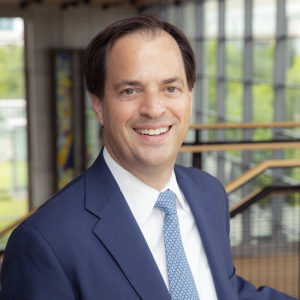
Many medical practices are eager to add wellness services, but few are prepared for what it takes to run them well. In this episode, Amy Anderson, Founder of ACG Practice Partners, breaks down how to successfully integrate wellness into an existing practice. Learn why practices often underestimate the operational, financial, and compliance complexity behind services like weight loss programs, and how those missteps can quietly impact profitability and performance. Tune in for practical strategies to build recurring revenue while avoiding the operational pitfalls that derail many wellness initiatives.
Listen to the full episode using the player below, or by visiting one of the links below. Contact ByrdAdatto if you have any questions or would like to learn more.




Transcript
*The below transcript has been edited for readability.
Intro: [00:00] Welcome to Legal 123s with ByrdAdatto. Legal issues simplified through real client stories and real-world experiences, creating simplicity in three, two, one.
Brad: [00:13] Welcome back to Legal 123s with ByrdAdatto. I’m your host, Brad Adatto, with my co-host, Michael Byrd
Michael: [00:19] As business attorneys for health care practices, we meet a lot of interesting people and learn their amazing stories. This season’s theme is The Future of Wellness, where longevity, advanced weight loss solutions, and anti-aging innovations collide. Get ready for insights from the people driving the evolution of the medical industry.
Brad: [00:42] All right, Michael, so I really want to impress our guest today. She’s live in the studio, so quick temperature check before we get into my legal brilliance. Important question, have one.
Michael: [00:54] Well, first, I wouldn’t start with referencing your legal brilliance because you’re setting expectations far higher than you can ever meet. And I’m definitely concerned.
Brad: [01:04] Okay. Well, I was just trying to be modest and hot at the same time. Theme parks, roller coasters, where do you stand, Michael?
Michael: [01:13] Not a big fan. Never have been. I’ve been to Six Flags here locally over the years, and once to Disney World, as you know, and that was enough. Even though we were just recently in Orlando and I could see it from my hotel, I never ventured in. But I thought we were starting with health care compliance.
Brad: [01:33] Well, this is-
Michael: [01:33] Legal brilliance.
Brad: [01:34] This is compliance, it’s emotional compliance. I need to know if my co-host is emotionally capable and has a desire for adrenaline.
Michael: [01:46] Well, I like adrenaline but not theme park adrenaline. I will ride the various roller coasters. I have to say, I’m finding that I don’t do as well with them as I age. I don’t know if it’s an equilibrium thing.
Brad: [02:00] Not like a fine wine?
Michael: [02:01] Yeah. I already know the answer, but I’ll ask, Brad. Where do you stand? Are we talking mild enjoyment, or do you like your roller coasters like you like your Titos? You blacking out and waking up three states away.
Brad: [02:18] First off, rude. That only happened one time. Second, for the record, I once rode the Hulk roller coaster in Universal Studios three times in a row.
Michael: [02:29] I don’t think that’s a flex, Brad. That’s more of a cry for help. Um, but I guess most importantly, were you in costume for the Hulk ride?
Brad: [02:37] Great idea, by the way. No, I was not, and it’s not a cry for help. It’s called commitment. The Hulk launches you from 0 to 60 faster than most physicians start asking the question, “Do I really need this contract in writing?”
Michael: [02:50] Well, that’s fast. Yeah.
Brad: [02:52] All right. Listen, globally speaking, I’m an amateur. The world’s craziest roller coasters are absolutely unhinged. There’s one in Abu Dhabi, which is called the Formula Rossa, goes 149 miles per hour.
Michael: [03:03] Okay, I’m definitely out on that one.
Brad: [03:05] And we talked about the Hulk. The Hulk flips you seven times, but there’s one, if you really dislike gravity, in the UK, that flips you 14 times. 14 times. That’s more inversions than some MSO structures we’ve reviewed.
Michael: [03:18] Again, out, and you’re trying way too hard to correlate roller coasters to compliance.
Brad: [03:23] Oh, you’re going to like this next one then.
Michael: [03:25] All right.
Brad: [03:25] All right. The Steel Dragon 2000 is the longest coaster in the world, and just when you think it’s over, it just keeps going. Kind of like your legal explanations.
Michael: [03:33] Or more like your analogies of roller coasters to health care.
Brad: [03:36] Okay, that, yeah, that did hurt a little bit.
Michael: [03:38] All right.
Brad: [03:38] All right, here’s my question, Michael. Thrill rider guy, or are you the guy that holds the backpack and I’ll watch?
Michael: [03:44] I think I answered this already. I am definitely more prone to not go in the first place these days.
Brad: [03:52] All right.
Michael: [03:53] Yeah.
Brad: [03:53] So I could probably not convince you to do the Gravity Max 90 Degree Tilt. This is a ride, it’s the first of its kind, where you have a unique situation where you’re on a roller coaster, but then it tilts 90 degrees to align with the vertical track and then drops you 114 feet, reaching speeds of almost 60 miles per hour.
Michael: [04:14] Okay, I’m out again, but I am about to agree to a ride if you’ll just stop. Does this have anything to do with today’s guest?
Brad: [04:24] I think it might. For our studio guest, Amy might be a little bit of an adrenaline junkie, so maybe after you introduce her, I can ask her some questions.
Michael: [04:33] Okay. All right. Joining us today is Amy Anderson, longtime friend and colleague. She’s a national speaker. We’ve shared the podium with her multiple times, including just recently, last week. She is the founder of ACG Practice Partners, and she is one of the lucky few who found her calling at a young age of 18 when she started working part-time in a plastic surgeon’s office as a pre-med student. In the 20-plus years since then, Amy has worn virtually every hat at a medical practice. She intimately understands what it takes to run a practice, is often referred to as the surgeon whisperer, and Amy has earned an MBA and BS from Indiana University, and perhaps at least for today’s purposes, most importantly, third time guest on our show. Welcome.
Amy: [05:34] That’s right. Thanks so much for having me.
Brad: [05:36] All right, Amy. Now I’m hitting you with the hard questions here.
Amy: [05:39] Bring it.
Brad: [05:39] There’s a rumor that you like to ride roller coasters, and if that is true, what is the wildest one you’ve ever ridden?
Amy: [05:46] Ooh, the wildest one ever. That’s a good question. I am an adrenaline junkie. I will ride every roller coaster at least once. There is a theme park in Sandusky, Ohio, known as Cedar Point that, at least for a period of time, was known as the rollercoaster capital of the world. And I was there this last summer, and there was one, much like the one you described, where the car goes out, tilts 90 degrees, and you suspend there before it releases you onto the track, and that was pretty nerve-wracking. But a ton of fun. Nice.
Michael: [06:25] Okay. Well, I’ll have to keep both of you in check as we keep y’all off the roller coaster talk, off the track, so to speak. Let’s get into it. I’d love for you to introduce your practice to the audience. Talk a little bit about ACG Practice Partners.
Amy: [06:44] Yeah. So we are a consulting and training firm that works exclusively with aesthetic practices. We help practices streamline operations, boost profitability, and develop high-performing teams. So what does that really mean? It’s the people and the processes that make your practice profitable. How about that for alliteration?
Michael: [07:06] Love it.
Brad: [07:07] That’s awesome. All right. So as you heard, in the beginning, this season our theme we’re focusing on is The Future of Wellness, and that is going to include, for audience members, longevity, weight loss, anti-aging. So Amy, discuss the impact wellness will be having on the typical medical practice that you’re working with on the operational side.
Amy: [07:25] Yeah. So a few things come to mind. First and foremost is the revenue model. So a lot of times, traditional medical practices are very transactional, right? Very episodic. Patient comes in for one treatment, they pay, and they’re gone. Wellness introduces a more predictable recurring revenue model, very heavily based on memberships, packages, ongoing care. So I’d say that’s the first thing that comes to mind that impacts practices. The next thing is provider utilization and who’s actually performing these services. A lot of wellness services are typically lower acuity, more frequent, and can be more delegatable. And so we want to look at who is actually delivering those services. I like to talk about using staff and providers at the top of their license. So if a nurse or even a medical assistant can administer an injection, I don’t want the physician to do it. So we really have to look at what our provider schedules are comprised of and make sure that our higher level providers don’t get filled with those maybe lower profitable procedures that can be delegated to someone else on the team. And then probably the third thing that’s really changing how health care is delivered is just the whole patient journey. Again, it’s no longer just that single episode of care. It truly is an ongoing relationship. And wellness, of course, is rooted in long-term care plans that are going to have some impact and outcomes. So operationally, we have to look at that differently. How do we follow up with patients? How do we keep them in the practice? Usually it means some new technology like a CRM to really drive communication, to make payment easy and improve the level of accessibility, how easy it is to schedule and get into the practice. So those are some of the top three things that come to mind.
Michael: [09:33] Are you noticing, I know we share a lot, you have a lot of surgeon practices where they have a heavy surgical focus. Are you noticing those practices delving into the wellness world?
Amy: [09:48] Oh, yeah. I think I see a lot of plastic surgeons who already have an aesthetic component to their practice, of course, a non-surgical aesthetic, see this as kind of a natural add-on. Because we’re dealing with the external aesthetics and beauty and wellness, and we know that internally, those things drive the outward appearance. And so adding some wellness services seem like a natural adjunct. But they are fundamentally different, right? They’re not aesthetic treatments. They’re more internal medicine-driven treatments and procedures. And so it really is different from what they’re already offering.
Michael: [10:30] I know. I think a lot of doctors don’t, at least initially, appreciate that difference. I’m curious what kind of friction you’ve seen practices experience with that. It seems like an easy add-on, like in aesthetics, you add a device, and there are some steps that go to that. But this does seem like it would have some added layers of potential friction incorporating that into the practice.
Amy: [11:00] Yeah. I think, listen, all of the treatments being provided really should warrant a detailed medical intake and review of medications, even when we’re doing skin treatments. That said, sometimes I see those pretty limited on the aesthetic side, but when we’re getting into internal medicine-based treatments, it’s even more important to have very clinically sound protocols in place, that we’re not just prescribing medications without fully understanding the patient’s medical history. So I think just from a clinical side, that’s one of the most important things to think about.
Brad: [11:43] And so we’re talking about some of the friction points, but what are the benefits you think the practices are receiving by adding the wellness to their practice?
Amy: [11:52] Sure. Well, there’s huge demand for it in the market. So the money is there. It can definitely be profitable if it’s set up and managed correctly. The other part of it is it helps build patient retention. So we want to get away from services that are so highly commoditized that people are shopping based on price. And so if you can be their wellness home, so to speak, and help them with everything from weight loss to skincare to injectables, it keeps them stickier to the practice and coming back for more services rather than shopping around and going to competitors who might have better pricing on one treatment.
Brad: [12:33] With the plastic surgeons you work with, are you seeing one type of wellness service over the other? Obviously, you represent practices all across the country, so you’re like, “Oh no, most of them are handling this type over this type.” What are you seeing? Is there a number one pick that patients are coming in asking for?
Amy: [12:53] Probably the top pick would be weight loss. I think that is just sweeping the country, and it seems like anyone and everyone is now offering weight loss medications. So that would be the top one. I do also have a lot of surgeons that are adding hyperbaric to their practice, because there is a lot of clinical data on post-op surgical healing. And so that aligns with what they’re already doing on the surgical side, and then, of course, there’s other health benefits on the wellness side to hyperbaric treatment. So those would be the top two.
Michael: [13:27] Fascinating. So one of the questions I have is about incorporating wellness, I’ve been on panels with you, and when you’re talking about traditional aesthetic services in a medical spa setting, one of the things that you help with is looking at the time utilization by the different providers and what’s the highest and best use of their time. If they’re doing a treatment that takes an hour and a half, is that going to sabotage some other activities or services that could be provided? How do you see wellness fitting in with that from that standpoint?
Amy: [14:15] So yeah. First, I think it starts with understanding the services being offered and what the profit margin is on each service. And if you don’t already know that in your practice, we need to stop and figure that out. This isn’t rocket science. It doesn’t need to be a super complex calculation. But knowing for each service you offer what your hard costs are, your cost of goods, as well as your provider time cost that goes into delivering that. And so then we want to balance the schedule so that it makes sense, again, that we don’t have our most highly compensated provider doing the lowest profitable treatments. And so we build the schedule, we build a template in a way that protects time for those higher profit-generating treatments, and then we allow the lower ones to maybe fill in the gaps, or we indicate which provider’s schedule they should go on.
Brad: [15:10] So we’re also seeing, I mean, the wellness industry that had existed well before the weight loss craze, and it is now, we’re three, four‑plus years into this now. And as plastic surgeons start adding this to their practices, where are some spots in which they’re kind of blind, either from an operational or financial perspective, that you think they need to be careful about as they add these to their practices?
Amy: [15:38] Yeah. I think making the decision to add wellness services is more than adding a few more services to your menu. It’s really a strategic decision to add an entire service line to your business, and it needs to be treated at that level of significance. That it’s not, “Oh, okay, let’s order some medications and order a few more things and then put some prices on it, and we move forward.” We want to have an actual strategy. So looking at everything with how we’re going to price it, how are we packaging it, what makes sense there? Training our team members, for sure clinically, but also your admin team and your front office team. Like, how do we talk about it confidently? How do we sell it? Because at the end of the day, this is sales. And so making sure the entire team is educated on the services and how to sell it. And then I often think of the EHR and the CRM setup. So we do this with a lot of practices. We’ll help them improve or update their EHR, everything from the schedule templates that we’ve talked about. We need new appointment types often. We need to get the new pricing entered in there, the documentation templates built out so that we can appropriately document the services, consent forms, all this fun stuff that you guys help practices with. We’ve got to get it into the system. So it’s so much more than just the decision to do it. Not to say it has to be overly complicated, but we’ve got to really think through that full strategy, and then how many patients do we need for this to become profitable for the business? And then the final thing I would say, and I would say this with any service, just adding it doesn’t mean people just start flooding in. So what is the marketing plan for it? You could have the best providers and treatments available, but if nobody knows you have it, surprise, they’re not going to show up. And so having a very intentional plan to communicate this, whether it’s social media, updating your website, internal communication to your patient base, but thinking through what it’s going to take to actually fill the schedule with those patients.
Brad: [17:56] So it doesn’t sound as easy as flipping on a light switch, and all of a sudden that you have this weight loss drug in your place.
Amy: [18:02] I wish. I wish it was that easy.
Brad: [18:04] So-
Michael: [18:05] Uh, oh, go ahead.
Brad: [18:06] No, no. I was going to say the follow‑up of that is then you’re talking about all these different changes they have to make. Have you seen that because they’re adding weight loss to it, they’re actually having to hire new personnel to come in? And going back to your equations, does it financially make sense? Because they don’t have the team in place to help kind of manage that.
Amy: [18:24] Right. Yes, and that’s a little bit of a dance to say when is it the right time. Are these services that we can absorb with our current staffing, and at what point do we need to add more? And sometimes that team member is clinical, and sometimes it’s more front office admin‑focused, to work on the leads coming in, to work on making sure patients who have those treatment plans are coming back. There’s a lot of recall that happens. Again, these are recurring services. And so yes, the staffing, at some point you’re going to have to add some team members in order to make this effective.
Michael: [19:03] I think Brad’s going to be really impressed with me. I have a detailed question.
Brad: [19:06] Yes.
Michael: [19:06] He knows I don’t live in the details.
Brad: [19:08] Love details.
Michael: [19:08] Yeah. So let’s talk about weight loss, and we get the detailed questions as it relates to compliance and the delivery of GLP‑1s. And so what’s unique about this compared to a lot of the other services is that it’s a prescription of a drug, right? There are some practices that do it the easy way where they add weight loss, but they issue a prescription and the patient goes and fills it at a pharmacy and they self‑inject. And then there’s some sort of follow‑up process that the practice has to monitor the patient. We get into calls, I had two of them yesterday, where it’s more integrated and the practice has the product. I don’t want to get into all the distribution laws and pharmacy laws that could come into play, but I’m just curious, even from an operational standpoint, what have you seen that works and doesn’t work as far as the best way to integrate that into the practice?
Amy: [20:22] Well, that’s probably the most popular choice that practices are starting with, weight loss. And for sure the easy way is, as you described, giving them the prescription. They get it direct from the manufacturer or from the pharmacy, but really there’s little profit to be made there because the most you can charge is some form of office visit, and then they’re paying for the drug from the pharmacy. So obviously it’s very desirable to either distribute or inject the medication in the office because now you have a package price, it includes the drugs, you can upcharge all of it, and you control the process a lot more. And so I would say the most common way I see this is that the patient comes in for the visit, they get the medication prescribed, and then the practice either ships it to them or they come in and pick it up and then self‑inject at home. Operationally, that works great because the patient’s doing the work. We just have that office visit and then the follow‑ups to check in on how they’re doing. I do have some practices that have the patients come in to receive the injection, and again, that would be something that can be delegated to a member of the team to provide. But that’s a lot of people coming through the office. If they’re coming once a week to get their weight loss injection, we’ve got to think about throughput. I think of ENT practices and allergy clinics where people come weekly for allergy shots. So we kind of mimic that model of having its own schedule that we can slot those people in. There’s an MA or a nurse responsible for it that day, and they’re just doing the injections. It’s not what I would recommend in most practices because I think it’s a lot of extra work and you’re not getting paid any more for those visits. But if you really want this concierge approach or you have people who are very resistant to self‑injecting, then that could be a way to do it.
Brad: [22:23] So one more follow‑up question. So again, going back to the plastic surgeons you work with, I’ve actually heard plastic surgeons say this, and I’m curious if you have too. They’re intimidated by weight loss because they don’t want it to take away from their surgical services. If one of our audience members is thinking, “This could take money out of my surgery side,” what’s your answer to them about weight loss and its potential for their clinic?
Amy: [22:49] Yeah. Well, I would tell the surgeon they don’t have to be the one seeing those patients and managing that care. A lot of times it’ll be a nurse practitioner or a PA who’s very interested in this, and they can really be the provider running that program so it’s not taking away from the surgeon’s time. I’ve had a couple surgeons, and I commend them for this, who have brought in a medical director who’s an internist because they say, “Listen, I’m a surgeon. I don’t really know anything about this.” And so they’ll bring in somebody else to oversee that, which I think is smart. And a benefit can be those patients who are seeking plastic surgery but maybe don’t meet your BMI requirement, and now you have something to offer. You’re not just turning them away. We say, “Let’s have you see our NP, and we can talk about weight loss options. And when you get down to your goal weight, then we can revisit the surgical discussion.” So I think it goes hand in hand. I think it makes a lot of sense in a practice if you’re interested in that. But every service we offer can be a distraction. It’s not always the right thing just to do more, so we want to be intentional and make sure that makes sense. If you’re a facial plastic surgeon, maybe weight loss makes sense, maybe it doesn’t. If you’re primarily doing breast and body surgery, it actually aligns very well into the practice. So really thinking about what your brand is, what your focus is, and then whether that makes sense with what you’re already offering.
Brad: [24:23] So I have one last question. Okay, Michael’s allowing me, audience members, and I don’t think you’re going to like this one. I’m going to make you look into the future.
Amy: [24:31] Oh, boy.
Brad: [24:31] And so with your plastic surgery practices, what do you think wellness will be like for them over the next five years?
Amy: [24:39] For plastic surgery specifically?
Brad: [24:42] Yeah.
Amy: [24:42] Yeah. Okay. I think I just see more of them offering wellness services. I think this is a rapidly expanding market. I think there’s demand for it. I think it does align well with aesthetic treatments. We’re already giving people quotes. We’re already collecting at the time of service. It fits the business model of retail‑based medicine. And I think as the patient population is more interested in overall longevity and anti‑aging, and we know that these things start from the inside out, it aligns well. So I think we’ll see more plastic surgeons offering it, and I think it can be a good thing. I think it can be another recurring revenue stream, a passive revenue stream that surgeons are often looking for, so they don’t have to just spend more time in the OR to generate revenue. These can be services provided while they’re operating, while they’re on vacation, wherever they are.
Brad: [25:45] Well, it also sounds like you have an opinion in general on wellness. So just in general, where do you think wellness will be in the next five years?
Amy: [25:53] Same. It’s exploding. I look at the trajectory of nonsurgical aesthetics and how much that has increased over the last five to 10 years. Ten years ago, getting neurotoxin, you didn’t really talk about it, and now it’s like getting your nails done or getting your hair done. We all do it. And I think wellness is on that same path and actually has maybe less of the stigma of some of the aesthetic treatments. Of course, we all support each other wanting to be healthier and increase our wellness and longevity. So I think we’re going to normalize it. I see the rise in functional medicine, which is very interrelated here. And I would say choosing not to do it is okay, but don’t be ignorant of what’s happening, because the demand is there for it.
Brad: [26:48] Right. Well, time flew by once again. Thank you so much for joining us on The Legal 123s with ByrdAdatto. We’re grateful for you and that you’re in studio for the third time. We’ll go to break, and after that, Brad and I will do a quick legal wrap-up.
Amy: [27:05] Thanks for having me.
Access+: [27:06] Many business owners use legal counsel as a last resort, rather than as a proactive tool that can further their success. Why? For most, it’s the fear of unknown legal costs. ByrdAdatto’s Access+ program makes it possible for you to get the ongoing legal assistance you need, for one predictable monthly fee. That gives you unlimited phone and email access to the legal team, so you can receive feedback on legal concerns as they arise. Access+, a smarter, simpler way to access legal services. Find out more. Visit byrdadatto.com today.
Brad: [27:41] Welcome back to Legal 123s with ByrdAdatto. I’m your host, Brad Adatto, with my co-host, Michael Byrd. Now, Michael, as we heard this season, our theme is The Future of Wellness, and we had an amazing conversation with Amy, who just came in and crushed it and threw a lot at us, and we actually wanted to do a lot more legal takeaways, but, you know, there’s so much that she said that was really important. One is if you do decide to go the route of dispensing the drugs in your, in your clinic or to, directly to, uh, your patients, there’s a lot of legal traps that you have to be aware of. So if you decide to go that route, definitely get with your counsel before you go that. But Michael, we had one more other thought you thought of.
Michael: [28:18] Yeah. I, I loved her thought when she talked about some practices that are bringing in internal medicine doctors or, or supervising physicians, uh, because they know that space, and it just drives home the importance of, uh, for any medical treatment, that if you’re delegating the treatment, you have to be a subject matter expert. You have to know the standard of care, and so many times, uh, when the provider that’s providing the treatment knows that the, the medical director, so to speak, may not be a master of that, and that creates risk.
Brad: [28:52] Well, audience members, that’s all the time we have today, but next Wednesday, we’ll be back as we continue to explore The Future of Wellness when we bring on our friend and client, Dr. Johnny Franco, who’ll be joining us and talking about the impact wellness is having on the medical weight loss industry.
Brad: [29:08] Thanks again for joining us today, and remember, if you liked this episode, please subscribe. Make sure to give us a five-star rating and share with your friends.
Michael: [29:16] You can also sign up for the ByrdAdatto newsletter by going to our website at byrdadatto.com.
Outro: [29:23] ByrdAdatto is providing this podcast as a public service. This podcast is for educational purposes only. This podcast does not constitute legal advice, nor does it establish an attorney-client relationship. Reference to any specific product or entity does not constitute an endorsement or recommendation by ByrdAdatto. The views expressed by guests are their own, and their appearance on the program does not imply an endorsement of them or any entity they represent. Please consult with an attorney on your legal issues.