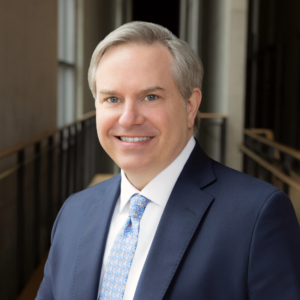
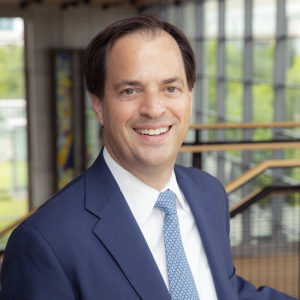
NP independence on paper does not always match independence in practice. In this episode, hosts Brad and Michael share the story of an Illinois nurse practitioner who launched her own wellness clinic after earning independent status—only to encounter obstacles she thought independence would protect her from. Tune in to learn how evolving NP autonomy, supervision rules, state scope-of-practice differences, and CPOM can create hidden challenges. Discover how the right business structure can keep your practice compliant as regulations evolve.
Listen to the full episode using the player below, or by visiting one of the links below. Contact ByrdAdatto if you have any questions or would like to learn more.




Transcript
*The below transcript has been edited for readability.
Intro: [00:01] Welcome to Legal 123s with ByrdAdatto. Legal issues simplified through real client stories and real-world experiences, creating simplicity in three, two, one.
Brad: [00:13] Welcome back to Legal 123s with ByrdAdatto. I’m your host, Brad Adatto, with my co-host, Michael Byrd.
Michael: [00:20] As business attorneys for health care practices, we meet a lot of interesting people and learn their amazing stories. This season’s theme is The Business of Medicine Today. Gone are the days of grandpa’s medical practice with paper charts and old-school treatments. Brad, we’re going to confront the business and health care issues faced by the modern medical practice.
Brad: [00:43] Michael, “I want my MTV”.
Michael: [00:49] Oh my goodness.
Brad: [00:51] I got a little frog in my throat there, huh?
Michael: [00:52] Right out of the gate, you have embarrassed and dated yourself and confused our listeners.
Brad: [01:00] First off, Michael, if the audience does not know that phrase, please pause this podcast, go to your trusted Gen X-er and ask them what it felt like to watch television before there were algorithms that were judging you and telling you what to watch.
Michael: [01:14] Yes, Brad, MTV was an iconic part of the ’80s and ’90s, which was, for our reminder, last century. As my kids will tell me.
Brad: [01:24] Probably. And Michael, maybe we should have a moment of silence on this podcast because in case you did not know, as of New Year’s Eve of 2025, MTV’s music channel officially went dark.
Michael: [01:39] That’s true, yes. Nearly 45 years of music television gone. I read that the primary culprit was YouTube, that it has become the place of choice for music videos.
Brad: [01:56] Well, as you said, gone, finito, mic drop. They signed off, with the video that actually launched MTV in 1981, the one that started it all, believe it or not was called “Video Killed the Radio Star.” That was the first video, and I mean, even MTV got a little nostalgic there.
Michael: [02:11] Very full circle moment.
Brad: [02:13] Yes. And I want to be clear for the record, and this may shock people, I was actually not a huge MTV watcher. What about you, Michael?
Michael: [02:21] I went through phases. In the early years, like, early high school, I felt like I would watch it a decent amount. But it wasn’t a mainstay, especially when I got distracted in college by more fun things. But I am a little surprised. You’re an ’80s kid and didn’t watch MTV?
Brad: [02:42] Look, I sampled MTV, but unlike fine wines, it just never became part of my routine.
Michael: [02:48] Okay. Well, Brad, I don’t think I’ve ever heard someone describe their fondness for wine to be, quote, “routine.”
Brad: [02:55] Oh, sorry. We can scratch that later. But even if you weren’t glued to it, MTV was just there. It was part of the culture. It was the background noise. It’s where you learn fashion mistakes are, were not only possible, but sometimes inevitable.
Michael: [03:11] Yes. How else could you explain parachute pants? MTV taught an entire generation that confidence could overpower logic.
Brad: [03:19] Which frankly kind of explains my entire career.
Michael: [03:23] And your singing and your Brad jokes.
Brad: [03:25] Fair. But what got me, MTV’s music era didn’t go quietly. It felt like a meteor. It just, and you kind of said this earlier, between the streaming and changing consumer behavior, reality TV, music just kind of started phasing away, and then it was like a sledgehammer. It was gone.
Michael: [03:43] Well, you and I have got a blind spot because we don’t get reality TV, so it’s strange that it survived and that music videos did not.
Brad: [03:50] Which is, well, because MTV was the place where music told stories. Maybe we could start our own ByrdAdatto music video channel.
Michael: [03:57] Okay, now we’ll add that confidence thing to you trying to add both dancing to your bad singing.
Brad: [04:07] Yeah, that’s pretty fair. Before MTV, had anyone even heard of the term VJs?
Michael: [04:13] Probably not, and probably people that don’t know what you’re talking about right now. That’s a video jockey, which is the old term for a disc jockey – DJs. Which people do know. Yeah, that was where the VJs came from.
Brad: [04:31] Yeah, and the original MTV VJs who launched the network on August 1st, 1981, were Nina Blackwood, Mark Goodman, Alan Hunter, Martha Quinn, and JJ Jackson. However, the VJ that really eventually became the face of MTV was Carson Daly.
Michael: [04:46] It’s crazy that I can still remember these people all these years, yet I can’t remember why I went into the kitchen this morning. But we actually got to see Mark Goodman a few years ago at the Medical Spa Show.
Brad: [04:59] That we sure did.
Michael: [05:00] ’80s theme party.
Brad: [05:01] Yeah. I guess the point is nostalgia’s great. I love the memories. I love that MTV closed the loop perfectly, but perhaps that, the survival, we won’t remiss too much about because they had to adapt.
Michael: [05:14] Yeah. Well, let’s adapt into today’s story. What do you think about that?
Brad: [05:18] Ooh, I like that.
Michael: [05:19] Okay.
Brad: [05:19] Well, our story today starts with a nurse practitioner who’s smart, capable, hardworking. She lives in Chicago, Illinois, and we’ll call her Miss Quinn.
Michael: [05:29] All right. Shout out to our Chicago office. Is that part of the story?
Brad: [05:32] Sure.
Michael: [05:32] I don’t know. Of course, Miss Quinn seems to be an ode to that list of VJs that you just listed.
Brad: [05:40] Yeah.
Michael: [05:41] Martha Quinn.
Brad: [05:41] There you go. So Martha, sorry, Miss Quinn had earned her independence in Illinois as a nurse practitioner. Illinois is one of those states that, based on the changes in law several years ago, recognized that certain advanced practice nurses could get their independence. She had the education, she had the credentials, and she was ready to open her med spa, but which she actually called MTV Wellness Center.
Michael: [06:06] So that’s an important kind of beginning of our story. We have a qualified independent nurse practitioner ready to build her business and serve her patients.
Brad: [06:17] Yeah. But as all great stories, conflict was brewing. So Ms. Quinn calls us and says, “Hey, I’m an independent nurse practitioner. I have this wellness clinic, I don’t have any supervision, and the law says so, I’m good to open my own kind of wellness clinic, right?” And, and she actually used the term med spa by accident, though.
Michael: [06:37] Gotcha. Gotcha. Okay. All right. I’m with you so far.
Brad: [06:41] Yeah. And so here’s where the plot kind of changes a little. One is we told her she couldn’t use the term med spa because she’s not medical, but two, Illinois has granted certain NPs independence under the nursing board rules, but the medical board rule states that because of the corporate practice of medicine, or as you know we call CPOM doctrine weren’t exactly rewritten to match. It was like there was a legislative update on one part of the operating system where you, you need to tell the rest of the computers to do something, and then the other half was like, “Yes, you’re independent,” but the other half was like, “Yeah, but it’s a 404 error. Must have physician involved.”
Michael: [07:15] And I’m going to give a cautionary warning to our audience that we’re about to just delve into some complicated nuance as we talk about this. And this is a hot topic that permeates in multiple places we’ll get to. So first, let’s start with CPOM you mentioned. So corporate practice of medicine is, as we’ve talked about on prior shows, a law that says that if you’re practicing medicine, that you have to be physician-owned or maybe there’s some exceptions to that, but that’s the general principle. And Illinois CPOM says only physicians can own and control medical practices. So even though independent NPs can practice independently, importantly, they cannot own a medical practice.
Brad: [08:11] Well said, sir. And so Ms. Quinn said, “But that makes no sense,” which we said, “Yeah. Well, welcome to the, the real world.”
Michael: [08:20] Yeah. This is where that legal friction that I alluded to really shows. The nursing board authorizes independent practice for certain NPs, but the medical board defines the practice of medicine broadly. So when, and if what an NP is doing is considered a medical act of the practice of medicine, even if it’s authorized under nursing laws, they’re at risk of practicing medicine.
Brad: [08:50] Yeah. And when you’re practicing medicine in a CPOM state, guess what? The CPOM rules still apply. It was like the medical board and nursing board were two divorced parents maybe giving totally contradicting instructions to their little kiddos.
Michael: [09:02] Yeah. And, the NP is the child stuck in the middle of this kind of risk scenario.
Brad: [09:09] Yes. And here’s where things get a little wilder. So MTV Wellness Center, Mrs. Quinn had a good friend, let’s call him Mr. Daly. He’s a physician assistant, and he really wants to join her, growing practice. And I should’ve said that she did open it, and it was being successful.
Michael: [09:27] Gotcha. And so this is the moment the law kind of quote, “Throws the chair through the window.”
Brad: [09:34] And this is because PAs are not independent in Illinois. They must be supervised by a physician, not an NP, and when a PA is supervised by a physician, they must practice in a medical practice owned by a physician.
Michael: [09:50] So if we, if we think a moment back, what she was doing before was confusing, but there’s a world where what she’s doing is maybe considered the practice of nursing. She’s staying in her scope. And so you have this position to take that you’re not providing medical services, so you don’t trigger into the CPOM. Well, you introduce a PA in, and now we’re really squarely facing off with the corporate practice of medicine and the need for a management services agreement.
Brad: [10:23] Yeah. And that’s a great point, and for audience members, I know we’re kind of moving pretty quickly here, but what Michael just said that’s really important is because she was independent and autonomous, so long as she stayed in her lane, with her formal education in advanced nursing and didn’t use the term med in her practice, that is a gray area, but it feels like a very comfortable area for most nurse practitioners in Illinois. But the moment we start bringing medical in the name and/or people who are licensed on the medical board, that’s where, as Michael said, this triggers this whole new legal structure, the MSO model.
Michael: [11:00] Yeah. And, and it goes back to your point, about these conflicts. You said earlier that the practice of medicine’s broadly defined. So you’re originally saying, “Okay, I’m staying in my lane,” using your words, of being an NP, but what they’re doing, those very services, are also defined in, in the practice of medicine. So, you have this, stay in the lane approach. Well, to your point, a PA being regulated by the medical board, that clearly defines services that are being performed by that PA as the practice of medicine because that’s where they get their license, and so that means that the practice is now practicing medicine, which means CPOM’s involved.
Brad: [11:46] Right. And so as you can hear, audience members, here’s the friction. She has a comfortable lane that she was in. She now wants to expand by adding other licenses in there, and we’ve, we’ve said this before, it’s the melting pot of licenses. There’s wellness clinics and med spa. So Ms. Quinn, who was originally told, “Yeah, you’re independent,” suddenly hears, “Congratulations, you now need to do a restructure and have an MSO model, and you as a physician, you don’t really know yet has to actually come along and even though it has, doesn’t have to supervise you, now needs to own a medical practice to be part of this equation.
Michael: [12:21] Yeah, I mean, I take just a moment to do a quick refresh on the MSO to your point. So think of it as two entities that Brad mentioned, and an agreement, a management services agreement. And so you have to have this physician, if it’s the practice of medicine, which when you have the PA it is, you have to have a physician-owned entity with this supervision that you, of someone you don’t know yet. And then you have your practice, which now serves as an MSO, and then this management agreement very broadly does two things. One is it sets the boundaries that medical, the practice of medicine’s going to happen under this physician-owned entity, and makes clear that the MSO is not practicing medicine and is involved in kind of back office management services and functions. And then the second thing it does is makes sure that the flow of funds happens in a compliant way to accomplish whatever your arrangement is with this physician. And so there is a lot that, to unpack there that’s not really for today’s episode. But, the bigger picture is that adding that PA makes it clear you need the MSO, which adds some complexity to the setup to make sure you’re staying compliant.
Brad: [13:45] Yeah. And audience members, where people get kind of confused here is this is where the friction arises, where one statute is now allowing nurses to do something on their own, while another statute says that they can’t do certain things. And, it could be that’s correct, or eventually it may not, that may change, but that’s the speed of having documents that have been, or legislative actions that have been the same for, years and years and years, add one element, but the rest don’t catch up to the changes of that one element. And so that’s again, these are the, like these friction points that we’re seeing as people get more independence. And, for her, she’s hearing like now and I guess going back to the statute talk, it’s like you upgrade the kitchen, but you’re still using plumbing from the 1937.
Michael: [14:34] I’m so famished from trying to explain this confusing topic that I think we need to go into break for a moment and go to commercial.
Brad: [14:43] Is this where I get to have some alcohol to help?
Michael: [14:45] Some of that wine that’s part of your quote, “routine.”
Brad: [14:48] Yes.
Michael: [14:48] And then we’ll come back and discuss what Ms. Quinn’s options are and further, get into this nuance kind of mid-level, scope of practice, and the impact of what they can and can’t do.
Access+: [15:04] Many business owners use legal counsel as a last resort, rather than as a proactive tool that can further their success. Why? For most, it’s the fear of unknown legal costs. ByrdAdatto’s Access+ program makes it possible for you to get the ongoing legal assistance you need, for one predictable monthly fee. That gives you unlimited phone and email access to the legal team, so you can receive feedback on legal concerns as they arise. Access+, a smarter, simpler way to access legal services. Find out more. Visit byrdadatto.com today.
Brad: [15:38] Well, welcome back to Legal 123 with ByrdAdatto. I’m your host, Brad Adatto, with my co-host, Michael Byrd. And Michael, for those who don’t know, this season our theme is The Business Of Medicine Today.
Michael: [15:49] All right. Audience, as you’ve heard, we’re tackling a tough topic to understand and explain. So we have an independent nurse practitioner in Illinois, Ms. Quinn, and she has MTV Wellness Center that she started. She started a journey realizing that her independence was not as clean and clear as she thought regarding her ability to own her own practice, but nevertheless, after understanding risks, she did start her own practice. Then things got confusing when she added a physician assistant, Mr. Daley, to the practice. We talked about the impact that this has on the idea of what can be owned and what’s the practice of medicine, what’s the practice of nursing, and that’s where we left off. So let’s take a step back, Brad, and dive deeper into what’s happening with nurse practitioners and their ability to practice independently, which is what we have with Ms. Quinn. And then there’s this concept of autonomy, which is a very expanded scope of practice, but usually has some element of supervision involved in other states.
Brad: [17:12] Yeah. And audience members, as you’re about to hear, every state’s going to be really different on this, how they look at the rules and how they interpret it. So we just spent a little bit of time in Illinois with our good friend in MTV Wellness in Chicago. Let’s jump down to Florida, Michael, and discuss the friction in Florida with nurse practitioners and their getting their independence. So in October of 2021, Florida did recognize that nurse practitioners with 3,000 hours within five years of supervised practice can become autonomous.
Michael: [17:45] And does that mean independent or autonomous? Or is their use of autonomous is what we talk about when we talk about independence?
Brad: [17:53] Independence, yeah.
Michael: [17:54] Yeah. So that means, without getting hung up on the words, that they don’t need supervision.
Brad: [18:01] Correct.
Michael: [18:01] Right? They can do it on their own. So this was a big development. A lot of news came from it, and yet, there were some limitations. Actually, they have this grant of, for lack of a better word, independence to a few limited categories. So, for example, some of the categories where you can achieve this independence is primary care practice. That would include family medicine, general pediatrics, and general internal medicine. But Brad, I guess importantly, especially for this audience, was cosmetic medicine one of those categories?
Brad: [18:45] Nope. It was not on point. So if you go, as Michael was saying, if you look at the actual statute, it actually listed out a whole bunch of categories. So instead of you have independence all across the board, it was if you meet one of these categories, you can get independence. And dermatology and our cosmetic procedures were not listed in that category. Now, there may be some strong arguments that certain aspects of primary care practice that are broad enough to be included, like anti-aging, hormone replacement, certain skin conditions, would fall into that category of general internal medicine or general family medicine. So what are your thoughts on that?
Michael: [19:28] Yeah, I mean, I think the thing that makes it confusing is that most people that are starting to add elements of for lack of a better word, wellness services to their practice, they still offer traditional medical spa treatments like laser treatments or injectables, et cetera. To be on the right side from a risk perspective, you probably need supervision. That’s a tough one because you’re super autonomous, but finding the right kind of supervision in Florida is its own conversation we actually have talked about before because they have a very nuanced statute on who can be a supervisor. But to be clear, if the NP in Florida, like I said, doesn’t fit neatly, they’re not going to fall into this exception, and the compliant route is to have that supervisor.
Brad: [20:28] Yeah. So if you’re just doing pure injections and fillers, you’re not going to meet that exception in Florida, I think is the best way to look at it. But Michael, now that we did Illinois, we jumped down to Florida, let’s move further north. Let’s jump over to New York, home of Broadway, bagels, and very strict corporate practice of medicine rules.
Michael: [20:49] Yeah. It’s another great illustration of the confusion. So New York, an NP coming out, they have this autonomy with a big scope of practice. They can do good faith exams, et cetera. But after they get to, I think it’s like 3,600 hours, they can become independent, which means they don’t need supervision. Again, Illinois, New York has a strong corporate practice of medicine statute and enforcement, and their rule is only physicians can own a medical practice. And so it makes a decision for an NP on how to structure. You have to be super careful, and you have to look at not just your services, but your team. Going back to our story, if they were to have a physician assistant that’s clearly regulated by the medical board, or they were to employ a physician to come in and provide treatments once a week or something like that and, that brings the practice of medicine clearly under the umbrella, which as we’ve said, the moment it is considered the practice of medicine, you’re dealing with CPOM, and it has to be owned by a physician.
Brad: [22:12] So, maybe for the audience members who are trying to make sure they understand it, so if you’re an NP and you want to do aesthetics in New York, does this mean you have to have an MSO?
Michael: [22:23] I’ll use our favorite answer: it depends. So let me paint a scenario where they could. So number one, that NP needs to be independent. They have to have their 3,600 hours.
Brad: [22:38] Agree.
Michael: [22:38] And, number two, they have to clearly be positioned as a nursing entity, and what that means is that if they’re employing others, they’re nurses, and they need to stay in their lane, going back to your old analogy, and recognize even with all of that, they have a really nice position. But we don’t know, there is a risk that the medical board might not like that anyway. They does still fit within the definition of the practice of medicine, you have to be able to sleep at night from a risk perspective that the medical board may give you a letter saying you’re participating in an unauthorized practice of medicine. And though you have a viable defense, you would face that kind of compliance battle. Now, we haven’t seen that yet, but that doesn’t mean it can’t happen.
Brad: [23:42] Right. All right, Michael, so we’ve covered Illinois, Florida, and New York. Let’s jump out to the West Coast, jump over to California. In California, they have updated the nurse practitioner laws there recently, creating categories where NPs can practice without physician supervision. But surprise, CPOMs still remain untouched. And for those who… probably California is the strictest state when it comes to enforcement, so if you have to dot the I and cross T, you need to do that. And so when it comes to CPOM, you have to be very careful of that. And it just started in 2026, where NPs with at least three years or 4,600 hours of full-time experience in California can apply for full independence.
Michael: [24:27] And to make things more confusing, the statute to gain independence in California has other strings attached. And so it’s not just this forty-six hundred hours, it’s the environment. You have to do it. You have to be in a clinic with a doctor that’s present there. And so what we’re finding is that NPs in aesthetics are often not in an environment where they may have well more than this number of hours, but they’re not on track to be able to gain independence. And so that’s causing a lot of friction too, because there’s a lot of perception that they would fit the mold based on their training and experience. And so they might take a route to own their own nursing entity without physician ownership and not realizing what risk they’re signing off on. To your point, California is super strict on enforcement of the corporate practice of medicine. And so that means that in California, a physician has to own at least fifty-one percent of a medical corporation or medical, a business that’s practicing medicine. And so that NP can own up to forty-nine percent of it. Of course, that’s not usually their vision. They want to own a hundred percent of it. And so we’re kind of discovering a lot of inadvertent noncompliance by NPs that have happened since this statute has been passed. And there’s an actually detailed process to become independent and application that goes with that. And so, yeah, actually not as opportune as some of these other states that we’ve talked about. But we have been spending a lot of time talking about NPs, and we’ve touched on PAs. But I think it’s important, as another really autonomous mid-level practitioner to talk about what’s happening with PAs.
Brad: [26:46] Yeah. So just to confuse you more, audience members, since two thousand, the number of physician assistants had quadrupled, while many parts of the country face doctor shortages, that’s why they wanted more PAs. That means PAs are becoming more numerous and visible in the fields of medicine, primary care, and dermatology. There a big piece of that.
Michael: [27:06] And there are some states that are moving towards physician assistants, independence where they’ve passed statutes where they don’t have to have supervision. And so that’s going to kind of add to that element.
Brad: [27:20] Yeah. And as everybody’s discussed, in the start of the show, Illinois is like California’s cousin, strong CPOM, but NPs are independent. And of course, there’s conflicts there. They overlap, and especially when a PA or other, that a medical provider wants to join the mix.
Michael: [27:36] Yeah, exactly. So, just this idea, physician assistants is going to be the next wave of change. But what we don’t want to lose sight of is that physician assistants are most often regulated by the medical board.
Brad: [27:54] Yeah, correct. In some states like Oregon, New Hampshire, and Maine, PA now actually means physician associate. And other states, they’re following with that. So these changes may be trivial, but according to the American Medical Association, they oppose such changes and that there’s a lot of friction here, Michael.
Michael: [28:14] Yeah, for sure. So I guess the overall picture here is that there’s a lot of expectation about what independence means, and there’s a lot more risk that’s out there to make sure that you’re set up correctly.
Brad: [28:33] So with the time left, I’m just going to say Ms. Quinn with MTV Wellness Center, did decide to go with the MSO model so she could bring in a friendly physician. She could get Mr. Daly to come in, and she kind of saw it as a opportunity to grow in different ways that she could or could not with her limitation as a nurse practitioner.
Michael: [28:54] Well, I’m glad you led her to a nice, safe decision, Brad. Any final thoughts?
Brad: [29:00] Yeah, independence, as you said, does not always equal exemption from CPOM. And with legislative updates and these laws that keep changing, understand there will be some chaos that comes with it. There’ll be friction. And obviously, make sure before you go open it up and start hiring all your friends, make sure you stop and pause for a moment because it can be very critical if you hire the wrong people inside of your NP clinic. Michael, final thoughts.
Michael: [29:25] Don’t be MTV. They got caught by the changes in technology and the landscape, and they had to shut down.
Brad: [29:34] That’s a good one.
Michael: [29:35] For mid-levels, things are shifting dynamically, and it’s important to stay dialed in on these compliance changes.
Brad: [29:43] All right, next Wednesday’s show, we will be back as we continue this journey of The Business Of Medicine Today when we learn about the med spa certification process with Kate Dee.
Brad: [29:53] Thanks again for joining us today. And remember, if you liked this episode, please subscribe. Make sure to give us a five-star rating and share with your friends.
Michael: [30:01] You can also sign up for the ByrdAdatto newsletter by going to our website at byrdadatto.com.
Outro: [30:08] ByrdAdatto is providing this podcast as a public service. This podcast is for educational purposes only. This podcast does not constitute legal advice, nor does it establish an attorney-client relationship. Reference to any specific product or entity does not constitute an endorsement or recommendation by ByrdAdatto. The views expressed by guests are their own, and their appearance on the program does not imply an endorsement of them or any entity they represent. Please consult with an attorney on your legal issues.