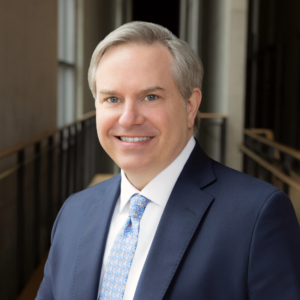
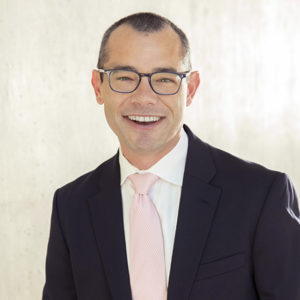
The medical spa industry has surged into a $20+ billion market, bringing with it significant challenges around regulation and patient safety. In this episode, we are joined by Dr. Kate Dee, a Yale‑trained physician, breast imaging specialist, author of Med Spa Mayhem, and founder of The Medspa Board. After witnessing widespread noncompliance and risky practices across the industry, Kate set out to create a safer, more transparent standard for both patients and legitimate practices. Learn how emerging industry efforts aim to bring clarity and accountability to the aesthetic industry. Discover how legal compliance, proper medical oversight, and transparent patient education can set your practice apart and protect the future of aesthetics.
To learn more about Dr. Kate Dee, visit: https://drkatedee.com/
Listen to the full episode using the player below, or by visiting one of the links below. Contact ByrdAdatto if you have any questions or would like to learn more.




Transcript
*The below transcript has been edited for readability.
Intro: [00:00] Welcome to Legal 123s with ByrdAdatto. Legal issues simplified through real client stories and real-world experiences, creating simplicity in three, two, one.
Brad: [00:13] Welcome back to Legal 123s with ByrdAdatto. I’m your host, Brad Adatto, with my co-host, Michael Byrd
Michael: [00:20] As business attorneys for health care practices, we meet a lot of interesting people and learn their amazing stories. This season’s theme is The Business of Medicine Today. Gone are the days of grandpa’s medical practice with paper charts and old-school treatments. Brad, we’re going to confront the business and health care issues faced by the modern medical practice.
Brad: [00:41] Oh, it’s exciting, Michael. And I’m actually really excited to bring on our guest today, but before we do am I the only guy in America who once believed a Twinkie could survive a nuclear fallout?
Michael: [00:52] Well, everyone knows, Brad, that Twinkies don’t expire. I think that the expiration listed on the package is just a suggestion.
Brad: [01:01] Okay, I got it. But, I don’t know, Michael, if you remember that dark American history, a time of fear and chaos and pure mayhem. Do you remember that?
Michael: [01:10] I’m not sure I want to ask. What chaos are you talking about, Brad?
Brad: [01:14] Michael, we’re talking about when we all got caught up in the Great Twinkie Crisis of 2012.
Michael: [01:22] I don’t remember anything called the Great Twinkie Crisis, but I do think I know what you’re talking about.
Brad: [01:30] Yes, for those who don’t know, the Twinkie apocalypse happened, in November of 2012 when Hostess announced it was shutting down because of a nationwide strike. People were hear like, “No more Twinkies,” and suddenly the whole country is stampeding down to the grocery stores, and it’s like Black Friday meets The Hunger Games as they’re trying to get ahold of their Twinkies.
Michael: [01:49] Yeah. I do remember. I actually went and bought Twinkies for my kids to experience, but I got them before things went crazy. It wasn’t like I didn’t get trampled trying to grab them.
Brad: [02:02] Of course you did. You’re a good planner.
Michael: [02:04] Yeah.
Brad: [02:04] I was out there, you know, elbow deep at the grocery store trying to get the last box of Twinkies. I don’t know if you remember this, but people were listing Twinkie boxes on eBay for hundreds of dollars. Someone even put, one up for $250,000. A quarter of a million dollars for something that basically has a shelf life of a small asteroid.
Michael: [02:21] You didn’t buy it, did you? The $250,000 package?
Brad: [02:25] I mean, no comment.
Michael: [02:27] Okay, yeah. People can get kind of crazy, and I’m looking at you as I say that. I mean, you just look at what happened last year with Labubus. I don’t know if… That market, I heard, has crashed already.
Brad: [02:38] Yes. Luckily, I missed the Labubus craze. Before you ask, I did not buy the quarter of a million dollar box of Twinkies. I’m not that dumb. Although, who wouldn’t have considered it? They must’ve been really good for a quarter of a million dollars.
Michael: [02:53] Yeah. No comment, but, it does feel like a uniquely American moment, for sure.
Brad: [03:00] Sure is, yeah. And for those who don’t remember the outcome, don’t worry, America, Apollo Global Management swooped in, paid $410 million, bought Twinkies back from the brink of death in 2013. Order restored, snack cake civilization survived, which leads me to the most important legal question to today’s show, Michael did you ever eat a Twinkie?
Michael: [03:24] Did I ever eat one?
Brad: [03:25] Mm-hmm.
Michael: [03:26] Well, yeah, of course. Yeah. That was a big part of my childhood. I don’t know that I’ve had one in years, but I’m betting they’re not as good as I remember them being. I do appreciate the history lesson, Brad. Well, I’m not sure what Twinkie talk has to do with show today.
Brad: [03:49] Okay. Well, not sure how familiar our guest today is with the great Twinkie apocalypse of 2012, but the Twinkie story kind of made me think about what’s happening now in the business of medicine today as it relates to the chaos and mayhem that’s happening with non-compliant med spas and wellness clinics, and the passion she has for correcting it. So much like Apollo Global Management saving Twinkies, maybe our guest can help save the med spa wellness world.
Michael: [04:13] Yeah. That segue was about as smooth as sandpaper.
Brad: [04:16] Thank you.
Michael: [04:17] Okay.
Brad: [04:17] That’s about the best I can get.
Michael: [04:19] Yeah. All right, let’s bring our guest on. Let’s get to it. We have longtime client and friend of the show, Dr. Kate Dee, joining us today. A little about Kate. She attended Yale for college and medical school, moved to Seattle for residency at the University of Washington, followed by fellowship in breast imaging at the University of California, San Francisco. She was a breast cancer specialist at Seattle Breast Center for 13 years, receiving “Top Doc” honors each year since 2010. After a successful career in this area, Kate found her way to aesthetic medicine. Kate has been part of the West Seattle community for over 25 years and raised her three kids there. She is the author of the industry exposé, Med Spa Mayhem, has her own podcast, Med Spa Confidential, where Brad’s been a guest and she agreed to come back and talk with you.
Brad: [05:19] I know.
Michael: [05:19] Best not to mess up too bad.
Brad: [05:20] I know about that.
Michael: [05:22] Kate especially loves to ski, cycle, hike, and cook. Kate, we’re so glad you’re here. Thanks for joining us.
Kate: [05:29] Thanks for having me.
Michael: [05:30] Awesome.
Kate: [05:32] Sorry, I had a little freeze there. I really appreciate being on. I would love to tell you that I experienced the Twinkie apocalypse. I do remember that event, though. And I remember learning that Twinkies were extruded rather than baked. That’s all I remember from that time. Like, they’re not even a baked good. But that’s all I know about Twinkies.
Brad: [05:56] So if you know a lot more than I do now already, Even though I’ve eaten them. So have you ever eaten a Twinkie, then?
Kate: [06:04] I believe I ate one Twinkie when I was 15 because my high school best friend was like, “I can’t believe you haven’t eaten a Twinkie.” But I was kind of more of a Ring Ding fan. So, you know.
Michael: [06:15] Yeah. Those were quite solid as well. Yeah, I remember those. Yeah. Well, cool. Well, let’s get in. I would love to start with having you introduce yourself to the audience for those that don’t know you, and talk a little bit about yourself and anything that I didn’t cover in my introduction.
Kate: [06:37] Yeah. Well, thanks so much. I got into aesthetics a little over 12 years ago now. Opened my own med spa back then, and at the time, I didn’t realize how the med spa world was pretty much in its infancy still. It had only been around for maybe 10 years, at most, at that time. You guys have known me a long time. I’m pretty much a stickler for being an expert in what I do, and I have a medical-legal interest. It’s always been really interesting to me. So I really figured out how to do this properly, and I thought I was doing everything right. When I met you guys, you helped me make sure that was true. In the 12 years since I’ve been in this industry, the industry itself has exploded, so it’s become well over a $20 billion industry, which to put that in perspective is as big or bigger than the NFL. In that time, most of that growth, in my estimation, has been people doing things illegally one way or another, or in lots of ways. Over the years, I’ve met more and more people in the industry who we all know it’s happening, and we all are dumbfounded by how many people are getting away with doing these illegal things. Everybody’s kind of throwing up their hands: “What do I do?” People are afraid to report about it because they’re afraid of retaliation. It’s really a mess in a lot of ways, and the mess has just been getting bigger. If you look at the recent arrests and studies that have come out of New York and Florida, 60% of med spas in those studies have been shown to be illegal. I don’t even think that they’re measuring some things like corporate practice of medicine violations. I don’t even think they’re looking at that. I just couldn’t believe it was going on, and I started writing about it. I wrote the book Med Spa Mayhem, and I thought, “Okay, I’m just going to publish this book, get it out of my system, and that’s going to be the end of this for me. I’m just going to be done.” Then what happened was the opposite. As part of getting the book published, I started the podcast and began interviewing people from all over the country who had very similar concerns, and they told more stories that I didn’t even know before. Out of that, over the last two years, many of those people basically said, “Yeah, I’ll help you and try to do something about this,” and the Med Spa Board was born out of that. There are eight of us who are actually organizing it. I would say four of us are actively really working on getting this launched. We have a little medical advisory board. Basically, we looked at what’s happening, and if you look at the laws being proposed all over the country in different states, they’re all trying to put more regulations on medicine. We really do have a lot of laws already. What’s missing is enforcement. There’s really no enforcement until someone’s very hurt, and even then, a lot of people are afraid to come forward. Many victims are afraid to come forward because they’re embarrassed about having gone to these places in the first place. The irony is that putting more laws on it only has an effect if people are willingly compliant with the laws. We’ve already seen that all over the country, if it’s a $20 billion industry, probably $12 billion is going to illegal operations. I wanted to change it upside down. I wanted it to be more of a system where if you are already operating legally and compliantly, then join the Med Spa Board. We are solving the problem that every single legit med spa encounters: how to compete against all these illegal operations in your neighborhood. This is how you do it. We created a Med Spa Board with a national set of standards that are really basic and that every single med spa should comply with. People who are already doing it legitimately just have to apply, show that they’re already legit, and be called Med Spa Board certified. We have digital assets for their website, social media, and advertising. We have a certificate they can display in their window. Then we have a national directory that’s growing actively, and we’re focused on growing the business of all the certified spas. It’s a really easy way to differentiate your legit spa from all the competitors that are cutting corners.
Brad: [12:17] Well, and this is great information, and especially since our theme is the Business of Medicine Today. As you were talking about the MedSpa Board that you’ve helped organize, you were talking about different action items, and I want the audience members to be clear. You were talking about enforcement and other things. Tell me, what is the MedSpa Board trying to solve and what are they actually doing?
Kate: [12:42] Right. Well, the problem is that there’s no way to differentiate. If you’re a patient or a prospective patient looking for a really great aesthetics provider near you, there’s no way to differentiate the legitimate legal ones from the illegal ones. I’ve had lawyers come to my spa and tell me they couldn’t tell the difference between my place and an illegal one in the general neighborhood, because it’s just not obvious.
Brad: [13:14] Well, they’re not very good lawyers is what I’m hearing.
Kate: [13:18] Very smart, but not in the area of health care law or med spa law.
Brad: [13:21] Yeah.
Kate: [13:22] And so for those of us who are legally compliant, we really care about patient care, we’re a high-end practice, we’re ethical, we’re owned legally, and we use real products. It is really hard for us to differentiate ourselves from everybody else. This is a voluntary certification that allows you to advertise, “Hey, we’re certified by the MedSpa Board.” Assuming enough spas get certified and this emblem becomes recognizable to the public, it will function like “certified organic.” Right now we’re new, and we’re trying to get the word out about what it means. Many people just have no idea how illegal some of these places are. They just don’t know. They walk into a place, someone’s in scrubs, they don’t even ask what their licensure is. They just assume they’re medically licensed. They pay money, and even if they’re happy, it doesn’t mean that the entire operation wasn’t completely illegal. The fact is that those places cutting corners make it really difficult for legitimate medical practices to compete because they have much lower costs. They’re not paying for legitimate products, or a medical director, or a doctor to supervise them. This certification is a way to differentiate your spa and advertise that you are operating legitimately. It’s really hard to make that distinction otherwise. You can’t just say, “Hey, I’m a doctor, and that other place down there doesn’t have a doctor anywhere near it.” It’s impossible to make that statement clearly. For any spa that’s already practicing legitimately, the process of getting certified is very simple. You just fill out an application, which takes less than 15 minutes. We make sure everybody’s license is valid in the state where they operate. We check their NPI number and do all that assessment, and we interview the medical director as well. If a spa does not have a legitimate medical director, either they won’t apply because they know their medical director won’t qualify, or we’ll find out during the interview. Many states, including Michigan, and the proposed laws in Indiana and Massachusetts, focus on having a legitimate medical director. You really need a medical director who understands aesthetics, can perform those procedures, supervise delegated procedures, and have a presence in the spa. You need to know your employees and their practices to properly supervise them. Right now, many spas have what I call fake or absentee medical directors a doctor somewhere with a license who doesn’t know anything about aesthetics and is never in the spa. For example, in New Jersey, nurse practitioners were temporarily allowed to practice independently due to COVID, but that was rolled back, and now they need a supervising physician. Many were unhappy about having to pay a doctor for “doing nothing.” I argue that medical directors should only be paid for actually doing their job, supervising, and ensuring compliance—not for being absent.
Brad: [17:52] Well, that’s a great point.
Michael: [17:53] Yeah. If I’m reading between the lines a little bit, and just knowing you, it feels like the foundation behind all of this is a concern and commitment to patient safety. Talk a little bit about that and your passions in that area.
Kate: [18:13] Yeah. Well, 100%. It should be a safe space to walk into any medical office. The practice of aesthetic medicine is the practice of medicine, and anything could happen. Just because this is cash pay and elective doesn’t mean it’s not a serious medical procedure, and there are a lot of procedures done in med spas that have very big potential consequences. Not just a droopy eyelid, which is not desirable but luckily goes away, but complications like burns, infection, and more than that, death. There are people who have died at med spas. You have to have medical personnel who understand not just the substance, whatever medical drug or device is being put into the patient, but also the anatomy of where they’re putting their needle and how to manage any negative consequences once that procedure is done. A lot of med spas are just not prepared with any of that. As a former radiologist, we are very anatomy intensive in radiology, same with surgeons. But many other doctors, although we study anatomy in med school, if you’re not working with the face and needles, you don’t know the intricate anatomy, even as a doctor. The lower down you go in the hierarchy, the less education there is. Many people go to a weekend course to learn how to inject things in the face, then put up a shingle and start charging money to do that without years of training in anatomy, physiology, medicine, and complication management. In my opinion, those weekend courses are very dangerous. There are so many ways patients could be harmed walking into a med spa, and I really don’t think people are aware of the risks.
Michael: [20:54] So kind of following the bouncing ball, if the spirit of all of this is patient safety, and the problem is the vast noncompliance, and your point earlier is there are already a lot of laws governing the practice of medicine, the solution might not be passing new laws on top of the ones that already exist. You pointed to the lack of enforcement that’s happening. It seems like you’re taking the ball to help move it forward through the Med Spa Board by showcasing the people who are doing it the right way. Is that kind of the track?
Kate: [21:48] Absolutely. A lot of it is patient education. If you showcase or promote all the really high-end, ethical, legal, safe practices, hopefully over time a critical number of consumers will understand the difference and most of them will abandon the illegal ones. There will always be people who seek out an illegal option because it’s cheaper, and some may fly to Mexico because a cosmetic procedure is cheaper there. But they know they’re making that decision, understanding that medical laws are different in other countries, and they’re taking a risk. Over time, many consumers really care about their own safety and having a high-quality, safe procedure that makes them look better without risking permanent scarring. Ideally, the legal, legitimate, safe places get labeled, promoted, and advertised as such, and consumers become aware and make that choice. Over time, the illegal places will stick out like a sore thumb because they won’t be certified, and people will hopefully abandon the dangerous practices.
Brad: [23:21] So if you had your crystal ball, following that logic, where do you think the tipping point will be, where the places that have the certifications will be the norm, and the ones that don’t will be the exception?
Kate: [23:31] Right. How long do you think this will take? I really think it will depend on how we get noticed. I have a friend and colleague who is shopping this whole idea as a movie. He thinks that the book, and the entire story, would make a great docu-drama. So if anyone listening works for Netflix, please take our calls. I do think that if a celebrity tweets about it, it will become well-known much more quickly. Otherwise, I’m trying to get all of my audience and your audience to get certified and join us. It’s not expensive. I am not looking to make a lot of money; I really want this to succeed in order to make the industry safer. I hope that this year, as we reach out to as many providers as possible, they’ll see the value, voluntarily get certified, advertise it, and tell their friends. In truth, it’s a tiny drop in the bucket of a med spa’s marketing budget. The idea of paying for this is a very small expense. To answer your question, the elevator pitch is simple: how do you win against illegal competitors? We help you do that.
Brad: [25:27] Yeah. Well, to your point with the Netflix show, if they do cast it, I’ll be happy to be the star of it. But second, it reminds me of-
Kate: [25:37] Well, I think, Brad Pitt should play you, Brad.
Brad: [25:40] Obviously, yeah. I was just about to say that. But John Oliver did that, I’ll call it my words, review of med spas, and I know it did not put med spas in a good light. Your reaction’s the opposite, which is, well, yeah, there’s some people out there doing things in an incorrect way, but your idea is to kind of reshape the mold as to how a compliant med spa looks and acts from that perspective. And I know, Michael, we probably got time for a quick question, what do you call it?
Michael: [26:10] Yeah. We’ll do a final question, quick round. I’d love to hear what you are optimistic about for the medical spa industry as you look forward. You’re trying to solve a lot of problems, but I’d love to hear.
Kate: [26:24] Right. Well, I think the med spa industry is fantastic. I’ve been in it for 12 years. I think we do really great work, most of us are safe and effective, and people love it. That’s why it’s growing so much. I’m very optimistic. I think the industry is still growing. I do think, though, we need to take a beat and self-regulate because what’s happening now is that states are looking at making it more onerous to be a med spa, when in fact we should be enforcing existing law. I’m hoping to elevate the industry, highlight the legitimate spas, and help them thrive.
Michael: [27:17] Love it. Well, thank you so much for joining us on the Legal 123s with ByrdAdatto. We’re grateful for you. And, we’ll go to break, and after we come back, Brad and I’ll have a quick little legal wrap-up. Thank you.
Kate: [27:30] Thanks so much for having me.
Access+: [30:04] Many business owners use legal counsel as a last resort, rather than as a proactive tool that can further their success. Why? For most, it’s the fear of unknown legal costs. ByrdAdatto’s Access+ program makes it possible for you to get the ongoing legal assistance you need, for one predictable monthly fee. That gives you unlimited phone and email access to the legal team, so you can receive feedback on legal concerns as they arise. Access+, a smarter, simpler way to access legal services. Find out more. Visit byrdadatto.com today.
Brad: [30:38] Well, welcome back to Legal 123 with ByrdAdatto. I’m your host, Brad Adatto, with my co-host, Michael Byrd. And Michael, for those who don’t know, this season our theme is The Business Of Medicine Today, and we just had an amazing conversation with Kate. Very passionate about compliance, about patient safety, founding the med- the Med Spa Board. And what I thought was interesting was she was talking about all these states with new laws, but in reality, a lot of states already have the laws in place that they could enforce. They don’t actually need new laws.
Michael: [31:06] Yeah. I mean, it just creates more confusion when you put a law on top of an already existing law. There’s the thought, “Okay, we’ll just enforce the laws that are in place rather than write new laws.” One of the things we’ve observed over the years is a lack of understanding from the regulatory bodies on the laws they’re enforcing. Enforcement can be uneducated in their approach. Sometimes they’re attacking the wrong things, and sometimes they’re not addressing things they should be. I do love that she’s trying to come up with a solution around these two problems.
Brad: [31:55] Absolutely. I like it. All carrot is something she said at one point. Audience members, believe it or not, that’s all the time we have today. We’ll be back next Wednesday, and in that episode, it’s going to be a fan favorite as we close out this season. It’s about the preventable death to your practice, which kind of ties into what we just discussed with Kate.
Brad: [32:17] Thanks again for joining us today. And remember, if you liked this episode, please subscribe. Make sure to give us a five-star rating and share with your friends.
Michael: [32:25] You can also sign up for the ByrdAdatto newsletter by going to our website at byrdadatto.com
Outro: [32:31] ByrdAdatto is providing this podcast as a public service. This podcast is for educational purposes only. This podcast does not constitute legal advice, nor does it establish an attorney-client relationship. Reference to any specific product or entity does not constitute an endorsement or recommendation by ByrdAdatto. The views expressed by guests are their own, and their appearance on the program does not imply an endorsement of them or any entity they represent. Please consult with an attorney on your legal issues.