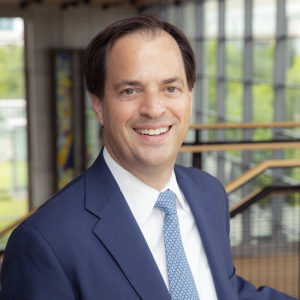
Stem cells and exosomes continue to shape conversations in the medical aesthetics and wellness industry, but understanding what is legally allowed is just as important as understanding the science. In this episode, Dr. Jordan Plews, PhD, a scientist and entrepreneur in biotechnology and stem cell research, breaks down how these products work and the regulatory challenges surrounding them. Tune in to understand how medical practices can legally use these products and the risks of going off-label or using unapproved treatments.
Listen to the full episode using the player below, or by visiting one of the links below. Contact ByrdAdatto if you have any questions or would like to learn more.




Transcript
*The below transcript has been edited for readability.
Intro: [00:00:00] Welcome to Legal 123s with ByrdAdatto. Legal issues simplified through real client stories and real-world experiences, creating simplicity in 3, 2, 1.
Brad: Welcome back to Legal 123s with ByrdAdatto. I’m your host, Brad Adatto, with my co-host, Michael Byrd.
Michael: As business attorneys for health care practices. We meet a lot of interesting people and learn their amazing stories. Brad, this season’s theme is: Asking for a Friend. We’ll tackle questions that practices are sometimes afraid to ask.
Brad: And audience members, as you probably know, this is a safe place, and everyone knows it’s not you asking the question, but only – only if you asked with the magic words, asking for a friend. Now, Michael, now we need to bring our A game today as today’s guest is bringing some serious PhD knowledge to the show on stem cells and exosomes. As such, I’m going to start the show with my trademark patent pending [00:01:00] serious face, so he knows I’m paying attention.
Michael: Why are you still smiling?
Brad: Oh that’s fair.
Michael: Yeah, I mean, maybe we can just have the team block you out of the camera, but we all know, I’ve talked about this on the show that you have the worst poker face that I’ve ever come across.
Brad: That’s actually not a bad idea, by the way, about blocking our faces. Maybe our YouTube ratings would go up if the team could just block our faces. But let’s be honest, my face is a legal disclaimer. It’s confusing, slightly alarming. It always present. It’s like an actual disclaimer, Michael.
Michael: I don’t even know what to do with that. You’re making a confusing analogy of your face to a disclaimer, and it makes me think knowing you that you’re trying to awkwardly shift the topic to disclaimers.
Brad: Well, speaking of disclaimers.
Michael: Yeah.
Brad: I need to issue one for today’s opening banter. It involves energy drinks, AI startups, a work schedule that makes the four day work week here at the [00:02:00] firm look like a vacation at Maui.
Michael: So you’re about to compare our compressed work week to Silicon Valley’s latest hustle trend?
Brad: Yes, Michael. Buckle up for those who don’t know. So, apparently young people who used to hit the club Saturday night are now pounding energy drinks with their coworkers as they code like caffeinated squirrels. It’s called the 9-9-6 schedule. And for those who don’t know, that means you’re working from 9:00 AM to 9:00 PM, six days a week.
Michael: I did read about this, and yes, that is intense. And also you kind of forget what the sunlight looks like under that schedule.
Brad: Yes, exactly. And one 23-year-old AI founder even said, why would I go to a drink at the bar when I can just build a company?
Michael: Look, you and I have been guilty of loving our work so much. I mean, when we started our firm, we were clearly working too much and can shift that way, but [00:03:00] I don’t know that we’ve ever tilted to the 9-9-6 level. I can’t fathom that that level of extreme activity.
Brad: Agree. And with the adoption of this new 9-9-6, some job listings are now requiring 70-plus hours a week and get this restaurant charges in San Francisco are spiking now on Saturdays around 11:00 AM when the 9-9-6ers are ready for the next round of caffeine and grub.
Michael: I guess we’re officially getting old when we can watch the yo-yo effect of what happens with people’s work hours. It goes from very intense to work-life balance. And I guess we’re tilting the other way now to the 9-9-6 era.
Brad: Yeah. And now the CEO of Google is now urging that everyone start doing 60-hour work weeks to just compete with China’s 9-9-6 culture. Meanwhile, in China, for those that don’t know, they’re actually cracking down on the 9-9-6, and they’re trying to keep it to about 72 hours a week when [00:04:00] recently a 22-year-old woman collapsed. She died on her way home at 1:30 in the morning after pulling a whole 9-9-6 work routine.
Michael: I think I know the answer based on what you just said, but that does beg the question, does 9-9-6 actually work?
Brad: Well, according to 9-9-6-ers, they seem to be living for the short term gains, but researchers have said, working over 55 hours a week can actually hurt your health and productivity.
Michael: That’s shocking news. Well, let’s shift. I’m super excited to bring our guest on. Now, joining us today is Dr. Jordan Plews. He is CEO, CSO, entrepreneur and scientist with over 20 years of experience bridging academic excellence and industry innovation, specializing in regenerative medicine, biotechnology, and health care. Jordan has successfully founded and scaled companies and built and led [00:05:00] diverse high performing teams and invented and launched groundbreaking products and technologies. His academic foundation includes rigorous research at internationally recognized institutions such as Stanford University. Note to the audience, Brad and I did not have any affiliation with Stanford in our academics. Jordan worked on as a postdoctoral research fellow stem cell and regenerative medicine from the University College London (UCL). He received his Engineering Doctorate in Stem Cell Research and Biochemical Engineering with Bioprocess Management, and his undergraduate degree in Biochemical Engineering. In the legal world for our trial attorneys, when you’re trying to establish someone as an expert, I think we’ve done a pretty good job on that. And you were right that we need to be on our best behavior today.
Brad: Yes. A game.
Michael: Jordan has transitioned seamlessly between [00:06:00] academia and industry, leveraged his expertise to drive product innovation and commercialization of global health care. He’s a national speaker. In fact, you and I met Jordan, had the pleasure of speaking with him on a panel on Longevity and Regenerative Medicine. He’s a first time guest on our podcast. Jordan, welcome.
Jordan: Thanks, Michael. I’m happy to be here.
Brad: Well, I mean, that is a long history of science behind it. So I guess really to start off right away, Jordan with all your scientific and degrees behind you, do you like the idea of the 9-9-6 work week?
Jordan: I was thinking that reminded me of my time as a postdoc, actually. Doing 80 hour weeks is not uncommon. And it was actually a point when I had my hands in a biosafety cabinet realizing I’m really only making money when my hands are working, that I needed to shift and find a way to make money when I’m at home asleep. [00:07:00] You know, building business that works for you.
Brad: Yeah, well, there you go. Yeah. We’ve all been somewhat a part of the 9-9-6 world at some point, it seems like.
Michael: And then you get the wisdom the hard way, that there has to be a better way. Well, awesome. Well, I’d love just for you to introduce yourself to the audience. Talk a little bit about your background and what interested you in biochemical engineering.
Jordan: Yeah, I was someone who I didn’t really know where I wanted to go. I had a, a broad interest in science and math, and so biochemical engineering covered a lot of that. My father being British, I went out there, dual citizenship worked for Pfizer out there in their bioprocess development group, and really was trying to wanting to make a difference in the world. I was somebody who was worried about cutting people open at 3:00 AM and thought I’m going to make the drugs instead of being that guy. And then as I worked on drugs for Pfizer [00:08:00] I was on a monoclonal antibody drug for skin cancer and various things that were interesting, but a lot of it was treating the symptoms of a problem and not really getting to the core of it. And that’s what led me to stem cells, which are often the core. You know, I’ve got Alzheimer’s and diabetes in my family, and so I did a doctorate focused on stem cell research and really converting adult cells back to a stem cell state. That eventually led me to my, my postdoc. And then I kind of got impatient and was really like, I really want to apply regenerative medicine and stem cells practically, and it’s a long runway for a lot of FDA approvals and things. And so along the way, I got pulled into cancer research and into aesthetics. I worked for Becton Dickinson for a while, worked for Natera for a while, and then eventually ended up at the business school at Stanford before going and doing companies that I co-founded myself.
Brad: So still, I think he’s beating us, Michael, on the educational front. Okay, good. [00:09:00] Again, going back to establishing credentials. Now, this is my first question to you. I’m asking for a friend, let’s just call him Miguel Byrd. I mean, Miguel, not Byrd. Because Miguel is very curious, you threw out a lot of big words there, but for people unlike me who actually understood everything you said, obviously, but can you explain to our audience, like, what are stem cells? What are exosomes? Because those are topics we hear a lot, but a lot of people don’t understand it. I mean, except for, I mean, obviously
Jordan: Sure. So stem cells, you can think of as the body’s master cells. They have the ability to self-renew and become many different kinds of specialized cells like skin, bone, nerves. They’re essentially the body’s repair toolkit in a way at least in our adult bodies. And exosomes on the other hand, are not cells. They’re not alive, they’re not dividing. They’re small lipid bound vesicles or messenger bubbles. And these stem cells [00:10:00] and other cells, they naturally release exosomes as a sort of communication mechanism. And They carry proteins, lipids, and RNA — microRNA in particular. And they help coordinate healing and regeneration, but also general communication cell to cell. And in aesthetics we’re seeing this growing interest because they can deliver a lot of the regenerative benefits of stem cells, like reducing inflammation, stimulating collagen, improving healing but without the risks associated with live cells.
Michael: Yeah, explain that a little bit, at least at a Brad level., very basic of that risk. Like, what’s the difference in the risk between a live cell and not?
Jordan: Well, so if I were to give you my liver or kidney, say you needed it, we are probably not a match immunologically, and those immune markers are present on the cell surface. Exosomes are [00:11:00] roughly about 1/100 to 1/200 the size of a cell.. They’re 30 to 150 nanometers. They don’t have nearly as much cell surface or lipid surface there. And so the markers, the immunological markers are much less. You really don’t have this immunological rejection issue in the same way, especially if you’re pulling exosomes from say a very young cell type like from the stem cells from the umbilical cord or placenta, for example. So the safety part is both that immunological reaction and also cells can carry viruses and disease. The exosomes can be filtered and processed in a way that you’re eliminating a lot of that risk. There is a tradeoff though – if you were to take a stem cell and inject it into somebody, you are injecting the factory, the exosome factory in and where you want it. And although the body’s likely to kick it out, reject it, [00:12:00] you’re getting a sustained release of exosomes over time and potentially other secreted molecules. Whereas the exosome is sort of like a single dose of something that was self-derived. Does that make sense?
Michael: Absolutely. Incredible that you can explain it like that.
Brad: I know. Well, audience member, when we were on the panel with him, I was so blown away because I actually have been talking about this subject matter and I understood it at the smallest grain of sand on a beach level. And obviously you’re helping explain it in big chunks, which is very helpful. So you also said that like people are using it in different capacities, but is there a pharmaceutical product out there that’s even similar to stem cells? Is that, is it is so unique and different, meaning that, as you said, you were the pharmaceutical world for a long time, have individual companies tried to build something similar to that? Or is it just so unique because it’s so different as you call it the factory, compared to other things out there besides stem cells? [00:13:00].
Jordan: Yeah. So we as scientists have been able to mimic various biological molecules for a long time. We know that cells are creating proteins and they’re sometimes releasing the proteins, or they’re releasing the proteins in one of these exosome bubbles, right? And a protein is just a chain of amino acids. So we’ve been able to make a chain of amino acids in the laboratory ourselves with pretty good precision. A short chain is called a peptide, and usually we make a peptide that’s representative of the active region of a larger protein. So it’s an approximation of a larger protein. It’s smaller, so it gets in better. Stability and functionality are not always perfect. Ideally you would want the full length, exact copy of the human protein. And in order to do that, you usually need a human cell or at least a mammalian cell. And those are expensive to grow. They divide roughly once every 24 hours.
So what many companies have done is, instead [00:14:00] we go and take a bacterial cell, genetically modify it to produce the same chain of amino acids, and those bacteria are dividing about once every 20 minutes, and they’re churning out a lot more. So it’s a much cheaper system, but what a lot of people overlook is that the bacterial cell doesn’t have a Golgi apparatus or endoplasmic reticulum. So, the folding and the glycosylation and these kind of tweaks that are done to the protein to make it functionally work are often not present. And so, there are companies and people out there selling you proteins that are not from a mammalian cell source. They’re from a bacterial source or a plant source sometimes, and they’re not always functionally a good mimic. And so at the end of the day, we’re trying to get something that mimics the, the human protein and function exactly, and there’s nothing quite like a human cell to do that.
Brad: Wow. That actually makes sense.
Michael: And all of this kind of sets up our key question that inspired [00:15:00] even this conversation that we get all the time. We get calls on a weekly basis about it, but we’re going to keep it anonymous. We’re asking for a friend Jordan. And so, we have, well, a friend who’s an owner of an aesthetic practice and they’re interested in offering some of these types of treatments and specifically called asking about treating patients in their practice with stem cells or exosomes, and would love from your perspective can a medical practice offer stem cells or exosomes?
Jordan: Yeah. And it’s an excellent, very important question. The short answer is, it depends on what type of product you’re talking about and how it’s regulated. Stem cells have this kind of long history that I don’t think we have time to go into today. But effectively, if the product involves live human cells that have been processed or [00:16:00] expanded outside the body, it typically falls under FDA regulation as a biologic drug. And that means it requires an IND, an investigational new drug application and clinical trials before it can be offered legally in the US for patient treatment. And to my knowledge, the only company that has received an FDA approval or mesenchymal stem cells, mesenchymal stromal cells as a drug is mesoblast for graft versus host disease. That was the end of 2024.
Exosomes are a bit different. even though they’re not live cells, the FDA does classify them as a biologic as well. So unless that exosome has gone through an IND and a BLA — a Biologics License Application — pathway, it can’t be marketed or administered to patients in the US as a medical drug. That said, and this is where this kind of gray area exists because I’m a rule follower myself. I’m very excited, [00:17:00] but I want to be conservative. And that said, cosmetic and topical exosome products where there’s no intent to treat a disease or alter body function can be offered as skincare when they’re formulated appropriately. And so, medical practices can safely and legally use topical exosome based serums with procedures as long as the products are cosmetic grade, and they’re not marketed as therapeutic medical products to treat, diagnose, or cure a medical condition. And I will add one caveat to that, which is that there is a newer FDA approved product that I am real excited about called GEL, which is an off-the-shelf extracellular matrix product..
It’s FDA approved for burns and wounds, and it provides a lot of these benefits of growth factors and exosomes that we get excited about when we talk about exosomes. But it’s not classified as a cosmetic product, and so these cosmetic exosome products, technically you should not be [00:18:00] putting into an open wound or burn or use for medical treatment. And there are these kind of products like [Raygel18:07] that can be used in some of these places legally without risking your license. So yeah, very good question.
Michael: Yeah. And you hear, and this kind of will lead to where the confusion gets is that you’ll hear of people that are injecting these products and so because there’s this kind of topical application that SkinCeutical type approach that can be done, what we experience is a lot of confusion where people hear that just broadly that exosomes are legal and you can do it. And so, there’s these different uses without them even realizing that they may be going down a risky path.
Jordan: It’s very much a semantic argument for most people. I think that’s what it comes down to. If you are out there [00:19:00] saying you’re going to treat cure, diagnose something, and it hasn’t gotten an FDA approval, that’s where the law says you’re in the wrong. If you are using something from a cosmetic side, in the US at least it’s pretty broad. If there’s no known danger, you can put almost anything on as a topical, as long as you’re not claiming anything more than a cosmetic benefit. And that’s where a lot of these more advanced products fit in and exist, and that’s where a lot of controversy comes from. And really I think the problem we see today is people going off script and injecting products that are really not proof for injection. They haven’t gone through clinical trials and they don’t have a lot of safety data out there to support that type of thing.
Michael: Good. Yeah, I was just saying, and that’s getting to the crux of it when people are trying to figure out what they can and can’t do, and we’re often kind of walking them through legal risk. [00:20:00] But from a science perspective, I mean, if it hasn’t been FDA approved, then there’s no scientific data to support that use. And so, talk a little bit about what that risk is that patients and or providers are undertaking when they go down that road?
Jordan: So when you go through clinical trials, the first phase is all about safety. And I think once we do get exosome product of some sort through safety, things will shift. And there will be doctors that, with a basic approval might start doing off-label things. I think that’s a big area of misunderstanding as well, is you can’t go off label if there’s not something on label. I think right now to my knowledge, there’s not an exosome on-label FDA approval. And so this is why we’re limited to topical application and we’re limited to what we can say about what those products can do for you. [00:21:00] I hope that that will shift. I do see a lot of companies working on it. It’s a tremendous amount of money, and that’s really the hold back. I don’t think it’s because companies necessarily are malicious. I think a lot of companies are doing good things, making good products in the right way, but are not in a place to pay the tens of millions of dollars to get through all the levels of trials necessary to even get that on label to start with. But I think that’s going to shift in the not too distant future.
Brad: And for our audience members who are not familiar, how these products, the biologics here, the stem cells and exosomes are being used, how are medical practices using it, at least on the… well, you’ve talked a little bit about like, but what is it being used for? Maybe you can give them some examples.
Jordan: Well these are cell messengers that if you’re getting them from a stem cell, Bonafede stem cell are assisting in healing and repair. And so they can accelerate healing, reduced redness, [00:22:00] enhanced skin quality, things of that nature. And so if you’re doing a microneedling, a laser resurfacing, some other kind of energy based treatment, you’re causing damage. You’re activating the wound healing cascade. And as we age, we’re healing worse and worse, so you need this little boost, and that’s really what it is providing. And I think if you dig into the science a bit deeper, we’ve had things like PRP and platelet-based for a long time, which address a fraction of this. I think the potential there is really in the stem cell side, and as long as we stick topical, you can do a lot there.
Michael: Fascinating. So as we’re kind of shifting into some of the final questions, I’d love to just hear your perspective on what would you advise clients who are thinking about adding these types of products that you know are on [00:23:00] the fringe, at least from a science perspective into their practice?
Jordan: Yeah, I would do your due diligence. Make sure that you can talk to somebody at the company that you’re buying these from, that is well educated and not just feeding you marketing materials.. Some doctors are able to get in touch with a PhD level person, no problem. Other companies, they can’t. That’s a red flag to me. There are also things like nanofat and PRP where you can use your own cells and do a liposuction, churn it into nano fat, combine it with PRP, and that’s probably the best autologous thing today that gives you those benefits of stem cells and exosomes. Costs a lot more, arguably more pain, but it really depends on what you’re doing and the extent of the treatment you’re trying to do. If you’re looking for something off the shelf, there is a growing number of exosome and stem cell derived products that are out there. I think [00:24:00] you got to do more than a cursory Google search. You got to do more than just believe what the influencers say. A lot of companies now do have publications or they have team members on their team that have peer reviewed publications. That’s usually a good sign. But as anything, be careful and be thorough.
Michael: There are, for lack of a better word, kind of some snake oil salesman in this kind of world. And I’m sure you’ve seen that at various you know, shows or places.
Jordan: Oh yeah, for sure. This is something – people want to believe that the best of the best is here. They’ve all heard about stem cells. I remember when stem cells were something scary, right? We had Bush do a lot of banning of stem cell research in the United States back in 2001. Now I think it shifted the other way and there’s so much excitement that people are sometimes putting too much faith in companies. [00:25:00] And unfortunately, there are people out there that are willing to do whatever it takes to make a dollar. I think the, the science is out there, people who say there’s no publications and whatnot, just go to PubMed, go to Google Scholar, type these words in, you will see stem cells, exosomes. There are tens of thousands of articles out there, but you do want to narrow in on, are there ones to do with the skin? Are there ones tied to the type of treatment that you’re doing? Can the company that’s actually making the product selling to you, did they have publications or can they reference people on their team that have publications?
There should be a pretty direct line between real researchers and the products that they’re creating. because unfortunately these things are so small, these exosomes, you could say, oh, I’ve got a billion, trillion bajillion exosomes in the bottle. And ultimately, you as the practitioner, often have to trust that that’s true. It’s difficult to go and, and third party test some of these things. [00:26:00] I wouldn’t just believe what you’re being told there; there should be a straight line between the research and the product.
Michael: Amazing. well I think that’s a great ender. That’s just as always fascinating to hear your perspective and your background. Thank you so much, Jordan, for joining us on the Legal 123s with ByrdAdatto. We’re grateful. We’ll go to break, and then on the other side, Brad, and I’ll do a quick little legal wrap up. Thank you.
Jordan: Awesome. Thanks for having me guys.
Access+: Many business owners use legal counsel as a last resort, rather than as a proactive tool that can further their success. Why? For most, it’s the fear of unknown legal costs. ByrdAdatto’s Access+ program makes it possible for you to get the ongoing legal assistance you need for one predictable monthly fee, that gives you unlimited phone and email access to the legal team so you can receive feedback on legal concerns as they arise. Access+, a smarter, simpler way to access legal services. [00:27:00] Find out more, visit byrdadatto.com today.
Brad: Welcome back to Legal 123s with ByrdAdatto. I’m your host, Brad Adatto, my co-host Michael Byrd. And Michael, as everyone knows, this season we’re asking for a friend. What an amazing conversation we just had with Jordan. Drop some incredible knowledge on us. We have so many takeaways. I wish we had another two hours to talk about him. But some legal perspectives, you know, Jordan brought up a lot of really important parts, but one of the most important things he said is like, hey, there’s a difference between on-label, off-label. On-label means that the FDA has approved this particular drug. And then you have now decided, I think by using this drug that’s been approved for certain procedures, I can use it in a different way. We always use aspirin as example. You know, aspirin was not originally approved by the FDA for blood pressure monitoring, blood pressure, but now it is. Okay, so that’s a shift there. But he actually said, what happens is something not approved at all by the FDA, now you’re really, it’s very risky. Cause it’s not been approved for any utilization. [00:28:00].
Michael: No label.
Brad: No label. And so that’s an issue. But the pushback we often get, Michael right away is like, well, the FDA does not control the practice of medicine.
Michael: Which is a true statement.
Brad: It is.
Michael: The FDA does not – and then yet it’s so critical and there is a huge difference between off-label and no label from a risk perspective. Because really, when you think about risk, the biggest risk comes back to your medical board, your license. And there’s a standard of care perspective, which is always important. And what’s the science to back behind whatever decision you’re about to make for the treatment, which is what I loved about Jordan talking about the research and all the resources that are there. And so, you’re more likely to have no backing or less backing in a no FDA situation than in an off-label situation. [00:29:00] And then you have the medical board’s view on these treatments that they would regulate just from a again, your license perspective.
So it’s a little bit different than standard of care malpractice, and it’s really important to look at your state’s view on this. And the boards vary. I mean, we’re seeing shifts even in Texas with dealing with, what do we require if there’s this alternative medicine that’s happening? Even though a lot of this stuff is super new, Jordan mentioned stem cells have been around for a long time. And so the boards are you can get a flavor of how they view this and it really distills your risk before you go down the road of injecting exosomes, which again, is a no label situation.
Brad: So again, be real careful. Hit the pause button, understand what’s going on in your state. But Michael, we’re at a time. Audience member, guess what? We are back next Wednesday asking for a friend when we explore artificial [00:30:00] intelligence and how it’s shaping the future of the medical practice when we bring on Randy Torban to join us. Thanks again for joining us today. And remember, if you like this episode, please subscribe, make sure to give us a five star rating and share with your friends.
Michael: You can also sign up for the ByrdAdatto newsletter by going to our website at byrdadatto.com.
Outro: ByrdAdatto is providing this podcast as a public service. [00:31:00] This podcast is for educational purposes only. This podcast does not constitute legal advice, nor does it establish an attorney-client relationship. Reference to any specific product or entity does not constitute an endorsement or recommendation by ByrdAdatto. The views expressed by guests are their own, and their appearance on the program does not imply an endorsement of them or any entity they represent. Please consult with an attorney on your legal issues.