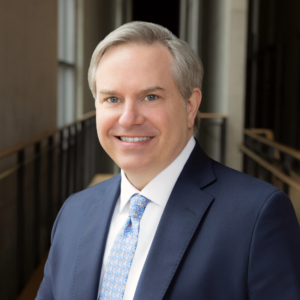
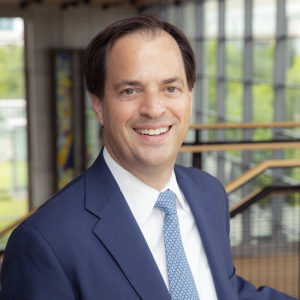
In this episode, hosts Brad and Michael are joined by, Dr. David Boudreault, board-certified plastic surgeon and founder of Illuminate Plastic Surgery. Dr. Boudreault shares the unintended consequences of growing his small family practice into a multi-location success. Tune in to learn about the importance of scaling with intention, building systems early, and the shift from hands-on leadership to strategic delegation to transform your practice and position it for sustainable growth.
Listen to the full episode using the player below, or by visiting one of the links below. Contact ByrdAdatto if you have any questions or would like to learn more.




Transcript
*The below transcript has been edited for readability.
Intro: [00:00:00] Welcome to Legal 123s with ByrdAdatto. Legal issues simplified through real client stories and real world experiences, creating simplicity in 3, 2, 1.
Brad: Welcome back to another episode of Legal 123s with ByrdAdatto. I’m your host, Brad Adatto, with my co-host, Michael Byrd.
Michael: As a business and health care law firm, we meet a lot of interesting people and learn their amazing stories. This season, Brad, our theme is Unintended Consequences. We sometimes find ourselves in a situation that can be traced back to a seemingly inconsequential or unrelated decision.
Brad: Now, Michael, I don’t know about you, but I’m really excited to have a conversation with today’s guest.
Michael: Yes. We have a friend and longtime client on, but first Brad, we need to get into something important.
Brad: Okay. I like that.
Michael: Coffee versus tea. You drink tea exclusively, and I think you need to justify yourself here.
Brad: Fair point. Mostly because coffee tastes horrible. [00:01:00] No matter what sugar or spices or whatever else you try to kill the taste with it, it’s just terrible. I mean, terrible, terrible. And tea is so refreshing. It kind of warms your soul.
Michael: Well, I’m not opposed to the occasional tea, but maybe handful of times a year or so. But as you know, I almost exclusively drink coffee. I’m not like into the fancy coffee lattes and mochas and all that. It’s just straight black coffee, no cream, no sugar. But I don’t even know. I think you know this Brad, by now, I think, but in college and law school, I didn’t drink coffee. I was a diet Coke guy. And then I started hearing all the news that it was really bad for you and made the switch to coffee when I started practicing law, and I haven’t looked back at all. But at the beginning it was just pure caffeine jolt. That was my only motivation. And of course I always have it with me now. And those watching, [00:02:00] there it is. And so, there’s my coffee rant. Why it’s better than tea.
Brad: Okay. Well, and just going back to that Yeti cup that you showed for everyone on TV land, you do go everywhere with it. I actually have my Yeti cup next to me because I go everywhere with it. Also, unlike you though, it always has coffee and mine doesn’t always have tea in it. Sometimes it has some other delicious drinks in it. I’m not saying I put any delicious drinks in it right now, but it has been utilized that way too allegedly.
Michael: Well, alright, well here’s another question for you. Coffee or tea, which one do you think is more dangerous?
Brad: Well, obviously to me clearly coffee is more dangerous because it kills your taste buds. But are you asking like from a health care, I mean, health benefits between the two? I’m just No,
Michael: No. I actually have evidence that t is extremely dangerous and can hurt you.
Brad: I’m not the context guy like you are, but I need some context here as to why it’s more dangerous.
Michael: Okay. Do you [00:03:00] remember the famous McDonald’s case in New Mexico where a jury awarded a woman $3 million for burn she suffered while trying to pry the lid of a cup of coffee?
Brad: Yes, I do. And another reason why I don’t drink coffee.
Michael: Okay, well, hold on. Recent case, I have evidence that tea is 16 times more dangerous. A jury in Los Angeles awarded someone $50 million for being burned by Starbucks tea.
Brad: I kind of see your logic, however, let’s go back to, this is a jury in California and I think that explains a difference in the verdict, and that tea’s still better than coffee.
Michael: You know, our guests, they may have a California perspective on your statement there too. Let’s bring him on. Joining us today is Dr. David Boudreault. He is the founder and owner of Illuminate Plastic Surgery with two offices in Northern California San Jose and Palo Alto. He’s [00:04:00] a board certified plastic surgeon education, UC Davis Medical Center, plastic and reconstructive plastic surgery. UCSF East Bay Surgery is his general surgery residency. He’s got certifications at Stanford, residency at UCSF, St. Louis University School of Medicine, California Polytechnic State University undergrad. His wife is Molly, son, Pen. David, thanks for joining us.
David: Thanks for having me, guys. Been excited to be part of you guys’ podcast as a fan, but now I’m actually here live with you guys, so that’s pretty cool.
Brad: Well, we’re going to hit you with some really tough questions. I’m going to hit you two right away. So first off, the first question is, do you drink coffee or tea? And second, which one’s more dangerous?
David: so I’m, I’m a, I’m a heavy coffee drinker. I usually have my first cup [00:05:00] of coffee around 4:30 in the morning. Generally, even while I’m working out. And then in California we have really bougie places like Phil’s coffee that I call it caffeine with nitros. So it’s like it’s heavy duty coffee, but I’m known to have a little bit of tea in the evening. I think it’s – I agree with you. It warms the soul and there’s some really amazing teas out there. And so, I’m not married to coffee, but I do like to date it.
Brad: Yeah. Do you think one’s more dangerous than the other?
David: I mean, I, I think you guys see things from a legal lens, but I think has a lot of health benefits – eastern medicine, big fan of a lot of the different types of tees and from the earth kind of feeling. Overall, I’d have to kind of agree with Brad here. I think coffee, for the most part, especially Starbucks can be burnt in flavor, overly baked. And so I think coffee has to be like, modified from my [00:06:00] point of view.
Michael: Okay. We never want to enable Brad, but we’ll have a sidebar on our next meeting.
David: We could still be friends though.
Michael: Alright, so let’s jump in. And so I gave kind of your stat sheet bio introduction, but love for you to introduce yourself to the audience and just talk about you and your story.
David: Yeah. Well, thanks. Well, I am, as you mentioned, the founder co-founder of Illuminate Plastic Surgery. My wife, Molly, is a nurse practitioner, helped me start illuminate plastic surgery in 2015. And we started really kind of like a small family practice. In fact, we often called ourselves the family practice of plastic surgery. We really believed that we wanted to get in there and kind of take care of patients together. We rented a small space and retiring plastic surgeon’s office, and I converted his coat closet into my first office and saw patients there with my wife. And we really enjoyed the relationships that we’re able to form with our [00:07:00] patients. And so, I think overall, like Illuminate’s foundations was in that core of just family centric patient care. We always put patients first. but over time we’ve really grown into a practice that’s focused on strategic partnerships and to develop a real sense of identity and purpose. And so, really proud of what we’ve done in our practice and where we are now, but we’re still just the same old patient centered, family centric plastics.
Brad: So I have to ask, where does the name Illuminate Plastic Surgery come from?
David: Yeah, I mean, that’s, that’s actually, it’s funny. Everybody told us not to call our practice illuminate. Every single one of my mentors. We kind of brainstormed it. We did mind mapping and bubbling. Like, we didn’t want it to be my name. Yeah. For obvious reasons – Boudreault is just too hard to spell and read. And we were advised early on not to do that really, because if anything [00:08:00] was to happen legally and you had to bankrupt your name, that would be awful. And then if you ever wanted to work with other people, no nobody’s going to want to be Boudreault Aesthetics. And so, it just really it wasn’t in line with what we really saw for Illuminate, which was something much bigger than ourselves, and we didn’t want it to be something that was like new you or like transformation. We wanted it to be like something that represented what we really wanted to do for people. We just wanted to like, take them and help them shine. And so we want to turn the light on, kind of, we want to illuminate. And everybody was against the name no matter how much we explained it, but we just were really passionate about what that meant for us. We wanted to be a light in our community. You know, our faith kind of instructs us to do that. And it just kind of hit so many things for us. It really kind of, like tea, hit the soul.
Brad: Well, I love that. Well, and and you were talking about how Illuminate plastic surgery is kind of a family affair too. Tell our audience who’s not familiar, like [00:09:00] what service lines and other things do you guys do at that practice?
David: So Illuminate has transformed over time into a fairly large organization. so we have 70 people that work for us. We’re three surgeons, now hiring our fourth. We’re in multiple cities. We have multiple offices. We have partnerships with multiple different types of practitioners, PAs, NPs, MDs, occupational therapists. We believe that our strength is in diversity and the way that we see patient care and the way that we’re able to kind of meet patients where they’re at on their journey and the things that we’re able to offer them. Everything from surgery, obviously, skincare-based treatments like lasers Botox filler in our skin, illuminate skin part of our practice, wellness services for anti-aging – longevity, postoperative recovery. And then we have our in-house operating room as well. And so we’re a multi income stream, a complex [00:10:00] practice. And on top of that, thanks to people like you, we are equally as diverse in our structure, corporate structure and legal structure, positioning us really well for partnerships with providers of all types and backgrounds so that people who share our vision have an opportunity to come in and be part of something bigger than themselves.
Michael: You, one of our common connections, we’re both builders, and so we’ve had a lot of fun conversations over the years as you’ve kind of shared your vision often after you get done running or while you’re running. But talk a little bit about what you’ve learned, in trying to build and what that experience has been like for those – really thinking of those in the audience that may have big ideas in their mind; what’s that actually like?
David: Yeah. I mean, you can read a bunch of books about all [00:11:00] this stuff, but I think from my point of view, I think probably the biggest takeaways would be start small, nurture, grow. Work on what you have to offer. Who are you, what are you about? What do you want to be in 10 years? The same things you were told to do in high school. You need to be clear about what you want to accomplish, what your vision is, what your mission statement is, because that’s going to permeate your business. That’s going to basically affect who you hire, who you fire, who’s on your team and who’s not, essentially. And as somebody who really thought you can just jump in and just be like, I’m like patient first. That’s who I am.
I’m going to like put that patient first, I’m going to come to work, I’m going to see them every day. I’m going to take care of them on the weekends, and I’m just going to be – it’s not enough. It’s not enough. Because as you grow, you need a team. And so, just as important as all the surgical skills that I developed in residency to deliver high quality; results without adequate [00:12:00] leadership, your organization will spiral. there’ll be problems you could never see coming and all with basically good intentions. So you came in with good intentions, and what you created was a bunch of misery for everybody around you. And so, what I learned is practice needs structure, you need systems, and then you need your team to really share in your vision and believe in your vision. Not just say it, but believe it.
Michael: Talk about, and you alluded to that too, that there’s in this kind of phase, and our theme is Unintended Consequences. Talk a little bit more about some of your experiences that you had good intentions, and then you kind of skinned your knees trying to do whatever it was.
David: Yeah. So we only have 25 minutes. So many, so many. But I do [00:13:00] think like, probably my greatest strength ended up being my biggest weakness, I came into my practice putting patients like an extension of my family. I treated them each and every one like they were my sister and now lately more like my daughters. And in the end I ended up treating my staff the same way, just like they were an extension of my family. And so much like you would do with your family, you still invite your drunk uncle Tom to come to your barbecues, even though you know the problems he’ll cause and you’ll just cover up for him and drive him home and put him into Uber or whatever. Like, you do that with your staff over time.
And what I ended up learning is that, treating your, your practice and your business, like family leads to a lot of family-like issues. Your employees start to feel like your favorite, your favorites are other people, and everybody who complains the most gets more attention. And so, what I really discovered is that my family style of leadership really did not lend itself well into practice. [00:14:00] I created a lot of friction perceptions of favoritism, and it’s also taught me that I need to change that. Like, I need to grow, I need to be different. And so in that, I’ve shifted from thinking of my practice as a family to a dream team. And so now, instead of making excuses for or doing more work, because other people couldn’t do it, now I set clear standards. And it doesn’t mean I don’t care about my team. It actually means I do care and I want them to succeed. And so it’s really led me to create more defined structure for them and a path to success.
Brad: And that’s so important from that perspective of is really having that vision to understand how, from a cultural perspective, the ability to be able to work with someone, doesn’t mean that they have to come home with you every day, right? Like going back to the family element. But that doesn’t mean that you’re going to treat them poorly. [00:15:00] And I love the idea what you described as the dream team because now you’re putting something as to why are you part of this team? And this is what we want. We know we want all the Michael Jordans, or I don’t know if anybody…
Michael: Michael Byrd.
Brad: Michael Byrd, yeah. I don’t think.
David: The Michael Byrd. There was a bird that was pretty famous.
Brad: There was, yeah. I think his name was Larry though. But going back to that point, so now you have this vision of the unintended consequence of it being that you were two into the weeds with the group, which happens sometimes when you’re a small group and now you’re at 70. You had to kind of shift that mentality, for our audience members, that’s a good lesson learned. Is there another one that you can share that would be important for takeaways from what you said, from a broom or a coat closet to multiple different locations? What are some of the lessons learned that you have, you can share with our audience?
David: I think starting small is obviously that’s what we did. I mean, I can’t say I can do it every single way, but I can say [00:16:00] that as you’re thinking about growing focus a lot on systems in the beginning. The small little things that you think will be no big deal in the beginning, whether that’s your electronic medical record that has some challenges around it, or the way you communicate with your staff, or the way that you store your photos. I mean, whatever systems that you have, think about optimizing when you’re small, because as you grow the small angle at the base becomes a divergent thing at the extremes. And so the time to really look at your practice is really, when it’s small, it’s when you have the most time too.
As somebody who really has no time, mistakes cost me dearly, cost my family dearly cost my partners dearly. And so, it really is the time to start focusing. And then it you know, the other thing is [00:17:00] probably understanding how important partners are. You can’t do it all, and so everything went through me for all decisions. And as I got busier, I’m in the operating room more and I’m not available to make critical decisions. And so, building your team early, even when you’re small, I think a lot of people pride themselves in being like, it’s just me and my patient care coordinator. She answers the phones, she like rooms the patients, she follows up on my leads. You don’t have a team; you just have that one person. And so, forming your teams early is another great lesson.
Michael: One of the things that I want to kind of touch on that you just mentioned is time. So you, like a lot of our clients and a lot of our audience members have been trained to be a surgeon. And that is as you said, you come in thinking that I’m going to be caring for my patients, and that’s what you’ve been trained to do. And [00:18:00] you have all these visions of all the attention and et cetera, and yet you’re also the CEO of your business, and so you have a business side. And so you talk about how you’ve managed your time as the business has grown and you’re getting pulled in all these different directions; what have you noticed about how you spend your time as you’ve grown?
David: Yeah, I think the biggest surprise to me as somebody who absolutely hates meetings is how many meetings I have now. And so probably the best way to organize my time is, one, I’ve hired an executive assistant who knows me very well, can almost attend meetings on my behalf and speak on my behalf at this point, but she coordinates meetings. It’s like basically you put an agenda item [00:19:00] on a calendar and all of a sudden you’re up at 10 working on the thing that you were putting off, right? So setting deadlines, setting meetings as a way to move things forward. That’s been like the biggest change in my management of time. Before, I just would work longer hours. I mean, I don’t sleep very much anyways.
I go to bed at 10, 11 at night, and I’m up at three to five in the morning, somewhere in that ballpark. At some point , you do still just run out of time and you spin your wheels and you do things that you shouldn’t do and your team should do. And by setting up meetings with my partners thoughtfully to, and not in mass. I used to do big department meetings and everybody could chime in. No. Now we have strategic working meetings. Two to three people focused on very task oriented projects with the clear goal in mind that’s set at a higher level, which is not just me anymore. It’s my board, my crew, my team who [00:20:00] share vision and set agenda items. And we are executing on a group vision now. But yeah, meetings are the best way to manage my time.
Michael: Did you have a hard time at the beginning letting go as you started delegating to team members?
David: Yeah, I bet my team wishes they were here now. Yes, a hundred percent. I still have a hard time. I mean, everything I’ve told you that I’ve done or that I recommend you do are things I’m working on every day. I’m very imperfect, and my team holds me accountable. They’re direct with me and I do hold onto everything still. It’s hard for me to let go. I am very passionate about the practice and where we’re going, and so I tend to have a lot of opinions about where we should go. And so that means I’m going to end up doing the work too, right? And so yeah, I’m continually working on letting other people carry some [00:21:00] of the practice, carry some of the responsibility, but yeah, it’s a work in progress.
Brad: Well, at least you identified it and you’re letting the audience know, like, don’t be like David.
David: Yeah, exactly. Yeah, I think that’s why I was brought here.
Brad: Well that’s an important element, though. I mean, if you think about it, if you recognize it, it means at least you know you need to start fixing it. And what I like about the advice is re and what you’re recommending is recognize as early as possible and as best you can, and again, it’s your baby, you’re growing it, it’s your vision. It’s really hard sometimes to let go of certain elements that you’ve kind of built yourself. And especially if in a small business like y’all’s, it’s a family, truly a family business, you built every single element, but now with 70 employees in multiple locations and potential other growth, it’s hard to be that same person.
David: Yeah. One of the funniest things about growing other businesses in parallel is you [00:22:00] think you can do it better, right? You’re like, look at all the things I’ve learned, right? I’m not going to do the same things. And then the new baby is just as hard as the old baby, right? Like, the baby arrives and you’re like, I’m going to be so much better dad, right? And we started our post-op recovery business called In Hands in Palo Alto. I have a new partner and like, trying to figure it out, trying to set up vision, trying to set up systems. I do have a bigger team now, and so we’re going through that process quicker, right? But the same struggles are there. Just because you got to learn something doesn’t mean all your partners have learned it too. And you kind of have to walk through the journey of raising that unique baby with their needs. It’s fun.
Michael: Have y’all started, this is a pivot question. Have y’all started integrating AI into your practice at all? Just thinking about your answers. You keep talking about systems and processes, and I’m curious [00:23:00] what y’all experienced.
David: Yeah. We’ve shied away from a lot of the AI solutions that we’ve seen in the market. We don’t like the phone answering services that AI has provided. I think AI is going to be part of the future of especially the private practices that haven’t been swallowed up by private equity. You know, we need staff and they’re very expensive. You know, they’re worth it. If anybody listens, they’re listening, they’re worth it. But it is the biggest line item on our P&Ls, right? And so taking monotonous tasks and in assigning them to an AI agent is definitely something I’ve been looking at it for my like a CFO function in my practice and try to look at my books to look for errors and things and patterns in purchasing and things like that. Some of the background stuff, I strongly believe that no matter how great AI sounds, that the personal touch, the authenticity that comes in private practice comes from that person to person [00:24:00] connection. That can’t happen autonomously. I mean, it can sound good, but it’s not a real connection. And for private practice, that’s our distinguishing characteristic is that we’re having a relationship with you and that can’t be fabricated.
Michael: So fascinating. What are your thoughts about where do you see plastic surgery over the next five years? I mean, we’ve, we’ve talked about AI, you’ve alluded to private equity, but what’s your kind of crystal ball?
David: Yeah, I mean, I think there’s, we’re at a crossroads in plastic surgery. it’s maybe the last – I’ll say this, I don’t know if anybody would agree with me, but I think there’s the last form of true primary care in medicine is plastic surgery. Most practices have insurance backing and involve in a hospital where those system’s controlling you. You have a true personal relationship with your patients in private practice, and that practice is at a crossroads. Private equity has come in and [00:25:00] back practices for, you know scalable growth to focus on mass acquisition of patients, essentially. The private practice guys are going to, and gals are going to be focused on the authentic care that comes with the private practice side of things.
And I think the future of plastic surgery will be a big divide. There’ll be the Sono Bellos, and then there’ll be the Illuminates, and patients will be able to choose. They’re going to be looking for – the more that they’re marketed to, the slicker it looks, the less surgery-like it looks, they’re going to eventually go in and realize it’s still surgery, right? And that’s going to chip away at trust. And so, I’m betting that patients are smart. They’re going to be looking for practices that promote trusting transparent safe environment for them to explore their aesthetic goals. And so I [00:26:00] think there’s going to be a big divide and there’s going to be a lot of people still going to Starbucks. And then there’s going to be a lot of people still going to those private coffee shops that sit and chat with you about why they picked these grounds and which Jamaican hill this came from. I want to be in that side. That’s the side I want to be on. I want to keep what we started. I want to keep those relationships, the pure, some say plastic surgery is not that pure, but I think it’s a pure relationship – at least. And I think it’s something that we’re really facing right now in the private equity world.
Michael: I call that the coffee side.
David: Yeah.
Brad: The tea, he was talking about the earthiness and the soul, the warmth of the soul. I mean, I’m starting to really, you know, it’s part of being the Cajun on the show, I always liked you, Dave, even though I didn’t know you, but now that I know you understand the power of great tea, that’s important too.
David: Yeah. it’s amazing [00:27:00] how this came all the way back around to coffee.
Michael: Randomly.
David: Unintentional. That’s unintentional.
Michael: Well, we’ve hit our time. We flew by. It was so fun having you on. Appreciate it very much. We’re going to go to break, and then on the other side, Brad and I can do a quick legal wrap up. Thank you.
David: Sounds good. Thank you guys for having me. It’s really, really fun.
Access+: Many business owners use legal counsel as a last resort, rather than as a proactive tool that can further their success. Why? For most, it’s the fear of unknown legal costs. ByrdAdatto’s Access+ program makes it possible for you to get the ongoing legal assistance you need for one predictable monthly fee, that gives you unlimited phone and email access to the legal team so you can receive feedback on legal concerns as they arise. Access+, a smarter, simpler way to access legal services. Find out more, visit byrdadatto.com today.
Brad: Welcome back to Legal 123s with ByrdAdatto. I’m [00:28:00] your host, Brad Adatto, with my co-host, Michael Byrd. Now Michael, for those that don’t know this season, our theme is Unintended Consequences. And we had just an amazing conversation with Dr. David Boudreault of Illuminate Plastic Surgery and really hearing his vision of going from a one small former coat rack room to now multiple locations, 70 people. But by the way, had so many great takeaways, but I’m going to ask you to take with our last minute we have left one major takeaway that you would thought of.
Michael: I loved his discussion about going from kind of family-focus to dream team. And I like it because in the unintended consequences, it really illustrates how we have good intentions when we do it. Like, you start a practice and you build it and treat them as if everyone’s your own family. I’m talking about the patients, I’m talking about your employees. And then he made the drunk uncle analogy. [00:29:00] You get a family and all the stuff and as the business – you learn along the way that this is a business and that there needs to be for everybody’s benefit, boundaries so that everybody can succeed.
Brad: Yeah. So that means having great employee handbooks or having good employment agreements, whatever you need, so that everyone knows what those boundaries are and they know how to succeed under that dream team. But that’s all the time we have today. Audience members, guess what, we’ll be back next Wednesday when we continue talking about unintended consequences, which we’ll be talking about a family business and the unintended consequences of that. Thanks again for joining us today. And remember, if you like this episode, please subscribe, make sure to give us a five star rating and share with your friends.
Michael: You can also sign up for the ByrdAdatto Newsletter by going to our website at byrdadatto.com.
Outro: ByrdAdatto is providing this podcast as a public service. This podcast is for educational purposes only. This podcast does [00:30:00] not constitute legal advice, nor does it establish an attorney-client relationship. Reference to any specific product or entity does not constitute an endorsement or [00:31:00] recommendation by ByrdAdatto. The views expressed by guests are their own, and their appearance on the program does not imply an endorsement of them or any entity they represent. Please consult with an attorney on your legal issues.